
A leak under a tiled floor, inside a chilled water line, or behind a bathroom wall can burn through money long before it leaves a visible stain. That is usually when the question comes up: tracer gas vs thermal imaging – which method actually finds the leak without tearing the property apart?
The short answer is that both are highly effective, but they solve different detection problems. Choosing the right one is less about which technology sounds more advanced and more about what is leaking, where it is leaking, how accessible the system is, and how quickly you need technical certainty. In many cases, the best result comes from using both methods as part of a structured diagnostic process rather than treating them as competing options.
Tracer gas vs thermal imaging – what is the real difference?
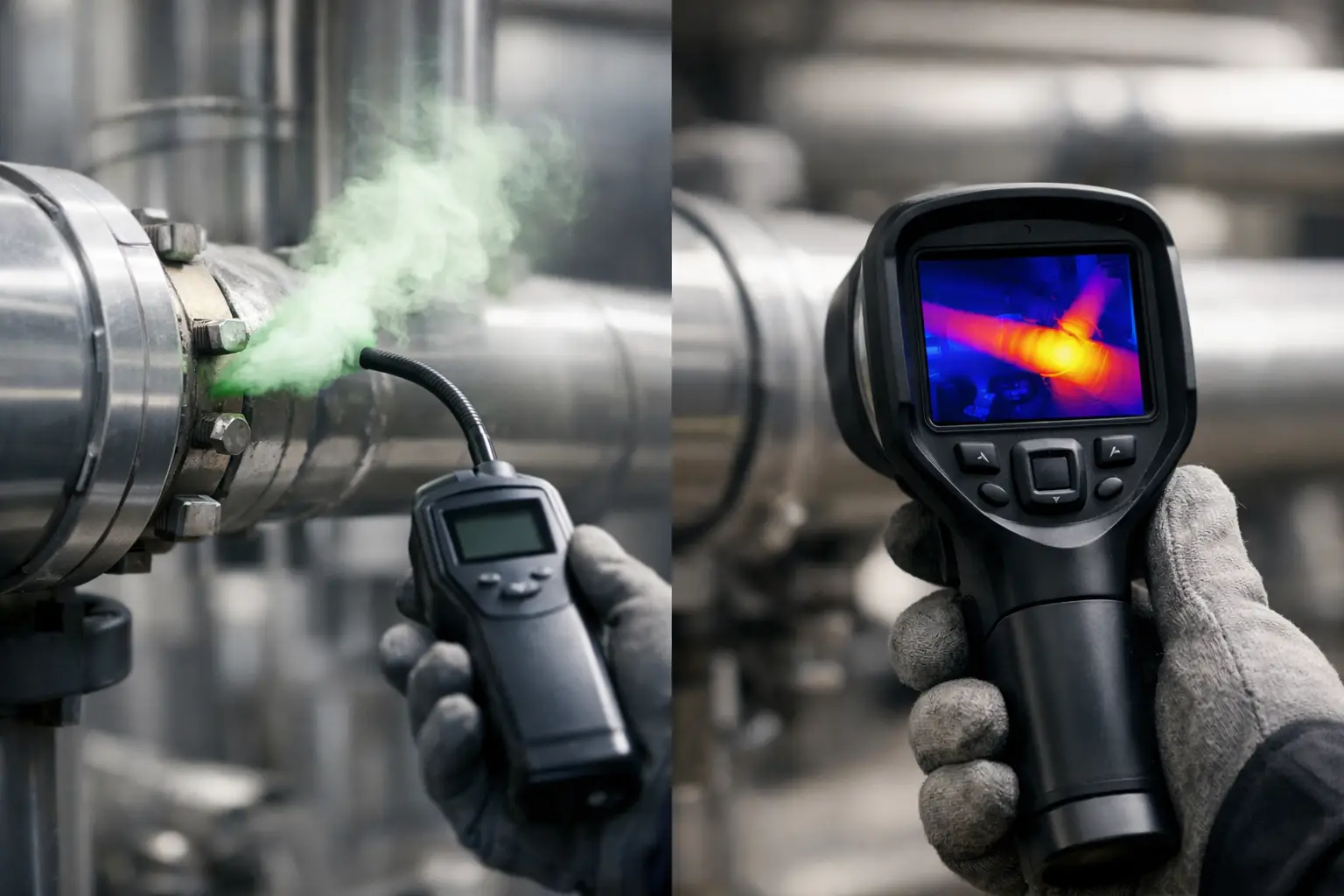
Thermal imaging detects temperature variation at surface level. A specialist uses an infrared camera to identify abnormal heat patterns caused by water movement, saturation, missing insulation, overheating components, or moisture-related temperature differences. It is fast, non-contact, and especially useful for scanning broad areas with minimal disruption.
Tracer gas detection works differently. A harmless gas mixture is introduced into a pipe or closed system after isolation and preparation. Because the gas molecules are smaller than water, they escape through the leak point and rise to the surface, where sensitive detectors locate the source. This method is particularly strong when the leak is concealed, very small, or not creating a clear thermal signature.
That distinction matters. Thermal imaging shows the effect of a leak. Tracer gas is often used to locate the actual escape point.
When thermal imaging is the better first choice
If speed matters and the area is large, thermal imaging is often the logical place to start. In residential properties, it can quickly highlight abnormal cooling or heating patterns beneath floors, behind walls, and around wet areas. In commercial buildings, it helps screen long pipe runs, roof zones, plant rooms, and façade sections without interrupting operations.
It is particularly useful where active moisture or temperature differential exists. A hot water line leak, underfloor heating issue, or water ingress area with evaporative cooling may show up clearly on camera. For facilities teams, that means a faster initial survey and a narrower target area for follow-up testing.
Thermal imaging also has value beyond leak tracing. It can support broader property diagnostics by identifying insulation gaps, thermal bridging, overloaded circuits, HVAC inefficiencies, and hidden damp patterns. For clients managing multiple assets, that wider diagnostic range adds commercial value.
But thermal imaging has limits. It does not see through walls or floors in a literal sense. It reads surface temperatures, and those readings can be influenced by ambient conditions, sunlight exposure, airflow, floor finishes, pipe depth, and whether the leak is active enough to create a measurable temperature change. A buried cold water leak in stable ground conditions may produce very little that an infrared camera can separate with confidence.
When tracer gas is the stronger option
Tracer gas comes into its own when the leak is elusive, intermittent, or too small to create obvious visible or thermal evidence. It is often the preferred option for pressure-tested pipework, concealed water lines, flat roof membranes, underground services, and systems where previous repair attempts have failed to resolve the actual problem.
Because the gas is specifically introduced into the line being tested, detection is highly targeted. If the pipe section is isolated correctly and the gas appears above a certain location, that gives a high level of confidence that the leak point is close to where the detector responds. For costly finishes, occupied spaces, and high-value infrastructure, that precision can prevent extensive strip-out work.
This is also why tracer gas is widely used where asset protection matters more than inspection speed alone. In hospitality, healthcare, education, district cooling, industrial sites, and petrochemical settings, pinpointing the leak with minimal interruption is often worth more than a broad scan that still leaves doubt.
The trade-off is that tracer gas usually requires more setup. The system may need to be isolated, depressurised, dried, and prepared properly. On some live or complex systems, this process takes planning. Detection can also be affected by environmental factors such as wind, sub-surface migration paths, or adjacent voids, so operator skill remains critical.
Accuracy is not just about the tool
Clients often ask which method is more accurate. That sounds simple, but accuracy in leak detection depends on the full inspection strategy.
A thermal camera in the hands of an inexperienced operator can produce false leads. Surface temperature anomalies are not always leaks. Likewise, tracer gas used on a poorly isolated system can send the investigation in the wrong direction. The real accuracy comes from understanding building fabric, pipe behaviour, pressure conditions, moisture movement, and how different test results correlate.
That is why engineering-led diagnostics matter. The goal is not to produce an image or a gas reading. The goal is to reduce the repair area, confirm the failure mechanism, and give the client enough certainty to act without unnecessary demolition.
Cost considerations – cheap testing can become expensive quickly
Thermal imaging is often more cost-effective as an initial screening tool because it is quick to deploy and can assess a wider area in less time. If the leak is active and conditions are favourable, it may provide enough evidence to proceed directly to repair.
Tracer gas testing can carry a higher inspection cost because of the setup, specialist equipment, and time required. But that comparison misses the bigger financial issue. If thermal imaging leaves uncertainty and the contractor opens the wrong section of floor or wall, the real cost sits in reinstatement, downtime, occupant disruption, and delayed repair.
For homeowners, that can mean replacing tiles, plaster, cabinetry, and decoration unnecessarily. For commercial and industrial clients, it can mean contractor overruns, operational delays, access restrictions, and reputational damage if occupied spaces are affected.
So the better question is not which method is cheaper. It is which method reduces total leak-related cost for this specific situation.
Why the best answer is often both
In difficult cases, tracer gas vs thermal imaging is the wrong way to frame the decision. The strongest diagnostic workflow often uses thermal imaging first to identify suspicious zones and environmental patterns, followed by tracer gas to confirm the exact point of escape.
That combination is particularly effective in large villas, multi-unit residential buildings, commercial plant areas, buried external lines, and recurring leak cases where previous contractors have repaired symptoms rather than the source. Thermal imaging speeds up the search. Tracer gas sharpens the target.
This layered approach is also useful when reporting matters. Insurance teams, facilities managers, developers, and maintenance consultants often need documented evidence, not just a verbal opinion. Cross-checking findings with more than one method strengthens confidence in the diagnosis and helps justify the repair scope.
Which method suits which scenario?
A domestic hot water leak beneath flooring may show clearly on thermal imaging, especially if the system is active and the finish allows a readable surface pattern. A concealed mains leak with no obvious heat difference is more likely to need tracer gas or acoustic support. Roof membrane leaks can benefit from tracer gas where water travel paths are misleading. Chilled water and process lines may require a combination of pressure testing, thermal review, and targeted gas tracing depending on insulation, access, and shutdown constraints.
For recurring high water bills with no visible damage, tracer gas is often the stronger investigative step once basic pressure testing confirms loss. For broad moisture mapping after ingress, thermal imaging may be the faster way to understand spread before opening any finishes.
That is why experienced leak detection teams do not force one method onto every problem. They select the right sequence based on pipe material, leak behaviour, building construction, occupancy, and the financial risk of getting it wrong.
LeakDtech approaches difficult cases in exactly that way – as a technical diagnosis, not a guess with expensive consequences.
Making the right call before repairs begin
If you are deciding between tracer gas and thermal imaging, the practical answer is to start with the conditions on site, not the marketing around the equipment. Ask whether the leak is active, whether a temperature difference exists, whether the line can be isolated, how destructive a wrong repair would be, and what level of certainty is needed before opening up finishes or shutting down systems.
When those questions are answered properly, the choice becomes much clearer. The right detection method is the one that narrows the repair zone fast, protects the asset, and prevents you paying twice for one leak.
If there is one useful rule to keep in mind, it is this: the most valuable leak detection is not the test that looks cleverest, but the one that gets you to the exact fault with the least disruption.