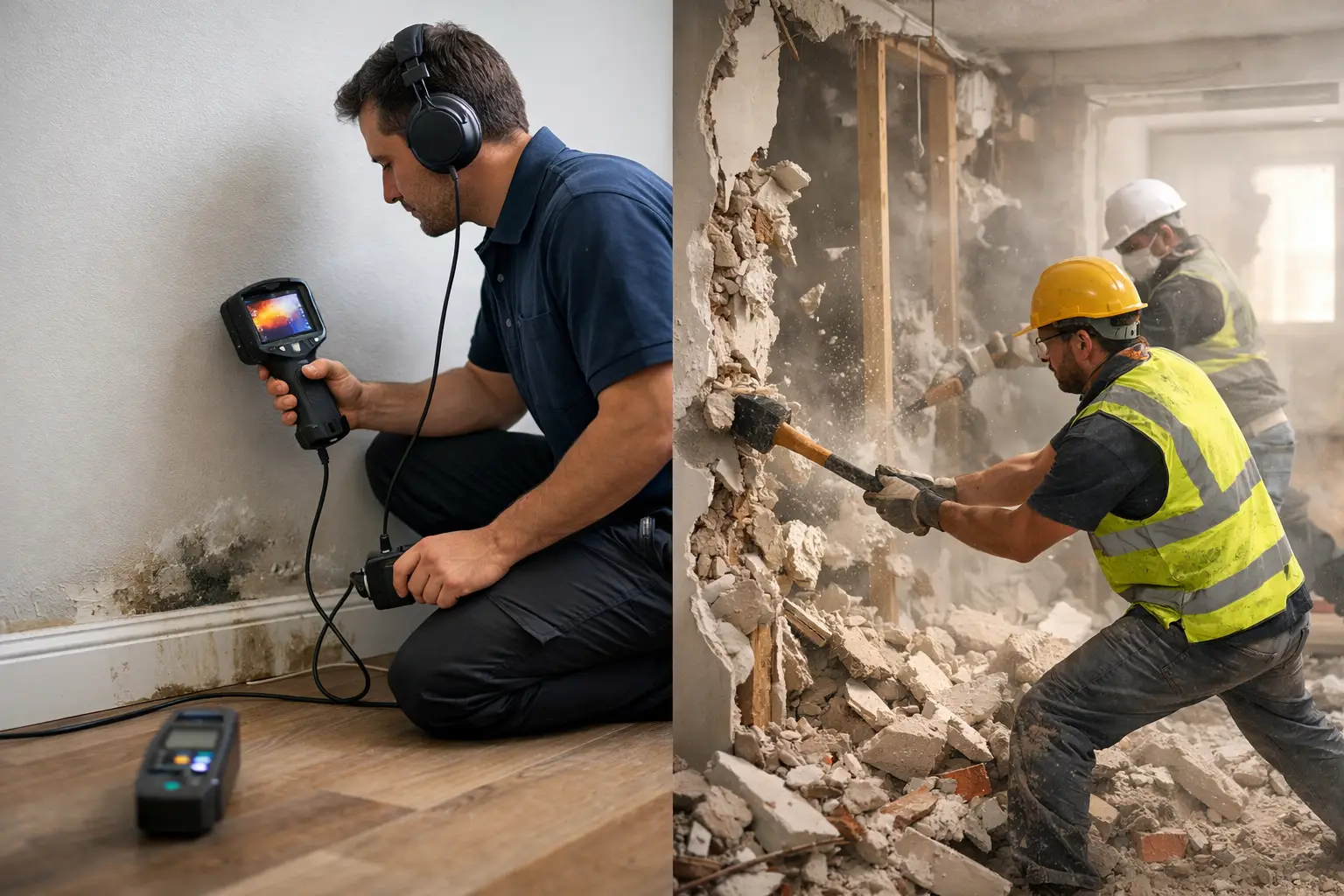

A leak behind a bathroom wall, beneath a tiled floor, or inside a buried line rarely starts as a demolition problem. It starts as a diagnostic problem. That is the real difference in leak detection vs traditional demolition: one approach identifies the fault before opening up the asset, while the other often starts breaking surfaces first and hopes the evidence appears quickly enough to justify the damage.
For property owners and facilities teams, that distinction has direct financial consequences. Every unnecessary tile removed, wall chased, ceiling opened, or slab broken adds repair cost, extends downtime, and creates new finishing work that was never part of the original leak. In residential properties, that means disruption to daily living. In commercial and industrial settings, it can mean tenant complaints, operational delays, compliance concerns, and shutdown risk.
What leak detection vs traditional demolition really means
Traditional demolition is exactly what it sounds like. A contractor suspects the leak is in a general area and starts removing finishes or breaking into building elements to look for the source. In some cases, this works quickly, particularly when the leak is visible, accessible, and close to the damage pattern. But hidden leaks rarely present that neatly.
Water travels. It migrates through screed, runs along conduits, drops from higher levels, and appears far from the actual point of failure. A stain on the ceiling below does not always mean the pipe above that stain is leaking. Damp skirting does not always mean the closest bathroom fitting is at fault. When demolition starts from an assumption rather than evidence, the repair can become a process of trial and error.
Non-invasive leak detection begins differently. It uses diagnostic tools such as thermal imaging, acoustic listening devices, tracer gas, pressure testing, and technical inspection methods to narrow down or pinpoint the source before destructive access is approved. The goal is not to avoid opening up the structure at all costs. The goal is to open only what is necessary, in the right location, with the right repair scope.
Why traditional demolition often costs more than expected
The visible cost of demolition is labour and reinstatement. The hidden cost is misdirection.
If a team removes the wrong tiles, opens the wrong wall, or excavates the wrong section of external pipework, the problem remains unresolved while the reinstatement budget grows. That creates a second round of work, and sometimes a third. For homeowners, that can turn a manageable repair into a refurbishment project. For facilities managers, it can mean multiple contractor visits, extended permits, tenant disruption, and difficult conversations about why the first intervention failed.
There is also the issue of secondary damage. Demolition creates dust, noise, waste removal, and exposure of adjacent finishes. In active buildings such as hotels, schools, hospitals, retail units, and occupied residential towers, that disruption matters almost as much as the leak itself. The repair may be technically simple once the fault is found, but the path taken to get there can still be expensive.
By contrast, diagnostic-led leak detection is usually a cost-control exercise. Even where advanced testing carries an upfront service fee, it often prevents larger spend on blind opening works, cosmetic reinstatement, and repeat contractor attendance. In high-value interiors or specialist environments, that difference is not marginal. It is often the whole business case.
Where non-invasive detection has a clear advantage
Leak detection has the strongest advantage where the leak is concealed, intermittent, or affecting critical infrastructure.
In villas and flats, common examples include leaking pressurised water lines under floors, bathroom waterproofing failures, concealed irrigation lines, and swimming pool leaks. These faults can produce symptoms in one area while the source sits several metres away. Breaking finishes based on surface damage alone is risky.
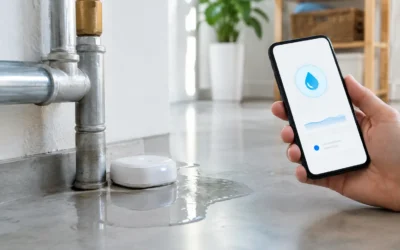
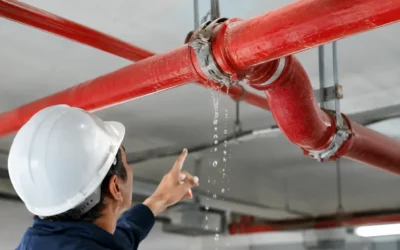
In commercial property, the stakes rise. A hidden leak in a chilled water network, fire line, plant room, washroom stack, or buried external main can affect operations far beyond the repair area. Here, a non-destructive method gives decision-makers something far more useful than guesswork – evidence. That evidence supports maintenance planning, insurance discussions, contractor coordination, and targeted repairs.
Industrial and petrochemical sites are even less tolerant of unnecessary opening works. Pipe testing, tank inspection, and fault tracing must consider safety, access limitations, continuity of operations, and the cost of lost production. In those settings, demolition-first is rarely a serious strategy. Technical diagnosis comes first because the environment demands precision.
Accuracy matters more than speed alone
Some contractors present demolition as the faster route. Sometimes, on day one, it is. A wall can be opened in an hour. The problem is what happens if the leak is not there.
True speed is not the time it takes to start. It is the time it takes to reach a correct repair and restore the property or system to normal operation. A targeted detection process may take a few hours, but if it reduces a three-day search to one precise repair point, it is the faster option in any commercial sense.
That is especially relevant when dealing with recurring leaks or previous failed repairs. Once a property has already been opened and patched without success, more demolition is not progress. It is repetition.
When traditional demolition still has a place
There are cases where demolition is reasonable and even necessary.
If a pipe has visibly burst through a wall, a ceiling has collapsed around a known source, or the failed component is already exposed, advanced detection may add little value. Once the diagnosis is certain, access and repair become the priority. The same applies where deterioration is so extensive that reinstatement is already planned as part of wider refurbishment.
Even then, the best results usually come from combining methods. Diagnose first where uncertainty exists, then approve focused opening works. This is not a choice between technology and repair expertise. It is a sequence. Good leak detection reduces unnecessary damage, and good repair practice resolves the confirmed fault.
The insurance and reporting angle
One practical advantage of professional leak detection is documentation. Decision-makers often need more than a contractor’s opinion. They need test results, images, pressure data, or a technical report that explains the suspected failure mechanism and recommended access point.
That matters for insurers, landlords, developers, FM providers, and asset managers who must justify repair decisions and control spend. It also helps when multiple parties are involved and responsibility is disputed. A detection report does not solve every coverage issue, but it provides a stronger basis for action than a vague assumption followed by broad demolition.
The commercial case for a diagnostic-first approach
The strongest argument in leak detection vs traditional demolition is not convenience. It is asset protection.
Buildings and infrastructure are capital assets. Finishes, waterproofing systems, buried services, process lines, and plant installations all carry value. Treating hidden leak investigation as a controlled technical exercise protects that value. It limits collateral damage, supports targeted repairs, and reduces the risk of making the situation worse while trying to find the cause.
For homeowners, that means fewer broken tiles, less mess, and a better chance of resolving high water bills or damp problems properly the first time. For commercial operators, it means protecting tenant experience and reducing downtime. For industrial sites, it means preserving operational continuity and avoiding unnecessary intervention in sensitive systems.
This is where specialist providers such as LeakDtech add real value. The benefit is not just access to equipment. It is the ability to interpret findings correctly, correlate symptoms with test data, and recommend the most efficient repair path. Tools alone do not solve complex leak problems. Methodology does.
Choosing the right approach for your property
The right question is not whether demolition is ever needed. It often is. The right question is when it should happen.
If the source is hidden, uncertain, or part of a complex system, start with non-invasive testing. If the evidence is already clear and the failed point is exposed, move directly to repair. If previous contractors have guessed wrong, stop expanding the damage footprint and insist on a diagnostic-led investigation before any further opening works.
Most costly leak jobs do not become expensive because the leak itself is extraordinary. They become expensive because the search was poorly managed. When the first step is precise diagnosis rather than blind breakage, the repair process becomes cleaner, faster, and far easier to control.
Before anyone reaches for a breaker or starts lifting finishes, make sure the problem has actually been found. That one decision usually separates a focused repair from a much larger bill.