A tank can appear sound from the outside while losing product through a corroded floor, developing internal coating failure, or placing foundations under stress. Effective tank inspection methods are designed to find these issues before they become contamination events, unplanned shutdowns, high water bills, environmental exposure, or expensive rebuilds.
For facilities teams, property managers and industrial operators, the objective is not simply to tick off an annual inspection. It is to establish the condition of the tank, identify the source and significance of defects, and make confident maintenance decisions with minimal interruption to operations.
Why tank condition cannot be judged by appearance
Water storage tanks, fire water tanks, cooling water tanks, process tanks and petrochemical storage vessels deteriorate in different ways. External rust may be visible, but the more serious failures are often hidden: pitting beneath coatings, thinning at the floor-to-shell junction, failed joints, settlement, internal corrosion, or leakage into surrounding soil.
The consequences depend on the asset. A domestic or commercial water tank can affect water quality, cause persistent water loss and damage nearby finishes. A fire tank may compromise a critical life-safety system. In industrial settings, a tank failure can halt production, create environmental liability and trigger extensive recovery costs.
That is why a condition-based programme is more valuable than reacting when leakage becomes obvious. The right inspection approach combines visual evidence, measurements and targeted testing rather than relying on one method alone.
Tank inspection methods and what each one reveals
Visual inspection and condition surveying
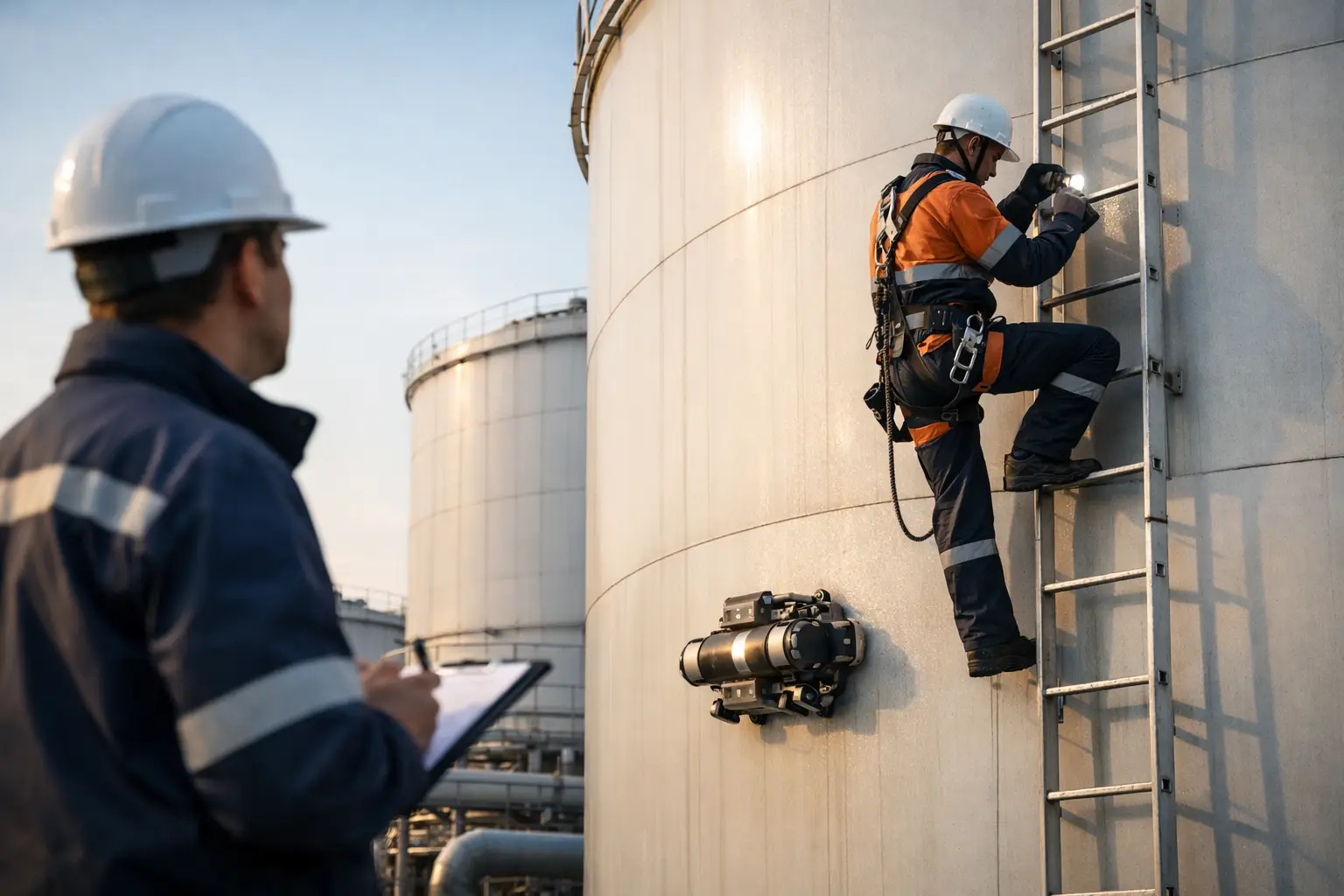
A detailed visual survey is normally the starting point. Inspectors assess the shell, roof, access points, vents, ladders, supports, flanges, welds, coatings, seals and surrounding area. Internally, the focus extends to sediment, corrosion patterns, lining condition, biological growth and signs of ingress or product loss.
Visual inspection is quick and cost-effective, but it has limits. It can identify symptoms such as blistered coating, staining, surface rust and deformation. It cannot reliably quantify remaining steel thickness or locate every concealed floor defect. For that reason, visual findings should guide further non-destructive testing rather than end the investigation.
Ultrasonic thickness testing
Ultrasonic thickness testing uses high-frequency sound waves to measure the remaining wall thickness of a tank shell, roof or accessible floor area. It is one of the most useful tools for tracking metal loss from internal corrosion, external corrosion or erosion.
The value lies in repeatability. Measurements taken at designated points can be compared year on year to establish a corrosion rate. This gives maintenance teams evidence for deciding whether a tank needs coating repairs, local steel replacement, more frequent monitoring or full rehabilitation.
Ultrasonic testing requires clean contact surfaces and a properly planned test grid. A few isolated readings may miss localised pitting, particularly on older tanks. Where risk is higher, the inspection scope should include sufficient readings around known vulnerable zones, including the lower shell course, nozzles, seams and floor perimeter.
Floor scanning and corrosion mapping
Tank floors are often where costly failures begin. Moisture trapped beneath the floor, poor drainage, aggressive product residue and ineffective coatings can cause underside corrosion that remains invisible until leakage occurs.
Magnetic flux leakage scanning is commonly used on suitable ferromagnetic steel floors to identify areas of metal loss across a large surface. The method is efficient for screening, allowing inspectors to focus detailed checks on suspect locations. Ultrasonic mapping can then help confirm thickness and defect severity.
Floor scanning does not remove the need for judgement. Tank contents, floor construction, coatings, access conditions and the required level of certainty all affect which technology is appropriate. A high-consequence tank merits more intensive coverage than a low-risk utility tank with a planned replacement date.
Leak testing and integrity verification
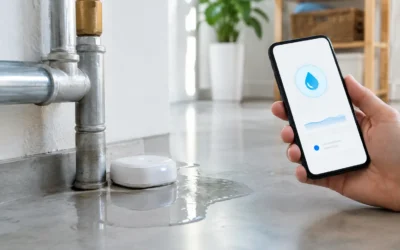
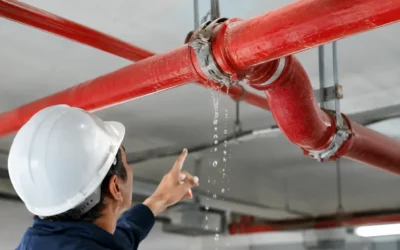
Where the immediate concern is unexplained water loss or suspected leakage, integrity testing is essential. Depending on the tank type and operating constraints, this may involve controlled filling, level monitoring, pressure testing of associated pipework, tracer gas testing, acoustic methods or thermal imaging.
A falling water level alone does not prove a tank-body leak. Evaporation, draw-off, faulty float valves, overflowing lines and leaks in buried supply or distribution pipework can produce similar symptoms. Accurate diagnosis separates the tank from its connected system before invasive repairs begin.
For operational sites, non-invasive methods are particularly valuable. They reduce the need for unnecessary excavation, limit downtime and provide a clearer repair scope. LeakDtech applies this engineering-led approach where hidden water loss requires a precise source location rather than assumptions.
Coating and lining assessment
A sound steel structure can still fail prematurely when its protective coating or lining breaks down. Internal coatings protect against corrosion and, for potable water applications, support hygiene and water-quality control. External coatings protect against weathering, splash-zone deterioration and corrosive environments.
Inspection should look for blistering, cracking, delamination, pinholes and areas where previous repairs have not bonded correctly. Dry film thickness checks and holiday testing may be appropriate where a coating system is being assessed or accepted after repair. The exact test method must suit the lining material and manufacturer requirements.
Coating defects should not be treated as cosmetic. Small failures can allow corrosion to accelerate beneath the surface, turning a manageable coating repair into steel loss and structural work.
Settlement and structural assessment
Not every tank problem originates in the tank plate. Differential settlement can distort the base, overstress connections, affect roof alignment and create low points where water or sediment accumulates. Foundations, plinths, supports and anchor bolts need inspection alongside the tank itself.
Survey measurements may be required where settlement is suspected, particularly for large above-ground tanks. Inspectors also assess dents, bulging, shell out-of-roundness, damaged supports and roof drainage. These issues can affect safe operation even where no active leak is present.
Choosing the right method for the tank and the risk
There is no universal inspection package. The correct scope depends on tank material, age, service, capacity, contents, operating pressure, previous failures and the consequence of a leak. A sectional GRP water tank in a residential tower demands a different approach from a steel fire tank or an industrial process vessel.
Inspection frequency should also reflect risk rather than habit. Tanks exposed to corrosive contents, temperature cycling, poor water quality, coastal conditions or repeated repair history usually require closer attention. For tanks supporting hospitals, hotels, malls, fire systems or critical industrial processes, planned inspections help prevent disruption that is far more expensive than the inspection itself.
Documentation matters. A useful tank inspection report records the asset details, methods used, accessible and inaccessible areas, measurements, photographs, defect locations, severity assessment and recommended actions. It should distinguish urgent safety or leakage risks from planned maintenance items, so budgets and work orders can be prioritised properly.
Warning signs that should trigger an inspection
Do not wait for visible pooling around the tank. Unexpected consumption, recurring topping-up, reduced pressure, unexplained dampness near a plant room, rusty discharge, deterioration in water quality, coating flakes, persistent odours or changes in tank level can all justify investigation.
For industrial sites, rising chemical usage, unexplained product imbalance, pump cycling, soil staining and frequent repairs to connected lines should also be treated as warning signs. The earlier the cause is confirmed, the more likely the repair can be targeted and planned around operations.
Turn inspection findings into controlled maintenance
The best inspection result is not a long defect list. It is a clear maintenance decision: monitor a minor issue, repair a defined area, renew a coating, investigate a suspected leak, or plan replacement before failure forces the timetable.
A tank is a critical part of a wider water or process system. Inspect it with the same discipline applied to pumps, pipework and controls, and small defects are far less likely to become expensive emergencies.