
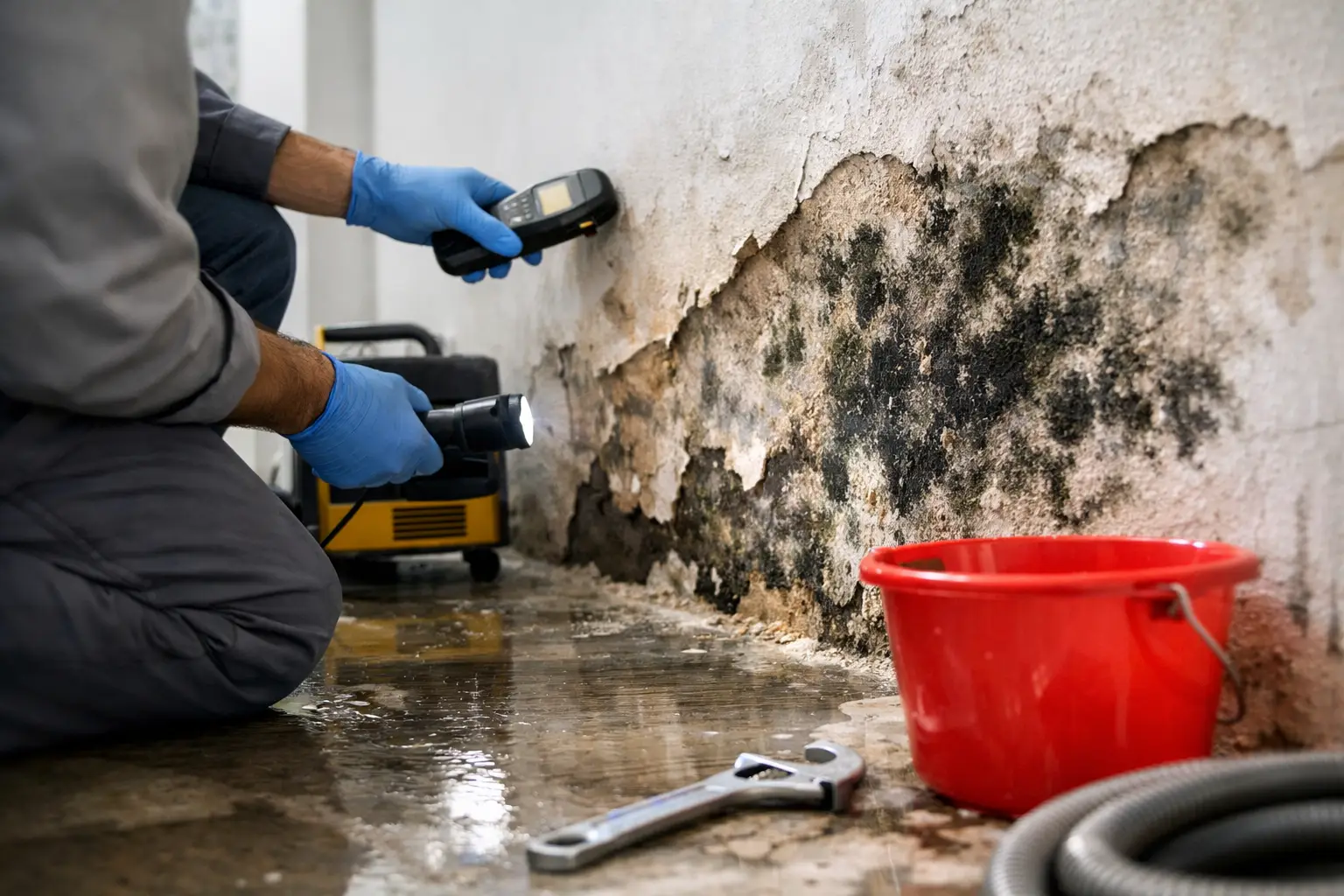
A ceiling stain that appears days after a pipe repair is not merely cosmetic. It can mean water remains trapped above the ceiling, inside wall cavities or beneath flooring – the conditions mould needs to establish itself. This mould after leak guide sets out what to do first, what can be cleaned safely, and when the property needs a technical inspection rather than another surface treatment.
The priority is not to spray mould and hope for the best. The priority is to stop the water source, dry the affected construction materials and confirm that moisture has not travelled beyond the visible mark. Missing one of these steps can turn a modest plumbing repair into repeated decoration costs, damaged finishes, tenant complaints and a much larger remediation bill.
Mould after leak guide: the first 24 to 48 hours
Once a leak is found or suspected, isolate the water supply where possible and arrange repair without delay. For a localised appliance leak, this may mean closing the appliance valve. For a concealed supply line, bathroom waterproofing failure or recurring ceiling leak, do not assume the visible water is the full extent of the problem.
Remove standing water quickly and improve air movement with appropriate ventilation and drying equipment. Open windows only where outside humidity will not make conditions worse. In Dubai, outdoor air can be very humid for long periods, so controlled mechanical drying and dehumidification are often more effective than simply leaving windows open.
Move rugs, furniture, boxes and absorbent belongings away from the affected area. Soft furnishings and timber can hold moisture long after surfaces feel dry. Photograph the damage before disposal or major cleaning, particularly in a rented property, managed building or insurance-related case.
Do not paint over staining, reinstall soaked skirting, or close a ceiling opening immediately after the leak repair. These actions can conceal moisture and allow mould to develop in a hidden void. A repair is complete only when the source is resolved and the building fabric is demonstrably dry enough for reinstatement.
Why mould can appear after the leak has been repaired
Mould spores are already present in normal indoor and outdoor environments. They become a property problem when water and organic material are available for long enough. Plasterboard paper, dust, timber, carpet backing, insulation and adhesives can all provide suitable surfaces.
A plumbing repair stops new water entering the property, but it does not remove water already absorbed by porous materials. Moisture can migrate sideways beneath tiles, behind kitchen units, through ceiling insulation or along a service duct. This is why a small visible patch may be connected to a much wider damp zone.
Condensation can also complicate diagnosis. A cold air-conditioning pipe, poorly insulated chilled-water line or inadequately ventilated bathroom may cause persistent surface moisture that resembles a leak. If mould returns after cleaning, or a stain continues to enlarge after a repair, the root cause needs to be tested rather than guessed.
For commercial sites, the stakes are higher. A hidden leak above a suspended ceiling can affect electrical services, ceiling tiles, stock, guest areas or clinical spaces. Acting early protects operational continuity and avoids an unnecessary shutdown later.
Assess the damage before choosing a cleaning method
Not every mould mark requires full-scale remediation. A small, isolated patch on a non-porous surface may be manageable after the area is fully dried and the moisture source has been corrected. The decision changes when growth is widespread, repeatedly returns, affects porous material, or follows a significant water event.
Check the surrounding area, not just the visible mould. Look for a musty odour, bubbling paint, swollen skirting, loose tiles, warped laminate, damp carpet edges and discoloured ceiling joints. These are useful indicators, but they do not confirm how much moisture remains behind finishes.
A professional moisture assessment can establish whether walls, floors and ceilings have returned to an acceptable condition. Thermal imaging can identify temperature anomalies associated with damp areas, while moisture meters help quantify the condition of building materials. Acoustic testing, tracer gas and pressure testing may be needed where the source of water remains uncertain.
This non-invasive approach matters. Breaking tiles or ceilings without evidence creates avoidable refurbishment costs and disruption. Equally, relying on visual inspection alone can leave the actual leak untouched.
Cleaning mould safely – and knowing when not to
For a very small, contained area on a hard, non-porous surface, use suitable personal protection, ventilate the space and clean according to the product instructions. Do not dry-brush mould, as this can disperse particles. Avoid mixing cleaning chemicals, particularly bleach-based products with other substances.
Porous materials are different. Plasterboard, insulation, untreated timber, carpets and heavily contaminated ceiling tiles may not be reliably recoverable if mould has penetrated them. Cleaning the face of the material may improve appearance but fail to remove contamination within it. Removal and controlled replacement can be the more dependable option.
Professional help is appropriate when any of the following applies:
- The affected area is extensive, has spread through several rooms, or returns after cleaning.
- There is an ongoing or unidentified leak, damp odour, staining or elevated moisture reading.
- Mould affects ceilings, HVAC areas, wall cavities, insulation or other concealed spaces.
- Occupants include people with respiratory sensitivities, or the building has hygiene-critical uses such as healthcare, hospitality or education.
The goal is not simply a cleaner-looking wall. It is to restore dry, stable conditions so mould cannot re-establish itself.
Drying and reinstatement: avoid the costly shortcuts
The drying period depends on the material, the volume of water, ventilation, air-conditioning performance and whether the leak was clean water, wastewater or external ingress. A minor supply leak in a tiled bathroom may dry relatively quickly once addressed. A leak that has saturated a gypsum ceiling, insulation and timber framing can require far more controlled work.
Dehumidifiers, air movers and targeted extraction can speed drying, but they must be used intelligently. Excessive heat or indiscriminate airflow can move moisture into other parts of the structure. In occupied flats, villas and offices, drying equipment also needs to be positioned with noise, access and electrical safety in mind.
Before repainting or reinstating finishes, verify that the substrate is dry. Replacing a damaged ceiling tile or repainting a wall before this point often produces a familiar result: staining reappears, paint blisters and the repair cycle starts again. Retaining moisture records and inspection findings is also sensible for landlords, facilities managers, insurers and handover or defect-liability discussions.
Preventing a repeat mould problem
Prevention begins with eliminating the original failure. That may be a leaking pipe joint, failed waterproofing membrane, damaged drain, air-conditioning condensate issue, roof penetration or irrigation line. Where a property has suffered repeat leaks, treat the pattern as evidence of a system issue rather than isolated bad luck.
Monitor areas that are difficult to inspect, including under sinks, behind washing machines, beneath air-conditioning units and above false ceilings. Investigate unexplained increases in water consumption promptly. Smart water monitoring and automatic shut-off systems can limit the duration of a supply leak, particularly in vacant villas, rental properties and premises that are unattended overnight.
Ventilation is the second part of prevention. Bathrooms, laundry spaces and kitchens need extraction that actually removes humid air, not just a fan that makes noise. Ensure condensate drains are clear and air-conditioning pipe insulation is intact. For facilities teams, planned inspections of wet areas, roofs, tanks, mechanical rooms and drainage systems reduce the chance that small defects become mould-related refurbishment projects.
When specialist leak detection is the right next step
If mould follows a leak that has supposedly been repaired, the source may still be active or moisture may remain trapped in the structure. A specialist investigation is particularly valuable where there is no obvious pipe failure, where damage keeps returning, or where opening finishes would disrupt residents, guests or operations.
LeakDtech uses non-destructive diagnostic methods to locate hidden water-related failures accurately before unnecessary demolition begins. This gives property owners and managers a clearer basis for repair, drying and reinstatement decisions – with less disruption and better control of the total cost.
Mould is a visible warning that the property has not yet returned to a dry condition. Treat that warning early, verify the source and the moisture level, and the repair can stay contained rather than becoming a recurring property problem.