
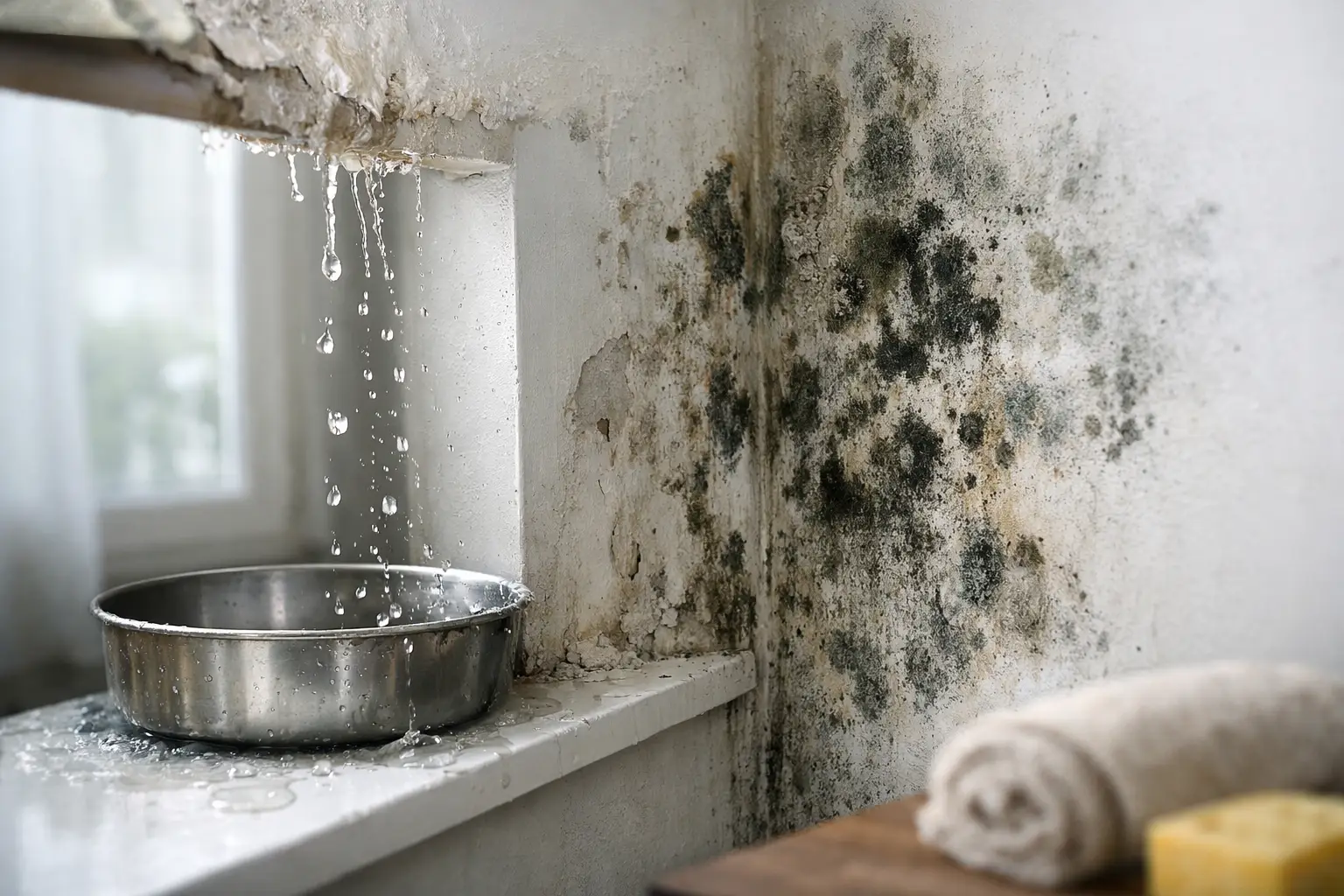
A small stain beneath a ceiling, a persistent musty smell in a wardrobe, or paint that begins to bubble can all point to the same underlying problem. Can leaks cause mould growth? Yes. Any active leak, however minor it appears, can create the sustained moisture mould needs to establish itself behind finishes, inside cavities and beneath flooring.
The visible mould is often not the starting point. It is a symptom of excess moisture that has been allowed to remain in the building fabric. The priority is therefore not simply to clean the affected surface. It is to identify the water source accurately, stop it, dry the area properly and assess whether hidden materials have been compromised.
Can leaks cause mould growth even when water is not visible?
Yes. Mould does not require a dramatic burst pipe or a flooded room. A slow leak from a concealed water line, drain connection, air-conditioning condensate pipe, roof penetration or bathroom waterproofing failure may release enough moisture to keep plasterboard, timber, insulation, grout or backing boards damp for weeks.
This is why mould can appear some distance from the actual defect. Water follows gravity, pipe routes and the path of least resistance through walls, slabs and ceilings. A patch of mould at the base of a wall may be caused by a shower leak on the other side, a leaking pipe within the wall, or moisture tracking down from an upper floor.
In Dubai properties, high humidity and heavily used cooling systems can make the diagnosis more complex. Condensation from poorly insulated chilled-water pipes or faulty AC drain lines may resemble a plumbing leak. The repair approach is different, but the mould risk is the same if moisture is not controlled.
Why mould develops after a leak
Mould spores are naturally present in indoor and outdoor air. They become a property problem when three conditions align: moisture, a food source and sufficient time. Most buildings provide the food source in the form of dust, paper facing on plasterboard, wood, carpet backing and organic residues. A leak supplies the missing ingredient.
Under favourable conditions, mould can begin to grow within 24 to 48 hours of materials becoming wet. This does not mean every wet surface will immediately show black or green spots. Growth may begin in concealed areas first, including behind skirting boards, inside vanity units, under laminate flooring or above suspended ceilings.
The degree of damage depends on the leak volume, duration, material type and ventilation. A brief, clean water spill that is dried thoroughly may leave no lasting issue. A recurring pinhole leak inside a wall is more serious because it repeatedly wets the same materials without being noticed. Porous materials can retain moisture long after the visible surface feels dry.
Common leak sources that lead to hidden mould
Bathroom and kitchen areas are frequent problem zones because they combine pressurised water supplies, drainage connections, waterproofing systems and regular steam. Failed silicone sealant alone does not always indicate a leak, but it can allow water behind finishes where it cannot evaporate easily.
Other common sources include leaking flexible hoses beneath basins, toilet cistern connections, cracked drain pipes, failed shower waterproofing, roof leaks, façade defects, overflowing AC condensate trays and irrigation lines close to external walls. In villas, underground pipe leaks can also increase moisture around foundations and external finishes, creating longer-term damp issues.
For commercial and industrial sites, the risk can extend beyond occupied rooms. Leaks in fire lines, chilled-water networks, plant rooms, process pipes and tanks can affect insulation, electrical areas, ceiling systems and adjacent operational spaces. What begins as a small pressure loss can become a costly remediation project if the moisture source remains active.
Mould removal without leak repair is a false economy
Cleaning visible mould can improve appearance temporarily, but it cannot solve an active moisture problem. If water is still entering the structure, mould is likely to return, often in the same location or a nearby concealed area. Repainting over stains without addressing the source can also trap moisture and delay a proper diagnosis.
The right sequence is straightforward: locate the source, complete the repair, dry the affected materials, remove or treat contaminated finishes as appropriate, then restore the area. Skipping the first step is where unnecessary costs begin.
There are trade-offs. Opening walls immediately may expose the problem but can cause avoidable damage if the leak location is uncertain. Conversely, waiting too long because the issue appears minor allows moisture to spread. Non-invasive testing methods help reduce this uncertainty by narrowing down the source before demolition is considered.
Thermal imaging can identify abnormal temperature patterns associated with moisture or active water movement. Acoustic equipment can detect the sound signature of pressurised leaks. Pressure testing, moisture measurement, tracer gas and targeted inspection may be used depending on the pipe material, construction type and suspected source. No single method suits every building, which is why a structured diagnosis matters.
Signs that a leak may be feeding mould growth
A mould problem should be investigated as a potential leak issue when it is persistent, localised or accompanied by other water-related symptoms. Warning signs include a musty odour, recurring discolouration after cleaning, peeling paint, swollen skirting boards, warped flooring, soft plaster, unexplained increases in water consumption or a drop in water pressure.
Pay attention to timing as well. Mould that worsens after showers, irrigation cycles, rain or AC operation can provide useful clues. A ceiling stain that expands when an upstairs bathroom is used is unlikely to be a simple cosmetic defect. Similarly, a patch below a fan-coil unit that returns after servicing may indicate a drainage, insulation or condensate management issue.
For landlords, community managers and facilities teams, repeated tenant complaints about odour or wall staining should be logged and investigated early. A small maintenance visit is considerably less disruptive than replacing damaged finishes, relocating occupants or responding to an insurance claim.
What to do when you find mould near a suspected leak
First, reduce further water exposure where it is safe to do so. Isolate the local water supply if a plumbing leak is suspected, stop using the affected shower or appliance, and protect nearby belongings. If water is close to electrical fittings, do not attempt a repair yourself. Isolate the area and arrange qualified assistance.
Avoid relying on fragrance products or a quick coat of paint. They can mask the signs that are needed to diagnose the issue and do nothing to reduce moisture. Photographs of staining, meter readings and notes on when the problem appears can help establish a pattern, especially for intermittent leaks.
Next, arrange a targeted inspection. The objective is to distinguish between a supply leak, drainage failure, waterproofing defect, roof or façade ingress, condensation issue or humidity-related surface mould. Each has different repair requirements and different implications for responsibility, insurance and future maintenance.
Once the water source is controlled, drying must be verified rather than assumed. Ventilation may be sufficient for a small, accessible area, but enclosed cavities and saturated porous materials can require professional drying, removal or treatment. A moisture assessment before reinstatement helps prevent finishing work over a damp substrate.
Protecting health, assets and operating continuity
Mould affects more than appearance. It can create unpleasant odours, damage finishes and furnishings, lower tenant confidence and complicate refurbishment schedules. People with asthma, allergies or respiratory sensitivities may be more affected by damp and mouldy environments, particularly where contamination is extensive or ventilation is poor.
For businesses, the commercial impact can be substantial. Hospitality operators need rooms returned to service quickly. Schools, healthcare facilities and offices need to protect occupied spaces. Industrial operators need to avoid water damage that threatens equipment, safety systems or production continuity. Fast, evidence-based leak diagnosis reduces the likelihood of broad demolition, repeated contractor visits and extended downtime.
LeakDtech approaches mould-related water damage from the source outward. Accurate leak detection and documented findings give property owners and managers a clearer basis for repair decisions, insurance discussions and preventive maintenance planning.
A mould patch is rarely asking for a better cleaning product. It is asking for the moisture problem behind it to be found and resolved before a small hidden failure becomes a larger property repair.