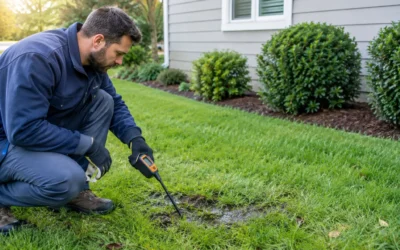
A villa can look perfectly dry while losing thousands of litres a day behind a wall, beneath a landscaped garden or through a toilet cistern that never stops refilling. For landlords, that is not a minor maintenance issue. It can mean a high DEWA bill, damaged finishes, tenant disruption, an insurance dispute and a repair that becomes more expensive with every day it is missed.
Landlord water monitoring gives property owners earlier warning of abnormal water use, pressure changes and continuous flow. Used properly, it changes water management from a reactive call-out after damage appears into a controlled process that protects the asset, the tenancy and the operating budget.
Why landlords need visibility between inspections
Periodic property inspections still matter, but they cannot reveal what happens at 2am in an unoccupied flat or during a tenant’s working week. Many leaks begin quietly: a failed flexible hose under a basin, a leaking irrigation valve, a concealed pipe joint, a malfunctioning water heater relief valve or a toilet fill mechanism. By the time damp patches emerge, water may already have travelled through ceilings, partitions and flooring.
The financial exposure is broader than the water bill. A leak can require ceiling replacement in the property below, mould treatment, tenant relocation, lost rental income and repeated finishing works. In managed buildings, it can also trigger disagreement over whether the source sits within the landlord’s property, a common riser or a shared system.
Monitoring provides a timeline. It shows when consumption changed, whether flow continued outside normal occupancy hours and whether an isolation event stopped the issue. That evidence helps maintenance teams act quickly and gives landlords a more defensible record when discussing responsibility with tenants, building management or insurers.
What landlord water monitoring should actually measure
A useful system does more than display a monthly consumption total. Monthly meter readings are too late for an active leak. The objective is to identify patterns that do not match normal use and turn them into an actionable alert.
At a minimum, monitoring should track water flow and pressure at regular intervals. Continuous low-level flow during periods when a property should be quiet is often the first warning sign. A sudden, sustained rise in flow may indicate a burst pipe, failed hose or open irrigation line. Pressure behaviour can add further context, particularly where fluctuating supply pressure or a pressure-reducing valve fault may be contributing to repeated failures.
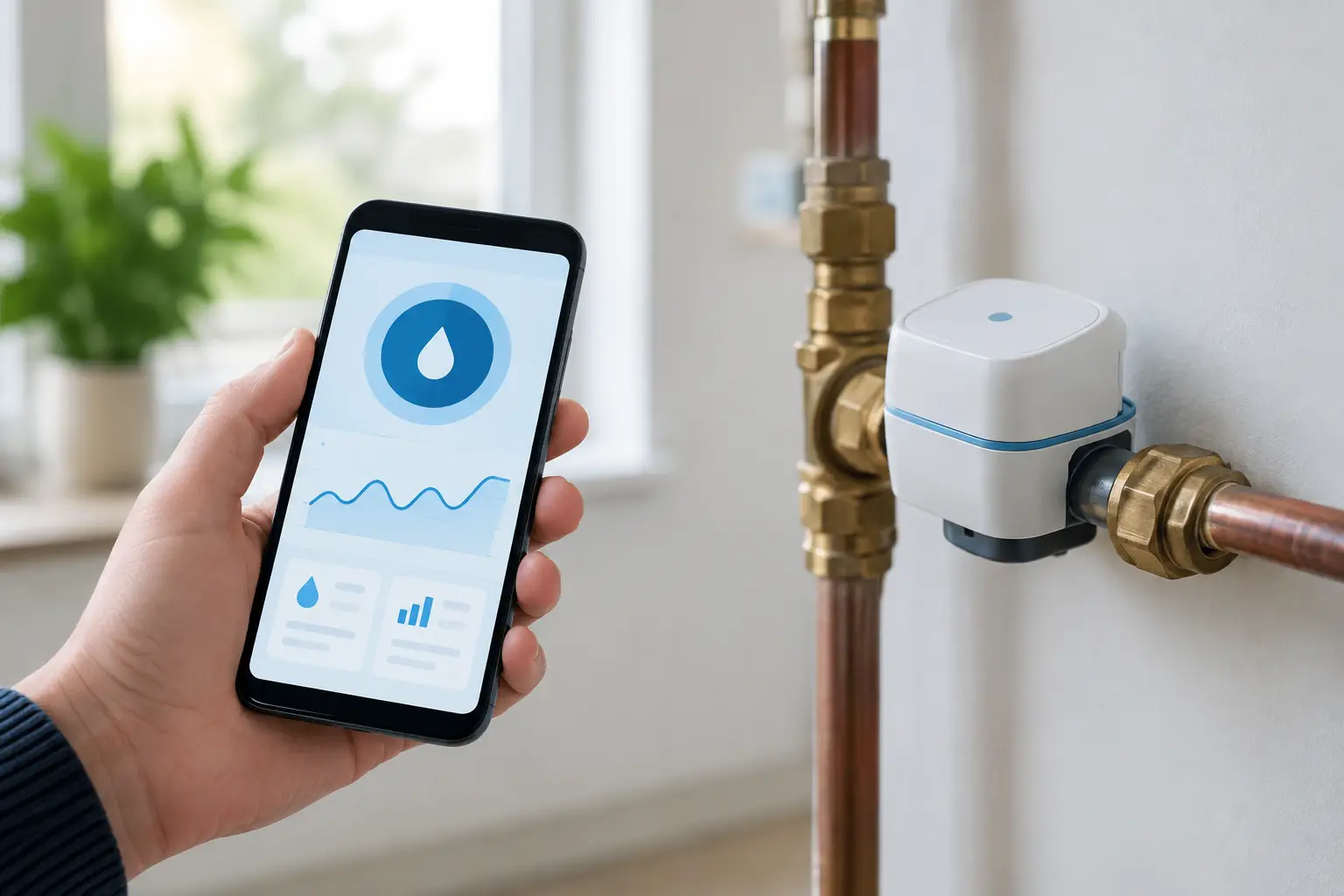
For a single villa, a smart water valve fitted close to the incoming supply can be highly effective. It monitors activity around the clock and, when configured correctly, can alert the landlord remotely or shut off the supply automatically if it detects a serious event. AquaSentra Smart Water Management is one example of this approach, combining flow and pressure monitoring with remote control and automatic shut-off capability.
For blocks, hotels, schools or commercial portfolios, the arrangement may need to be more layered. Main meter monitoring identifies whole-building anomalies, while submeters or zone meters help isolate whether the issue is linked to irrigation, staff accommodation, a plant room, a particular floor or an individual unit. The right level of detail depends on the size of the property, occupancy pattern and cost of disruption.
Alerts must be useful, not constant
Poorly configured alerts quickly get ignored. A system that treats every night-time toilet flush as an emergency is not protecting the property; it is creating alert fatigue.
Thresholds should reflect the site. An occupied family villa has a different normal water profile from an empty investment property, a holiday home, a retail unit or a building with automated irrigation. Set separate rules for continuous flow, unusually high volume, pressure loss and extended usage. Review the first few weeks of data and adjust the parameters based on actual occupancy and equipment behaviour.
Automatic shut-off also needs thought. It can prevent major flooding, but a valve should not close without considering critical supplies. Fire systems, specialist plant, pools, irrigation requirements and occupied properties may require zoned protection, a delayed response or a confirmation process. The goal is fast risk control without causing an avoidable operational problem.
Monitoring is not the same as leak diagnosis
A water monitoring system can tell you that something has changed. It cannot always tell you precisely where the failure is or whether the cause is a leak, unusual use or a fault in connected equipment.
That distinction matters. Continuous flow could be a concealed pipe leak, but it could also be an overflowing tank, a failed flush valve, a pool top-up issue or irrigation running outside its programme. Switching off water without diagnosis may limit damage, yet it does not resolve the underlying defect.
When abnormal consumption persists, the next step is targeted investigation. A competent leak detection team can combine pressure testing, acoustic leak detection, thermal imaging, tracer gas testing and non-invasive inspection methods to locate the source with minimal demolition. For a landlord, this is usually far more cost-effective than authorising exploratory breaking across tiled bathrooms, landscaped areas or occupied rooms.
The monitoring data improves that diagnostic process. It can show whether the event is constant or intermittent, when it started, how it responds to isolation and whether it affects a specific zone. This helps the investigation begin with evidence rather than assumption.
A practical rollout for rental properties
Start by separating properties according to risk, not simply by size. A recently refurbished studio with accessible pipework may be lower priority than an older villa with concealed services, expensive finishes, a history of high bills and long periods of vacancy. Properties with irrigation, pools, water heaters, multiple bathrooms or tenants below should also rank higher.
Then establish a baseline. Record normal daily consumption, known irrigation schedules, occupancy levels and any recurring maintenance issues. Without a baseline, an alert has no meaningful context. A short period of observation will usually reveal whether a property has predictable low-use hours and what level of consumption deserves investigation.
Assign ownership before installing technology. Decide who receives alerts, who can authorise shut-off, who contacts the tenant, and who attends site if the issue cannot be resolved remotely. For professional portfolios, this may sit with a facilities manager during working hours and an emergency maintenance provider outside them. Delays usually arise not because no one saw the alert, but because no one knew who was responsible for acting on it.
Finally, document every event. Keep alert records, photographs, maintenance reports, water bills and repair findings together. Over time, this creates a property history that identifies repeat defects, weak workmanship and equipment approaching failure. It also supports better budgeting for replacement work rather than repeated temporary repairs.
Tenant communication protects the relationship
Water monitoring should be framed as asset protection and service improvement, not surveillance. Landlords should explain what is being monitored, why it is installed and what may happen if an abnormal event is detected. In most cases, the system is monitoring water behaviour at the incoming supply, not tracking a tenant’s personal routines.
Clear communication matters when remote shut-off is possible. Tenants need to know who to call, how they will be contacted and what to do if water is isolated. If the property is occupied, a sensible response plan may begin with a notification and a request to check obvious causes before escalating to automatic shut-off, unless flow suggests an immediate flood risk.
This approach prevents misunderstandings and makes tenants more likely to report early warning signs such as a constantly running toilet, reduced water pressure or unexplained dampness.
Where monitoring delivers the strongest return
The strongest return usually comes from preventing one major incident rather than shaving a small amount from routine consumption. A hidden leak beneath a villa floor or a burst connection above a fitted kitchen can easily cost more than the monitoring equipment, installation and response process combined.
It is particularly valuable for vacant properties, high-value villas, multi-unit portfolios and homes with a previous leak history. It also suits landlords who live abroad or manage properties through agents, where a small problem can remain unseen for days. In Dubai, where high utility bills and heat-related strain on external systems can expose water issues quickly, remote visibility is a practical safeguard rather than a luxury.
Water monitoring does not eliminate the need for inspections, quality repairs or professional leak detection. It gives landlords the evidence and speed to use those services before water becomes damage. The most effective next step is simple: identify the property where an undetected leak would hurt most, establish its normal water pattern and put a response plan in place before the next alert arrives.