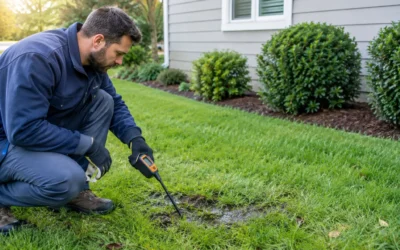
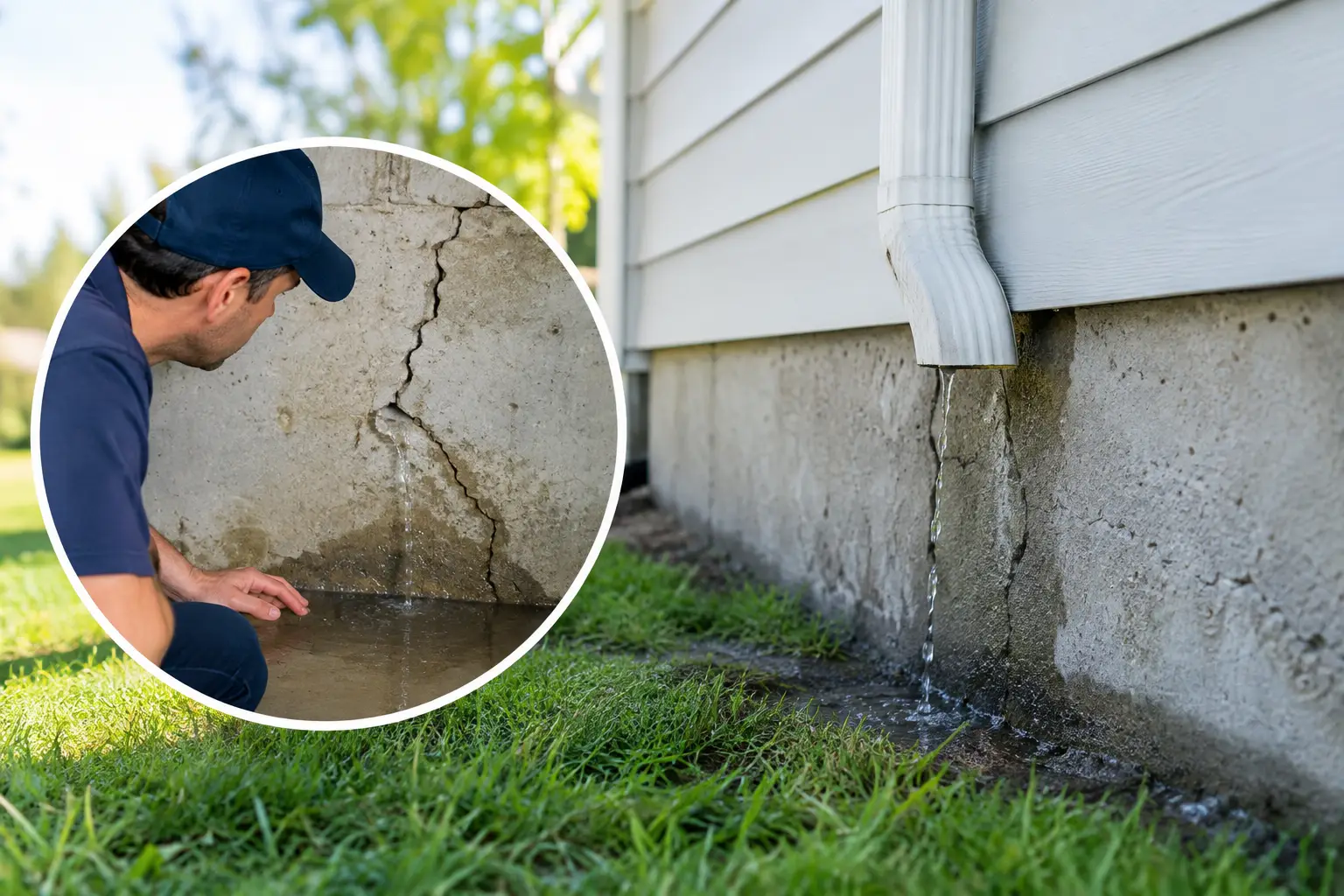
A concealed pipe leak can run for months beneath a villa, corridor or plant room without leaving a dramatic puddle. Meanwhile, water may be changing the soil conditions that support the structure above it. So, can hidden leaks damage foundations? Yes – particularly when the leak is persistent, close to the building, and allowed to saturate or wash away supporting ground.
The risk is not always an immediate structural emergency. Foundations are designed for specific ground conditions, and a small leak will not automatically cause failure. But undetected water can turn a manageable plumbing fault into settlement, cracking, mould, damaged finishes and major excavation costs. Early, accurate diagnosis is the difference.
How hidden water leaks affect foundations
The most common mechanism is not water simply “eating” concrete. It is movement in the soil around and beneath the foundation. Escaping water from a pressurised supply pipe, irrigation line, swimming pool system, drainage connection or underground tank can saturate the ground continuously. Depending on the soil type and the volume of water, this can reduce its bearing capacity or create voids as fine material is carried away.
In granular or sandy soils, prolonged leakage can cause local erosion beneath slabs, paving and foundation edges. In clay-rich ground, repeated wetting and drying can lead to expansion and shrinkage. Either situation may result in differential settlement, where one area of a structure moves more than another. That uneven movement is what produces stepped cracks in masonry, sticking doors, uneven floors and separation around window frames.
Dubai properties present their own set of variables. Sandy ground, high water use for irrigation, swimming pools and landscaped areas, plus buried service lines, can make leaks difficult to spot before secondary damage appears. Groundwater conditions, construction methods and nearby works also affect the level of risk. A professional assessment should establish the cause before anyone assumes a visible crack is solely a foundation problem.
Can hidden leaks damage foundations even without visible water?
Yes. A leak does not need to surface to cause concern. Water often follows the easiest path through backfill, service trenches, drainage channels or cracks in surrounding material. It may travel away from the original pipe failure and emerge in a garden, below external paving or inside a neighbouring area.
This is why a dry floor or dry wall does not rule out an underground leak. A rising water bill, unexplained pressure loss, a pump that cycles too often, damp soil in one area or unusually lush landscaping can be more useful warning signs than a visible stain.
For commercial facilities, the indicators may be operational rather than cosmetic. These include unexplained water consumption, recurrent drainage issues, moisture in service corridors, corrosion around pipework supports, or a repeated need to top up tanks and closed systems. In industrial settings, any suspected leak near structural bases, bunds, tanks or process lines requires prompt technical investigation because the consequences can extend beyond building damage.
Warning signs that should not be ignored
Foundation movement has several possible causes, including poor drainage, soil compaction, tree roots, construction defects and nearby excavation. However, the following signs warrant a leak investigation, especially when they appear together or worsen over time:
- New diagonal or stepped cracks in blockwork, render or internal walls
- Gaps opening around doors, windows, skirting or built-in joinery
- Floors that feel uneven, tiles cracking or paving sinking in isolated areas
- Persistent damp, mould growth or a musty smell with no obvious source
- Soft ground, sunken landscaping or unexplained pooling near the building perimeter
- Higher water bills, falling pressure or continuously running pumps
A crack alone does not prove that a hidden leak is the cause. Equally, repainting a crack without investigating moisture and movement can conceal a developing problem. The priority is to identify whether water is escaping, where it is travelling and whether the surrounding ground has been affected.
The difference between a leak and a drainage problem
Not all water around a foundation comes from a leaking pipe. Failed waterproofing, blocked roof outlets, poor site grading, overflowing AC condensate drains and damaged surface drainage can all direct water towards a building. The remedy depends on the source.
A pressurised water leak tends to be continuous or linked to usage, and it may cause a measurable loss of pressure or elevated consumption. A drainage leak may become more apparent when bathrooms, kitchens or roof drains are in use. Rain-related ingress follows a different pattern again. Treating every wet area as a plumbing leak can lead to unnecessary repairs; treating every issue as surface water can leave an active buried leak running unchecked.
This is where non-invasive testing has a clear advantage. Rather than breaking floors, walls or external paving based on assumptions, specialists can combine pressure testing, acoustic detection, thermal imaging, tracer gas and moisture assessment to narrow down the fault location. The appropriate method depends on pipe material, depth, access, operating conditions and the type of system being tested.
Why fast detection protects more than the structure
The financial impact of a hidden leak rarely stops at the pipe repair. Once water has affected soil, finishes or electrical zones, the scope can include reinstatement, waterproofing, drainage corrections, crack repairs, mould treatment and landscape restoration. For landlords, community managers and hospitality operators, there is also disruption to occupants and the risk of repeat complaints.
For a villa owner, fast detection can prevent a small underground supply leak from becoming a costly external works project. For a facilities manager, it can protect business continuity by avoiding unnecessary shutdowns and targeted repair access. For developers and asset owners, documented testing helps establish the condition of water systems and supports decisions during defect liability, handover and maintenance planning.
The trade-off is straightforward: investigative testing has a cost, but blind demolition, repeated patch repairs and delayed action usually cost more. The right approach is proportionate. A minor, quickly repaired leak with no sign of ground movement may need monitoring and local reinstatement. A persistent leak near a load-bearing wall, slab edge, retaining structure or tank base may justify a broader assessment by a qualified structural or geotechnical professional after the leak has been located and stopped.
What to do if you suspect a leak near your foundation
Start by limiting further water release where it is safe to do so. If a supply leak is suspected, isolate the relevant line or turn off the main water supply if necessary. Do not excavate beside foundations, remove supporting soil or repeatedly inject sealants into an unknown void. These actions can complicate diagnosis and increase the risk of damage.
Arrange a targeted leak inspection that can confirm whether the system is losing water and locate the likely failure without unnecessary demolition. Ask for clear findings: the tested system, test results, probable leak position, recommended repair access and any evidence that water has affected surrounding materials or ground.
After repair, verify that the loss has stopped. Pressure testing, meter monitoring or follow-up inspection may be appropriate depending on the system. If cracking, settlement or voiding is present, involve a structural professional to assess the building independently. Repairing the pipe is essential, but it does not automatically reverse movement that has already occurred.
LeakDtech approaches these cases with the precision they require: establish the source, locate it accurately, minimise disruption and provide information that supports the correct repair decision. A hidden leak is easiest to resolve before it becomes a ground-condition problem. If water use, pressure, dampness or movement does not make sense, investigate the cause now rather than waiting for the next crack to appear.