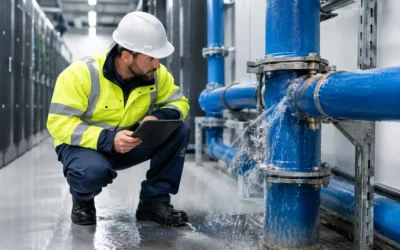
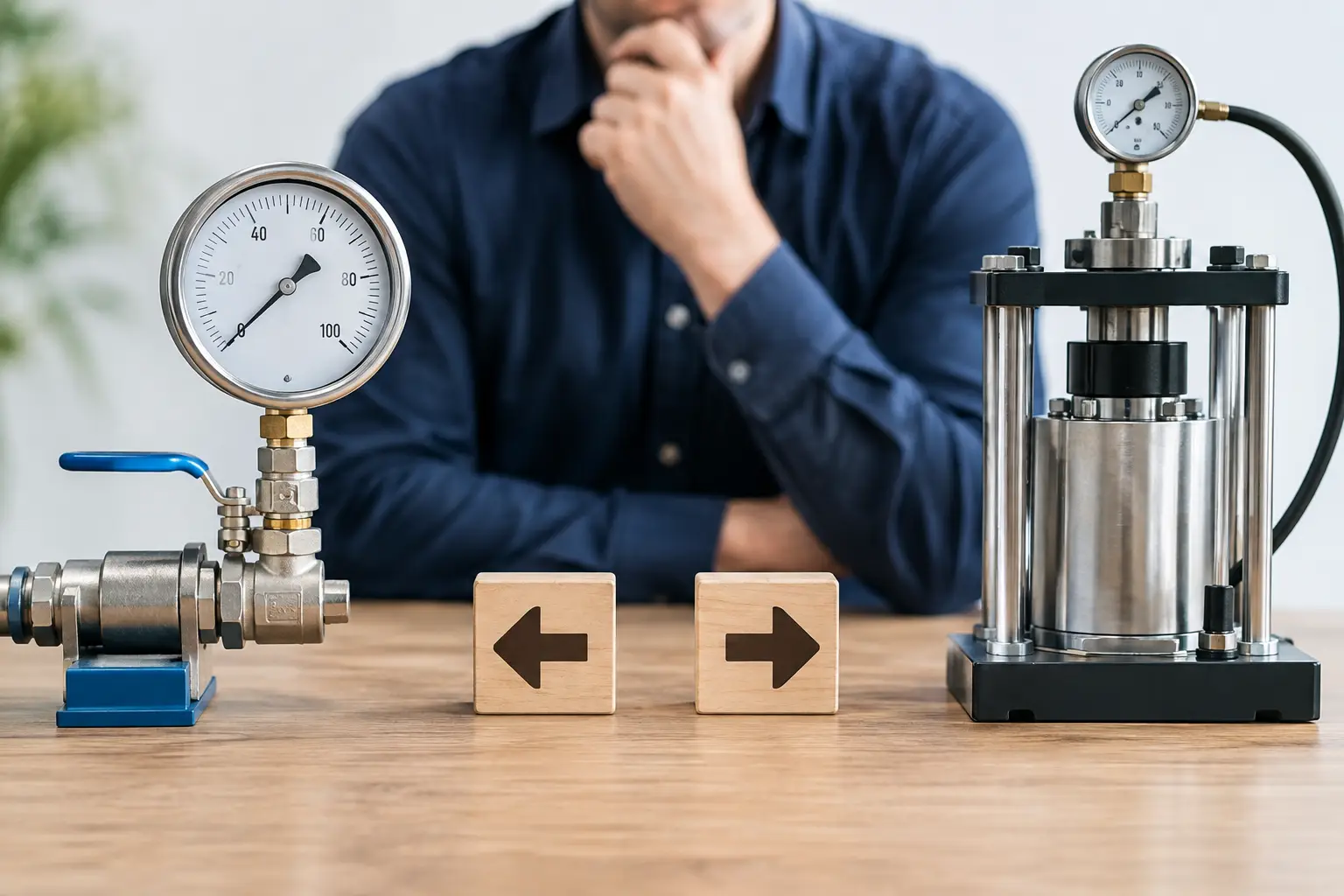
A pressure testing comparison is not simply a choice between filling a line with water or air. The test medium, target pressure, stabilisation period and acceptance criteria determine whether the result provides real evidence or a false sense of security. For a villa water network, fire line, chilled-water circuit or industrial process pipe, selecting the wrong method can mean missed defects, unnecessary shutdowns and expensive repeat work.
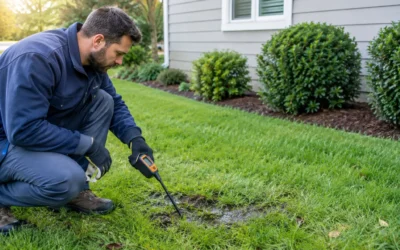
Pressure testing establishes whether a sealed system can hold a defined pressure for a defined period. It does not always identify the precise location of a leak. That distinction matters. A failed test confirms a loss of integrity; targeted leak detection methods such as acoustic testing, thermal imaging or tracer gas may then be needed to locate the fault without opening floors, walls or ceilings.
Pressure Testing Comparison by Test Method
The most useful comparison starts with the system itself: what it carries, its normal operating pressure, the consequences of a failure and whether water can safely enter it. Hydrostatic and pneumatic tests are the main methods, while pressure-decay testing is often used for smaller or sensitive sealed systems.
Hydrostatic pressure testing
Hydrostatic testing uses water to pressurise a pipe, vessel, tank or network above its normal working pressure. Because water is largely incompressible, it stores comparatively little energy under pressure. This makes hydrostatic testing the preferred option for many water supply lines, irrigation networks, tanks, fire-fighting pipework and newly installed plumbing systems.
A technician fills and vents the system carefully, raises it to the specified pressure, allows for temperature and material stabilisation, then monitors pressure over the agreed test duration. Visible seepage at joints, valves, fittings and welds should also be inspected. A pressure drop may indicate leakage, but only after allowing for factors such as trapped air, temperature changes and pipe expansion.
Its main advantage is safety. If a component fails, the release is generally less violent than a compressed-air failure. It can also reveal obvious wet leaks directly, which is useful before finishes are reinstated or handover documentation is signed off.
The trade-off is practical. Filling, draining and drying a large system takes time. Water may be unsuitable in systems at risk of freezing, systems that must remain dry, certain gas networks, electrical-adjacent installations or process lines where contamination cannot be tolerated. In Dubai, water disposal, access constraints and protecting finished interiors can also affect the programme.
Pneumatic pressure testing
Pneumatic testing uses compressed air or an inert gas, commonly nitrogen, to pressurise a system. It is often selected where introducing water would damage equipment, contaminate the process, create corrosion concerns or make drainage impractical. It can be appropriate for selected gas lines, dry pipe systems, refrigerant-related applications and certain industrial pipework.
The benefit is speed of preparation. There is no filling or draining process, and small leaks can sometimes be easier to detect using approved leak-detection fluid, ultrasonic equipment or gas-specific instruments. For systems that must remain dry, pneumatic testing may be the only realistic method.
However, compressed gas stores significant energy. A sudden rupture can release forcefully, putting people, equipment and nearby property at risk. For that reason, pneumatic testing requires stricter planning: an exclusion zone, controlled pressure increments, calibrated instruments, competent personnel and a documented test procedure. The test pressure may also need to be lower than a comparable hydrostatic test, depending on the applicable code and engineering assessment.
Pneumatic testing should never be treated as the quicker default. It is a controlled engineering activity best used where its advantages clearly outweigh the increased risk.
Pressure-decay testing
Pressure-decay testing measures the reduction in pressure over time within a closed system. It can use air, nitrogen or another suitable medium and is commonly applied to smaller-volume lines, sealed assemblies, drainage sections, appliance connections and purpose-built test zones.
This method can be highly sensitive, but sensitivity is not the same as certainty. Ambient temperature shifts, hose movement, regulator creep, trapped air and the natural settling of flexible materials can all affect readings. A test must therefore include a stabilisation period and defined pass/fail limits rather than relying on a quick gauge check.
Pressure-decay testing is particularly useful where a simple answer is needed: does this isolated section remain tight? It is less useful when the asset owner needs to know exactly where a failure sits across a long buried or concealed network. In that case, a failed pressure-decay result should trigger a location strategy rather than guesswork and demolition.
What Each Test Can and Cannot Prove
A passing pressure test supports the integrity of the tested section under the stated conditions. It does not guarantee that every intermittent defect has been eliminated. Some leaks only appear with heat, vibration, flow demand, valve operation or pressure cycling. Others occur on a branch that was not included in the isolated test area.
Likewise, a failed test is not automatically evidence of a broken pipe. A poor isolation valve, leaking test connection, unsealed outlet, temperature variation or trapped air can produce misleading results. This is why competent testing starts with defining boundaries, isolating correctly and verifying the test set-up before reporting a failure.
For property managers and developers, the practical question is often whether the test is suitable for handover, defect liability period investigations or insurance evidence. A useful report should state the system tested, medium used, test pressure, test duration, gauge details, ambient conditions, observed losses and any limitations. A statement saying only “pressure test failed” leaves too much room for dispute.
Choosing the Right Method for the Asset
For potable water, irrigation and fire-water pipework, hydrostatic testing is usually the first choice because it closely reflects service conditions and manages stored-energy risk. For dry, gas or contamination-sensitive systems, a carefully controlled pneumatic test may be justified. Where a localised section requires a sensitive tightness check, pressure decay can be effective, provided the readings are stabilised and interpreted properly.
The decision also depends on access and consequences. Testing a newly installed pipe before tiling is straightforward compared with testing an occupied hotel, hospital or operating industrial facility. In live environments, the best method is often the one that produces dependable evidence with the least interruption. That may mean sectional isolation, out-of-hours testing or combining a pressure test with non-invasive leak location methods.
For example, a villa owner with an unexplained increase in DEWA consumption may benefit from isolating the incoming water network and carrying out controlled pressure testing. If the network cannot hold pressure, acoustic or tracer gas techniques can then narrow down the source beneath landscaping, screed or tiled areas. Pressurising the entire property without a location plan may confirm the problem while doing little to reduce repair costs.
For industrial operators, the stakes are higher. Pressure testing must account for line classification, operating history, corrosion risk, process compatibility, shutdown windows and site safety rules. A test that is technically valid but disrupts production unnecessarily can still be commercially costly.
Why Test Conditions Matter More Than the Gauge
A gauge is only one part of the evidence. Temperature has a direct effect on pressure, especially in pneumatic tests. Water-filled plastic pipework can expand during initial pressurisation. Entrapped air can compress, then gradually dissolve or redistribute. Even sunlight on an exposed pipe section can alter readings enough to create confusion.
That is why reliable testing follows a sequence: inspect the section, isolate it, fill or pressurise it correctly, remove air where required, allow it to stabilise, monitor it with calibrated equipment and document the outcome. The allowable pressure loss and duration should be based on the applicable specification, system material and project requirements, not a generic rule applied to every asset.
Where failure is confirmed, avoid the temptation to start breaking finishes immediately. The next step should be a targeted diagnosis that identifies the leak source and separates it from non-leak defects such as faulty valves, failed waterproofing or drainage issues.
When a Combined Testing Strategy Saves Money
Pressure testing and leak detection work best together. Pressure testing verifies integrity and helps establish which zone is affected. Non-destructive investigation then locates the defect with greater precision. This approach reduces speculative excavation, limits reinstatement work and gives stakeholders a clearer basis for repair decisions.
LeakDtech applies this principle across residential, commercial and industrial assets: test the correct system under controlled conditions, then use the appropriate diagnostic method to identify the cause. It is particularly valuable where previous contractors have repaired symptoms without proving the original failure.
The right test is the one that answers the real operational question. Whether that is proving a new line before handover, finding the cause of a high water bill or protecting a critical process network, clear test boundaries and disciplined interpretation will always cost less than repeated repairs based on assumptions.