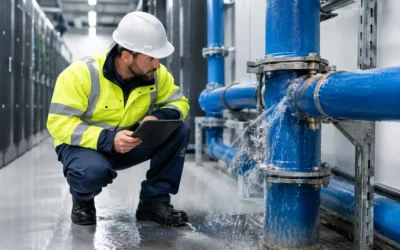
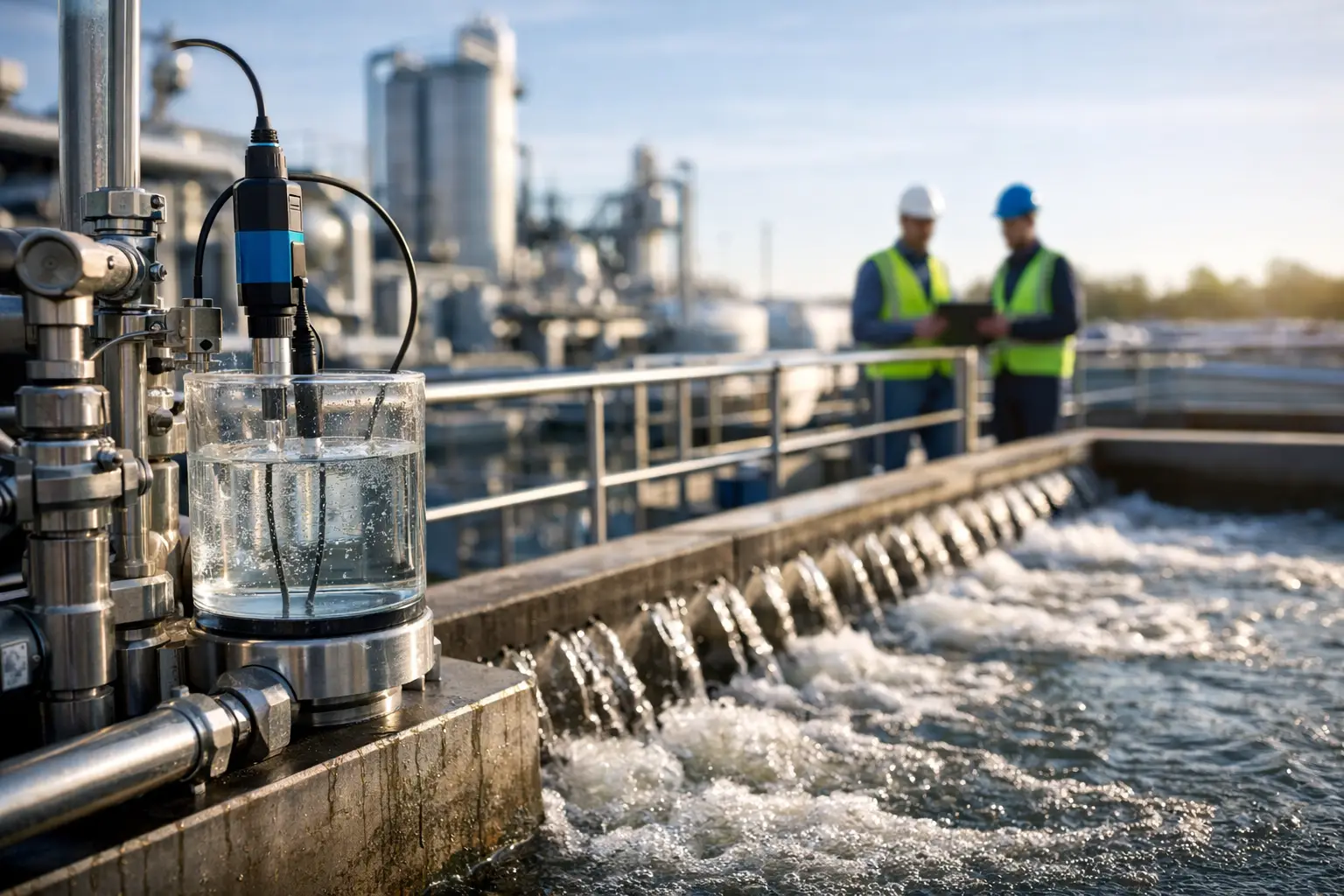
A small pressure loss on a process line can become a shutdown, a contaminated area, damaged equipment or an expensive insurance claim long before it becomes visible. The most consequential industrial water safety trends are therefore moving prevention closer to the point of failure: detecting abnormal conditions early, proving system integrity and responding before water compromises people, assets or production.
For industrial operators, safety is not limited to potable water quality or emergency spill response. It includes the condition of fire networks, chilled-water circuits, tanks, drainage, cooling systems, buried pipework and process infrastructure. Each system has different risks, but all require evidence-based maintenance rather than assumptions based on age, appearance or a single meter reading.
Industrial water safety trends are becoming predictive
The traditional approach has been reactive. A facility notices rising consumption, an operator finds standing water, or a pressure drop triggers an urgent call-out. That model leaves too much time for damage to develop, particularly where pipework runs beneath slabs, behind plant, inside shafts or across live operational areas.
The shift is towards continuous condition awareness. Smart flow and pressure monitoring can establish what normal demand looks like for a site, zone or individual asset. When overnight flow rises unexpectedly, pressure cycles become irregular or a valve repeatedly compensates for loss, the maintenance team has an actionable warning rather than a vague suspicion.
This does not mean every industrial site needs to replace its control infrastructure with a fully connected platform. The right level of monitoring depends on process criticality, site size, water cost, shutdown consequences and the accessibility of the network. A logistics warehouse may benefit from monitored main isolation and targeted sub-metering, while a hospital, hotel, plant room or petrochemical operation may need zoned monitoring, alarm escalation and documented investigation procedures.
The commercial value is clear. Early alerts reduce water waste, but the greater saving is often avoided disruption: no flooded electrical room, no emergency excavation, no damaged stock and no rushed repair undertaken during production hours.
Data only helps when it leads to diagnosis
A dashboard cannot identify whether a loss is caused by a leaking valve, failed joint, underground pipe defect or a legitimate change in demand. Monitoring should be paired with a diagnostic response plan.
When an alert occurs, teams need to isolate the affected zone where safe to do so, verify pressure behaviour and investigate with suitable non-invasive methods. Acoustic detection, thermal imaging, tracer gas testing and pressure testing each have a role. The method must fit the pipe material, depth, operating conditions, surrounding environment and suspected leak size. Using the wrong method can produce inconclusive results and prolong downtime.
Non-destructive testing is replacing unnecessary demolition
One of the strongest operational trends is the move away from exploratory demolition. Opening floors, walls or trenches based on guesswork adds cost and can introduce new defects, particularly in occupied facilities or controlled industrial areas.
Non-destructive testing allows investigators to narrow the source before repair work begins. Acoustic equipment can identify leak noise on pressurised pipework. Thermal imaging can reveal temperature anomalies around chilled-water lines, moisture migration or insulation failures. Tracer gas testing is valuable where other methods are limited by depth, noise or construction materials. Pressure testing confirms whether a closed section is holding integrity.
No single technique is universally reliable. Acoustic testing can be affected by high ambient machinery noise, plastic pipework and complex networks. Thermal imaging identifies surface temperature patterns, not water itself, so results need skilled interpretation. Tracer gas requires controlled testing conditions and careful access planning. A competent investigation uses the evidence from several methods to reach a defensible repair location.
This approach protects operational continuity. Instead of closing a large section of a facility or removing finishes across several rooms, the repair scope can be limited to the point supported by test results. For facilities managers, that means cleaner work areas, fewer reinstatement costs and a better record for owners, insurers and compliance teams.
Water containment is receiving the same attention as supply
Leak prevention is only one side of industrial water safety. Sites are also reassessing what happens when a failure occurs. A sound containment strategy limits the spread of water, contaminated liquid or fire-system discharge while allowing operators to act safely.
Attention is increasing around tank integrity, bunds, drainage capacity, backflow protection, isolation points and water-tightness at plant-room thresholds. In many older facilities, these features exist but have not been tested under realistic conditions. Drains may be partially blocked, floor falls may direct water towards sensitive equipment, and isolation valves may be inaccessible or seized.
Annual inspections and planned testing turn those unknowns into manageable work. For tanks, this can include visual inspection, level behaviour checks, condition assessment of joints and penetrations, and targeted integrity testing. For drainage, cleaning alone is not enough; teams should confirm flow performance, identify recurring blockage causes and check whether water is being directed to the correct discharge point.
Fire lines need a separate risk mindset
Fire-water networks are designed to remain ready for an event that may never occur. That makes hidden leaks and pressure losses especially dangerous: a system can appear untouched while its reliability steadily declines.
Routine checks should focus on pressure stability, valve condition, accessible signs of corrosion, unauthorised modifications and the integrity of connected pipework. Any unexplained refill cycle, pressure decay or persistent moisture around a fire line warrants prompt technical investigation. Delaying diagnosis to avoid disruption can create a much larger safety and compliance exposure.
Compliance is shifting towards proof, not paperwork
Industrial operators are under increasing pressure to demonstrate that systems are maintained, not merely scheduled for maintenance. A checklist without readings, photographs, test results or clear remedial actions provides limited protection after an incident.
The stronger standard is traceability. A useful water safety record identifies the asset inspected, its location, the method used, the observed condition, measured results, defects found, repair recommendations and the date for reinspection. This matters for internal governance, insurance discussions, handovers and defect-liability investigations.
For developers and asset owners, this documentation is particularly valuable before practical completion, during DLP periods and ahead of major refurbishment. Water-tightness failures can be expensive to dispute once ceilings are closed, equipment is installed or tenants are operational. Independent inspection and testing help identify defects while responsibility and access are still clear.
What site teams should prioritise now
The most effective programmes do not begin with a large technology purchase. They begin by ranking systems according to consequence. A minor irrigation leak and a loss on a critical chilled-water main should not receive the same response timeline.
Start by identifying where water failure would stop operations, create safety exposure, damage high-value equipment or affect regulatory obligations. Then establish baselines for pressure and consumption, confirm isolation points and arrange targeted integrity testing for high-risk assets. Where hidden losses or recurring failures are already suspected, use non-invasive investigation before authorising demolition.
Four warning signs deserve immediate attention:
- unexplained increases in water consumption or overnight flow;
- pressure loss, frequent pump cycling or recurring top-ups;
- dampness, corrosion, mould or staining around concealed services;
- repeat drain blockages, tank level irregularities or water ingress after cleaning or repair.
For Dubai facilities, high ambient temperatures, continuous cooling demand and complex mixed-use developments can magnify the cost of a missed water defect. Fast, precise diagnosis is not simply a maintenance preference. It is a practical way to protect building performance, avoid avoidable DEWA charges and keep critical spaces operating.
LeakDtech approaches these failures as engineering problems, using appropriate test methods to locate the cause and provide clear findings before repairs begin. The objective is not to create more work. It is to reduce the repair area, shorten disruption and give decision-makers confidence that the correct defect is being addressed.
The next useful action is to review the one water system on your site that would cause the greatest disruption if it failed tomorrow. If its condition is based on assumption rather than current evidence, it is time to test it before the failure chooses the timing.