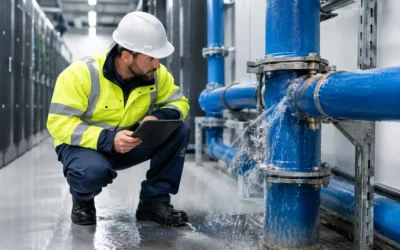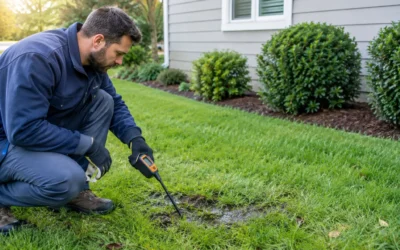
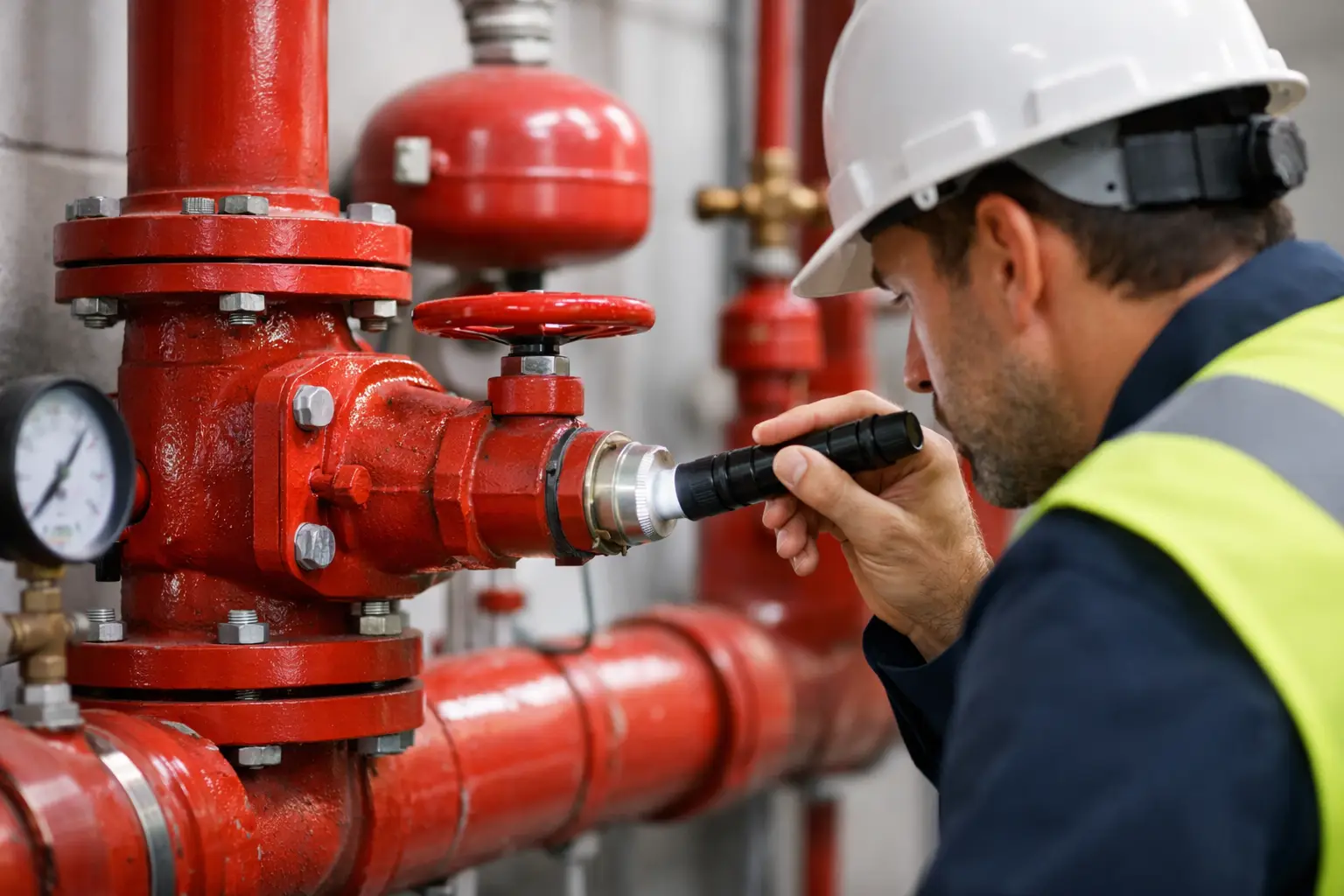
A fire line can remain out of sight for years while corrosion, minor leakage or pressure loss develops below ground, above ceilings or inside plant areas. When you inspect fire lines properly, the objective is not simply to find water escaping from a pipe. It is to confirm that a life-safety water network will perform as intended, while preventing avoidable damage, water waste and expensive reactive works.
For facilities managers, developers and industrial operators, this is a high-consequence maintenance task. A hidden leak may undermine pavements, saturate service corridors, damage finishes or increase pumping demand. More seriously, a compromised fire-water network can affect system availability at the point it is needed most.
Why fire-line inspections need a different standard
Fire lines are not ordinary domestic water pipes. They form part of a wider fire-protection arrangement that may include tanks, pumps, valves, hydrants, hose reels, sprinklers, landing valves and monitoring equipment. Any inspection must therefore distinguish between a leak investigation and formal fire-system testing, certification or maintenance required by the authority having jurisdiction.
A technical leak inspection can identify unexplained water loss, pressure instability and likely pipe defects with minimal disruption. It does not replace statutory inspection, testing and maintenance by suitably qualified fire-protection specialists. On a complex site, both disciplines should work together: one verifies operational compliance and component condition, while the other investigates difficult, concealed failures that cannot be located through routine checks alone.
The cost of assuming a leak is minor can be substantial. A slow underground failure may only show up as frequent pump cycling, unexplained tank level reduction, wet soil or recurring settlement around a road or hardscape. By the time surface damage is visible, the repair scope can include excavation, reinstatement, waterproofing and disruption to tenants or operations.
When to inspect fire lines
Fire lines should be assessed whenever there is evidence that the network is losing water or behaving inconsistently. The most common trigger is pressure loss after isolation and testing, particularly where no visible discharge is present. Other warning signs include a fire-water tank requiring more frequent top-up, abnormal pump starts, persistent damp patches, reduced pressure at remote points or a water bill that cannot be explained by normal consumption.
Inspection is also sensible before major resurfacing, landscaping, refurbishment or handover. Finding a weak section before new finishes are installed is far less costly than opening completed works later. In Dubai, where external pipework is exposed to high temperatures, variable ground conditions and intensive irrigation activity, it is worth checking whether apparent leakage is actually coming from an adjacent irrigation, domestic, chilled-water or drainage line. Misidentification is common and can lead to unnecessary excavation.
After a pressure event, accidental damage, prolonged vacancy or a fire-system alteration, a focused investigation may be justified even if there is no obvious surface evidence. It depends on the pipe material, network age, installation history, prior repair record and the consequence of failure at that location.
A practical method to inspect fire lines
A reliable inspection starts with information, not excavation. Review available drawings, valve schedules, pump records, water tank make-up data, prior pressure-test results and repair history. These records help define the suspected section of the network and prevent technicians from testing the wrong line.
1. Establish the system boundary
The first task is to identify exactly what is being tested. Fire-water systems can have interconnected loops, branch lines and valve arrangements that make isolation more complicated than expected. A valve that does not fully close can produce misleading results, while an overlooked branch may conceal the actual source of water loss.
Technicians should confirm valve positions, isolate the relevant zone where permitted, and record baseline pressure and water level. This work must be planned so that any impairment to fire protection is controlled, authorised and communicated under the site’s fire-safety procedures. A leak investigation should never create an unmanaged reduction in protection.
2. Test pressure behaviour over time
A controlled pressure test can indicate whether the isolated section is holding or losing pressure. The rate and pattern of loss matter. A rapid drop may point to a significant open defect, failed joint or valve issue. A slower, repeatable decline can indicate pinhole corrosion, a small joint failure or a concealed seepage path.
Pressure testing alone does not reveal the exact location. Temperature changes, trapped air, valve leakage and instrumentation error can all affect readings. For that reason, the test should be performed with calibrated equipment and interpreted alongside site conditions, not treated as a single pass-or-fail number.
3. Use non-invasive location techniques
Once there is evidence of a probable leak, non-destructive methods can narrow the search area before any opening works begin. Acoustic equipment may detect the sound created as pressurised water escapes through a defect. Thermal imaging can identify unusual cooling or moisture patterns at surfaces where conditions allow. Tracer gas testing can be effective for difficult concealed networks, especially where acoustic signals are weak or the pipe is deeply buried.
No single method is perfect. Acoustic detection can be affected by traffic, pumps, dense concrete and depth. Thermal imaging does not see through walls or slabs; it identifies surface temperature differences that may support other findings. Tracer gas requires proper preparation and controlled test conditions. The strongest results come from combining methods rather than relying on one instrument reading.
4. Confirm the defect before repair
Before approving excavation or demolition, the suspected leak position should be verified as far as practical. This protects the client from costly exploratory work and gives the repair team a defined scope. On buried external lines, the final confirmation may involve a carefully selected trial opening rather than a long trench.
The repair itself should be assessed for more than the immediate hole or split. If corrosion, poor jointing, ground movement or unsuitable material caused the failure, a local patch may only postpone the next incident. Reviewing adjacent pipe condition, supports, valve chambers and protective coatings can prevent repeat call-outs.
What inspectors should look for beyond leakage
A fire-line inspection should consider the environment around the pipe as well as the pipe itself. External valve chambers should be checked for standing water, corrosion, damaged covers, restricted access and signs of leakage around valves or glands. Above-ground pipework requires attention to corrosion under clamps, poor supports, damaged coatings, impact risk and exposed connections.
For buried networks, recurring surface cracking, soft ground, unexplained vegetation growth and local subsidence can all be relevant. These symptoms do not prove a fire-line failure, but they justify investigation when they align with pressure loss or tank-level changes.
Documentation is equally important. A useful technical report identifies the tested section, methods used, pressure observations, suspected leak location, confidence level, photographs where appropriate, and recommended next action. Facilities teams need evidence they can use to plan repairs, explain expenditure and coordinate fire-protection compliance requirements.
Avoid the two most expensive mistakes
The first mistake is waiting for visible damage. Water can travel along ducts, trenches and granular backfill before appearing at the surface, so the wet area is not always the leak location. Early testing is usually cleaner, faster and cheaper than responding after a collapse, flooded plant room or major pavement failure.
The second is opening floors or external paving based on guesswork. Blind excavation creates disruption without solving the underlying problem. A targeted inspection programme reduces the area that needs to be opened and helps maintain continuity for occupants, guests, patients, students and operational teams.
LeakDtech applies engineering-led diagnostic methods to locate hidden water failures with the least practical disruption, supporting property teams where conventional checks have not produced a clear answer. For fire-water infrastructure, that diagnostic work should sit within a properly controlled fire-safety and maintenance plan.
Protect readiness, not just the pipe
The best time to investigate pressure loss is before it develops into an emergency. Monitor tank replenishment, review unusual pump activity, keep accurate inspection records and act promptly when water loss cannot be explained. A precisely located repair protects far more than the pipe: it helps preserve site safety, avoids unnecessary reinstatement costs and gives the responsible team confidence that the system is being managed before failure dictates the schedule.