A water bill that rises without a change in occupancy, a damp patch that returns after repainting, or a pressure drop on a closed system should never be treated as a minor maintenance nuisance. Pipe leaks often begin out of sight, beneath floors, behind walls, above ceilings or within external buried lines. By the time visible staining appears, water may already have affected finishes, insulation, electrical routes, structural materials or neighbouring areas.
For villa owners, facility managers and industrial operators, the priority is not simply to stop water escaping. It is to identify the exact failure point, understand why it occurred and repair it with the least possible disruption. Guesswork can turn a contained defect into unnecessary demolition, extended downtime and avoidable refurbishment costs.
Why pipe leaks become expensive quickly
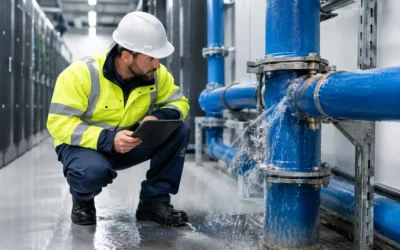
Water follows paths that are rarely obvious. A leak in a bathroom supply line may emerge through a ceiling several metres away. A failure under a tiled floor can migrate through screed before it reaches a wall edge. In commercial and industrial buildings, leaks on chilled-water, fire, process or irrigation networks can be concealed within shafts, plant rooms, risers and underground routes.
The direct cost is often the first warning: unexplained consumption and higher DEWA charges. The wider cost can be far greater. Persistent moisture encourages mould growth, damages joinery and floor finishes, corrodes metalwork, degrades insulation and can affect electrical safety. In occupied buildings, intrusive exploratory work also creates disruption for residents, guests, tenants and operations teams.
There is a further risk in repeatedly repairing the visible symptom. Regrouting a shower, sealing a crack or replacing a ceiling panel may improve the appearance temporarily, but it will not resolve a pressurised supply leak or a failed concealed joint. Effective repairs begin with verified diagnosis.
Signs of pipe leaks that need investigation
Not every leak produces a dramatic flood. Many develop slowly, particularly where pipework is embedded in concrete, routed behind finishes or operating at modest pressure. The following signs justify professional investigation, especially when they persist after routine maintenance:
- A water meter continues moving when all known fixtures and appliances are off.
- Water pressure drops, pumps cycle more frequently or a closed network needs repeated top-ups.
- A localised warm or cool area appears on a floor, wall or ceiling.
- Paint bubbles, plaster softens, tiles loosen, flooring lifts or a musty smell develops.
- A high water bill cannot be explained by irrigation, occupancy or seasonal use.
- Dampness returns after an apparent repair, particularly around bathrooms, kitchens, balconies or plant rooms.
These signs do not all point to the same cause. Condensation, failed waterproofing, drainage defects and air-conditioning discharge can resemble a pipe leak. That distinction matters because the testing method and repair scope will differ.
When a visible leak is not the source
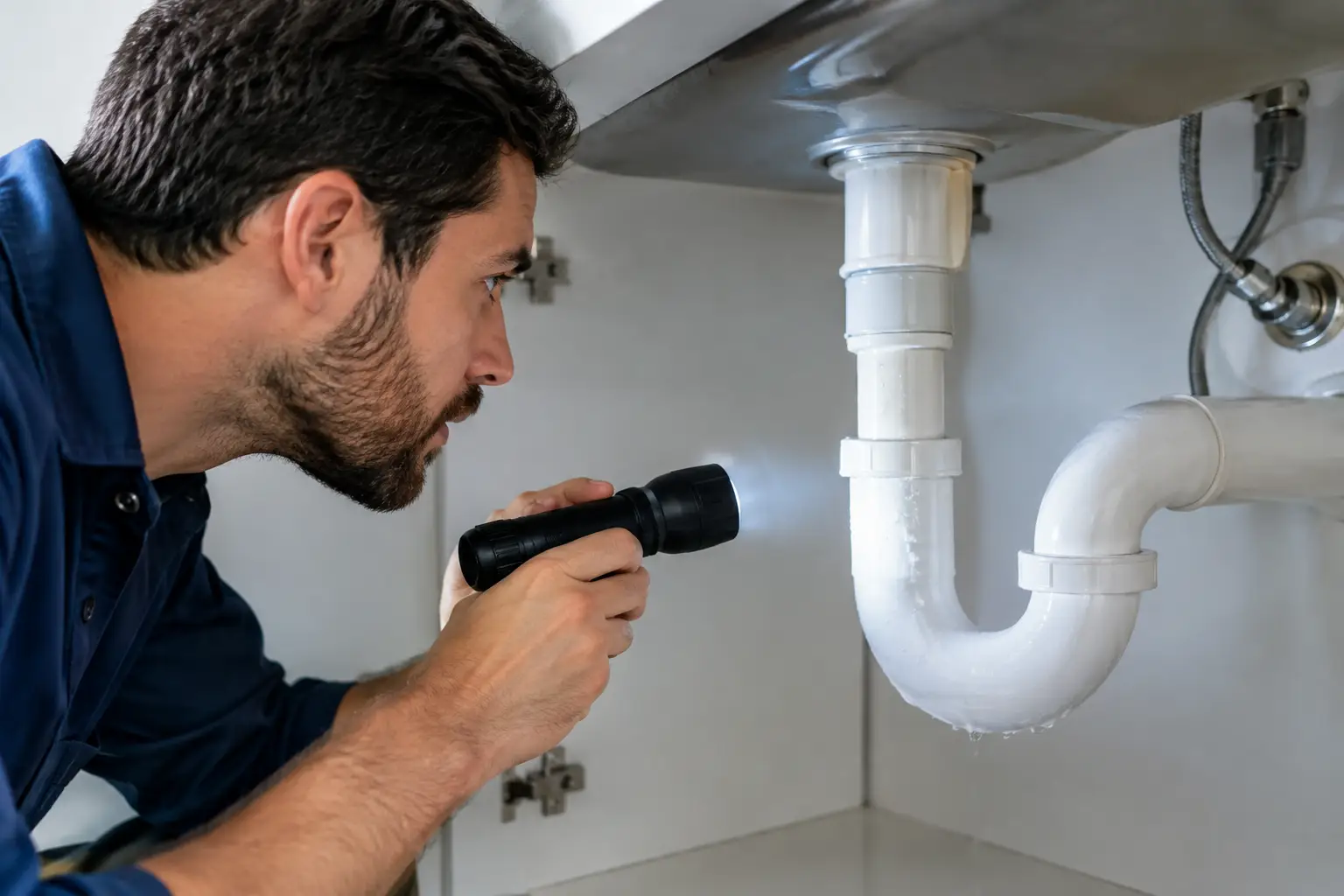
A ceiling stain beneath a bathroom does not automatically mean the pipe directly above it has failed. The source may be a shower waterproofing defect, a waste line that only leaks during use, a faulty valve connection or a supply pipe leaking continuously within the slab. Testing must replicate the relevant conditions and rule out alternatives rather than relying on appearance alone.
This is particularly important after refurbishment. New finishes can conceal poor connections, damaged pipework or incomplete waterproofing. Opening the wrong area may add cost without bringing the investigation closer to the fault.
Common causes of concealed pipe failures
Pipework rarely fails without a reason. Ageing materials, poor-quality fittings and installation errors are common, but they are not the only factors. High pressure, pressure fluctuations, thermal expansion, vibration, corrosion and ground movement can all place stress on a system over time.
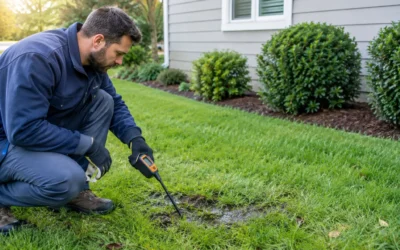
In residential properties, failures often occur at joints, flexible connectors, concealed mixer valves, toilet connections and pipes routed through slabs. Irrigation systems can suffer from damaged underground lines, root intrusion, poor jointing or accidental impact during landscaping work. For buildings with central cooling or extensive services, corrosion under insulation and inaccessible valve connections require careful assessment.
In industrial and petrochemical environments, the stakes are higher. Process conditions, chemical exposure, temperature cycling and external corrosion can compromise pipe integrity long before a visible release occurs. Here, inspection must be aligned with the material, service duty, operating pressure and safety requirements of the asset.
The right way to locate pipe leaks
Non-invasive leak detection is not one single test. It is a structured investigation using the method most suited to the pipe type, the suspected leak behaviour and the building construction. A reliable technician starts with a technical inspection: reviewing the affected area, isolating sections where possible, checking pressure behaviour and establishing whether the issue is continuous or only occurs during use.
Acoustic detection
Pressurised water escaping through a small opening creates sound and vibration. Acoustic sensors can help trace this sound through floors, walls and pipe routes. They are particularly useful on accessible pressurised networks, although background noise, pipe material, depth and building construction can affect results. Acoustic testing is powerful, but it should not be used in isolation when the signal is unclear.
Thermal imaging
Thermal imaging identifies temperature variations on surfaces. A hot-water leak may produce a warmer pattern, while chilled-water or cold-water losses can create cooler anomalies. It is fast, non-destructive and valuable for narrowing an investigation area.
However, a thermal image is evidence, not a repair location by itself. Sun exposure, air-conditioning, underfloor heating and moisture evaporation can all influence surface temperatures. An experienced operator interprets the image alongside pressure readings, moisture assessment and site conditions.
Tracer gas and pressure testing
Tracer gas testing is often used when pipework is concealed and other methods cannot provide enough certainty. After the relevant line is isolated and prepared, a safe tracer gas mixture is introduced. Sensitive detectors can then identify gas escaping at the leak location through floor or wall finishes.
Pressure testing verifies whether a contained section of pipework is losing pressure over a controlled period. It can confirm that a leak exists and help isolate the affected circuit. On larger or critical systems, methodical sectional testing prevents teams from opening extensive areas based on assumption.
Moisture mapping and technical inspection
Moisture meters and visual inspection help establish the spread of water impact. This matters for repair planning. Finding the leak is essential, but so is identifying whether adjacent materials need drying, treatment or replacement. A precise report should separate the confirmed source from secondary moisture damage and clearly define the recommended repair area.
Choosing a repair scope without unnecessary demolition
Once the source is confirmed, the repair should be proportionate to the evidence. A pinhole leak in a localised section may require only targeted access and replacement. Recurrent failures in ageing pipework may justify a larger renewal programme. The right decision depends on the pipe condition, accessibility, history of failures, material type and the consequences of another outage.
For a homeowner, a targeted repair may protect newly renovated finishes and avoid a prolonged period out of service. For a hotel, school, hospital or retail site, the timing and containment of works may be as important as the repair itself. Industrial facilities may need a planned shutdown window, safety controls and documented testing before returning a line to operation.
This is why diagnostic certainty has commercial value. The cheapest investigation is not always the one with the lowest initial price. A poorly located repair can lead to repeat call-outs, repeated reinstatement work and continued water loss. Accurate detection reduces the area opened, shortens the repair cycle and gives decision-makers a defensible basis for action.
Preventing repeat failures
After a leak is repaired, confirm the system is stable. Pressure testing, functional checks and moisture monitoring may be needed before finishes are closed. If there has been significant wetting, drying and mould treatment should be addressed rather than concealed behind new paint or ceiling boards.
Property managers should also consider planned inspections for high-risk systems, including irrigation networks, tanks, chilled-water lines, fire lines and older domestic pipework. Smart water monitoring can provide another layer of protection by identifying unusual flow or pressure behaviour early and, in suitable installations, automatically isolating the supply before damage escalates.
LeakDtech approaches difficult leak investigations as an engineering problem: establish the evidence, identify the source precisely and protect the property from unnecessary disruption. When water appears where it should not, acting early is usually the most cost-effective repair decision you can make.