A flood warning is not the time to search for sandbags, clear a doorway or decide which entrance is most exposed. The ability to deploy flood barriers quickly can be the difference between a contained external water event and damaged flooring, swollen joinery, electrical risk and days of costly clean-up.
For homeowners, landlords and facilities teams, the objective is not to make a property invincible against every flood scenario. It is to stop or reduce water ingress at the openings most likely to fail, while allowing occupants and site teams to act safely and decisively. Reusable, tool-free barriers are particularly valuable where storms can develop quickly and permanent flood defences are not practical.
Know what flood barriers can, and cannot, do
Flood barriers are designed to protect vulnerable openings such as external doors, patio doors, garage entrances, service doors and low-level access points. They form a temporary seal or physical obstruction that holds back shallow, slow-moving surface water. When correctly selected and fitted, they can significantly reduce the volume of water entering a building.
Their performance depends on the opening, the surrounding structure and the type of flooding involved. A barrier may be highly effective against ponding rainwater flowing across a driveway, but unsuitable for fast-moving water, deep flooding, damaged door frames or openings with significant gaps. Water pressure increases rapidly with depth. A barrier that is appropriate for a low threshold may not be rated for a deep or prolonged flood event.
This is why specification matters. Check the product’s stated maximum water depth, opening dimensions, seal requirements and installation guidance. Treat the barrier as one part of a wider property protection plan, not a substitute for drainage maintenance, sound building fabric or safe emergency procedures.
Identify the openings to protect first
Do not assume the front door is the highest-risk entry point. Water follows levels, drainage routes and gaps. During a storm, it may reach a rear patio door, garage, plant-room access door or side gate opening before it reaches the main entrance.
Walk the property in dry conditions and identify where water has pooled previously. Look for low thresholds, sloping driveways, blocked gullies, cracked paving, deteriorated seals and doors that sit below nearby ground level. In commercial properties, include loading bays, electrical rooms, risers, basement access points and service corridors in the assessment.
A practical priority order is based on consequence as well as likelihood. An opening leading into a utility area may seem less important than a reception entrance, but it can expose electrical equipment, pumps, controls or stored stock. Facilities managers should record each barrier location, the barrier size required and the responsible person for deployment.
Check the opening before storm season
A flood barrier relies on the surfaces it seals against. Dirt, loose debris, uneven thresholds and damaged frames can create pathways for water. Before the period of highest rainfall risk, inspect the doorway and clean the contact surfaces thoroughly.
Measure the clear width and height of each opening rather than relying on nominal door sizes. Check whether the threshold is level and whether the door frame is secure. If the frame moves, the threshold is cracked or there are visible voids around the opening, address those defects first. Flood protection equipment cannot compensate for failed building fabric.
How to deploy flood barriers correctly
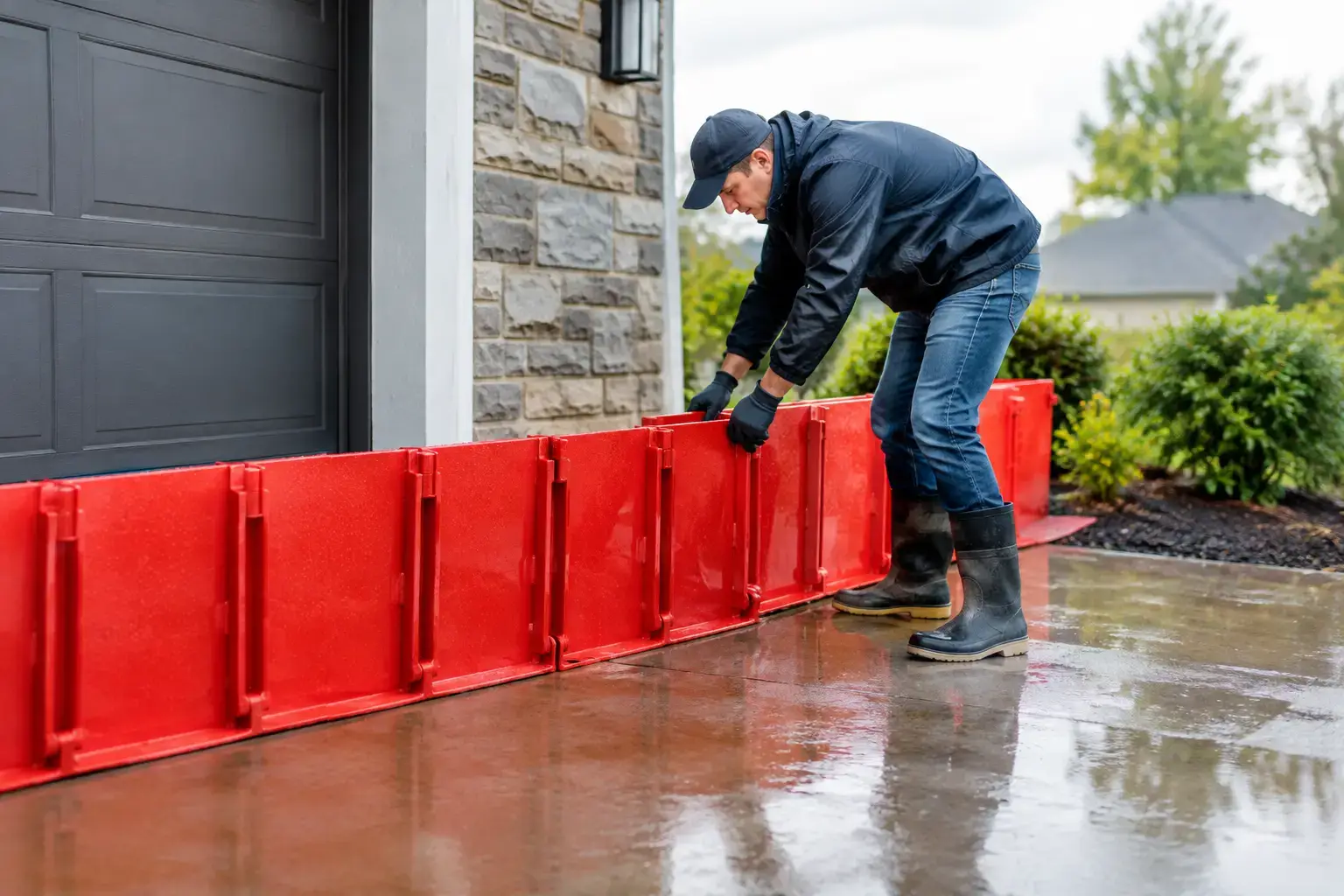
The exact method varies by product, but tool-free barriers are designed to be positioned rapidly without permanent fixings. Dam Easy Flood Barriers, for example, are reusable systems intended for doors and openings and can be deployed in under five minutes when the correct size has been prepared in advance.
Start by removing loose items, leaves, sand and other debris from the threshold and sides of the opening. Position the barrier squarely against the frame, ensuring that all sealing edges make even contact. Follow the manufacturer’s locking or compression sequence precisely. Do not force components into place or improvise with timber, tape or weights unless the product instructions expressly permit it.
Once fitted, inspect the full perimeter. A barrier that appears secure in the centre can still leak at a lower corner or along an uneven sill. Where possible, conduct a controlled hose test before the rainy season. Use a gentle, directed flow rather than high-pressure water, and check the internal side of the opening for drips or movement.
If rain has already started, deploy barriers before water reaches the threshold. Trying to fit a system while water is flowing through an entrance is slower, less safe and more likely to compromise the seal. Never deploy a barrier where rising water, live electrical hazards or unstable ground put people at risk.
Build a response plan around speed
The most effective barrier is the one that can be located, carried and installed without delay. Store each barrier close enough to its intended opening to avoid searching through a store room during severe weather, but keep it dry, clean and protected from damage. Clearly label every unit by location and opening size.
For a villa or residential property, one trained household member should know where the barriers are kept and how to fit them. For managed buildings, assign primary and backup personnel, especially where a site may be unattended overnight. A short written procedure should cover who monitors weather alerts, who makes the decision to deploy, which entrances are prioritised and who checks the barriers after installation.
A response plan also needs an escalation point. If water is approaching the barrier’s design limit, drainage is backing up, or water is entering through walls, floor drains or services, the site team should move from protection to safety and damage limitation. Isolate electricity only where it is safe and authorised to do so, protect critical equipment where possible, and contact the relevant emergency services or property support team.
Do not overlook drainage and hidden water routes
A doorway barrier can reduce direct ingress, but water often finds another route. Blocked drains, overflowing gutters, failed surface channels and poorly graded paving can concentrate water against the building. In some cases, the visible water at the door is a symptom of a wider drainage defect rather than the main problem.
Property owners should keep gullies, roof outlets and drainage channels clear before forecast heavy rain. On larger sites, maintenance teams should inspect pumps, backflow protection and drainage access points as part of seasonal preparation. Recurring water entry at the same location deserves technical investigation, particularly where there is no obvious external cause.
LeakDtech’s diagnostic approach is relevant here: identify the actual pathway before committing to disruptive repairs. A recurring wet area may involve stormwater, a plumbing leak, irrigation overspray, failed waterproofing or a drainage issue. The remedy changes completely depending on the source.
After the water recedes
Do not remove barriers immediately simply because rainfall has stopped. Standing water can remain outside an opening, and drainage systems may still be under pressure. Wait until water levels have reduced and it is safe to access the area.
Remove the barrier carefully, clean away grit and contaminants, then inspect seals, locking components and contact edges for damage. Dry the system before storage. Inside the property, check skirting, flooring, wall finishes, electrical outlets and concealed areas near the threshold. Early drying and inspection can prevent mould growth and reduce the need for more extensive reinstatement.
Document the event with photographs and notes. Record where water collected, whether the barrier held, where any leakage occurred and how long deployment took. This evidence helps refine the plan before the next storm rather than repeating the same response under pressure.
Flood protection is most valuable when it becomes routine property preparedness rather than a last-minute purchase. Measure the openings, correct the defects, train the people responsible and keep the barriers ready. When the forecast changes, a prepared property team can act in minutes and protect far more than the doorway.