A water bill that rises without a change in occupancy is rarely just an accounting issue. It can be the first measurable sign of a concealed failure beneath a floor, behind a wall, above a ceiling, or within a pressurised pipe network. Hidden plumbing leak detection replaces guesswork with evidence, allowing the source to be located before water damages finishes, weakens building materials or forces a costly shutdown.
For a villa owner, the concern may be a persistently high DEWA bill or a damp patch that keeps returning after repainting. For a facilities manager, it may be unexplained pressure loss on a domestic water line, chilled water circuit or fire network. The right response is the same: establish whether there is a leak, identify its precise location, and repair only the affected section.
The signs a leak may be out of sight
Hidden leaks rarely announce themselves with a burst pipe. More often, they produce small but persistent changes that are easy to dismiss until the repair scope becomes much larger. A localised warm or cold area on a tiled floor can indicate a hot-water or chilled-water leak. Peeling paint, bubbling plaster, warped skirting and a musty odour may point to moisture travelling inside a wall or ceiling void.
Water meter activity is another useful indicator. If the meter continues to register consumption when all taps, appliances, irrigation zones and water-using equipment are switched off, water may be escaping somewhere in the system. That reading is not a diagnosis on its own. A leaking toilet cistern, a faulty irrigation valve and a concealed pipe leak can all create continuous demand, so each possibility needs to be tested methodically.
In commercial, hospitality and industrial properties, pressure behaviour is often the first warning. Repeated pressure drops, frequent pump cycling, unexplained make-up water use or a system that cannot hold pressure should be investigated before they develop into a service interruption. Waiting for visible water damage is not a cost-saving strategy. It usually means the leak has already had time to migrate through finishes, insulation, cable routes or structural elements.
Why hidden plumbing leak detection needs more than a visual check
A visible stain does not necessarily sit below the leak. Water follows the path of least resistance, travelling along pipes, conduits, slab joints, insulation and ceiling structures before it becomes visible. Opening the nearest wall or lifting the nearest tiles may therefore expose sound finishes while leaving the actual fault untouched.
Professional hidden plumbing leak detection combines observations with test data. The aim is to distinguish a live plumbing leak from condensation, rainwater ingress, failed waterproofing, HVAC discharge or an old moisture event that has already dried. This distinction matters because each issue requires a different repair team, repair detail and budget.
A technical inspection normally begins by understanding the property and the affected system. Pipe material, age, recent alterations, pressure history, consumption records and the location of valves all influence the testing plan. A property with multiple pumps, tanks, booster sets and irrigation circuits cannot be assessed in the same way as a single flat with one domestic supply.
The tools used to locate concealed leaks
No single device is suitable for every leak. Conditions such as pipe depth, water pressure, background noise, surface material and access determine which method will produce reliable results.
Acoustic leak detection
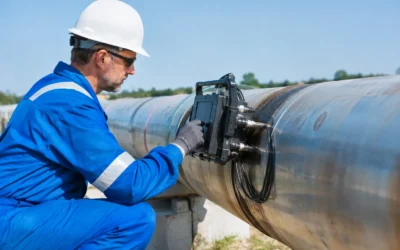
Pressurised water escaping through a crack or joint creates vibration. Sensitive acoustic equipment can detect and compare that sound through floors, walls and exposed pipe sections. It is particularly effective on many pressurised water lines, although performance can be affected by busy plant rooms, traffic noise, pipe insulation and certain pipe materials.
Thermal imaging
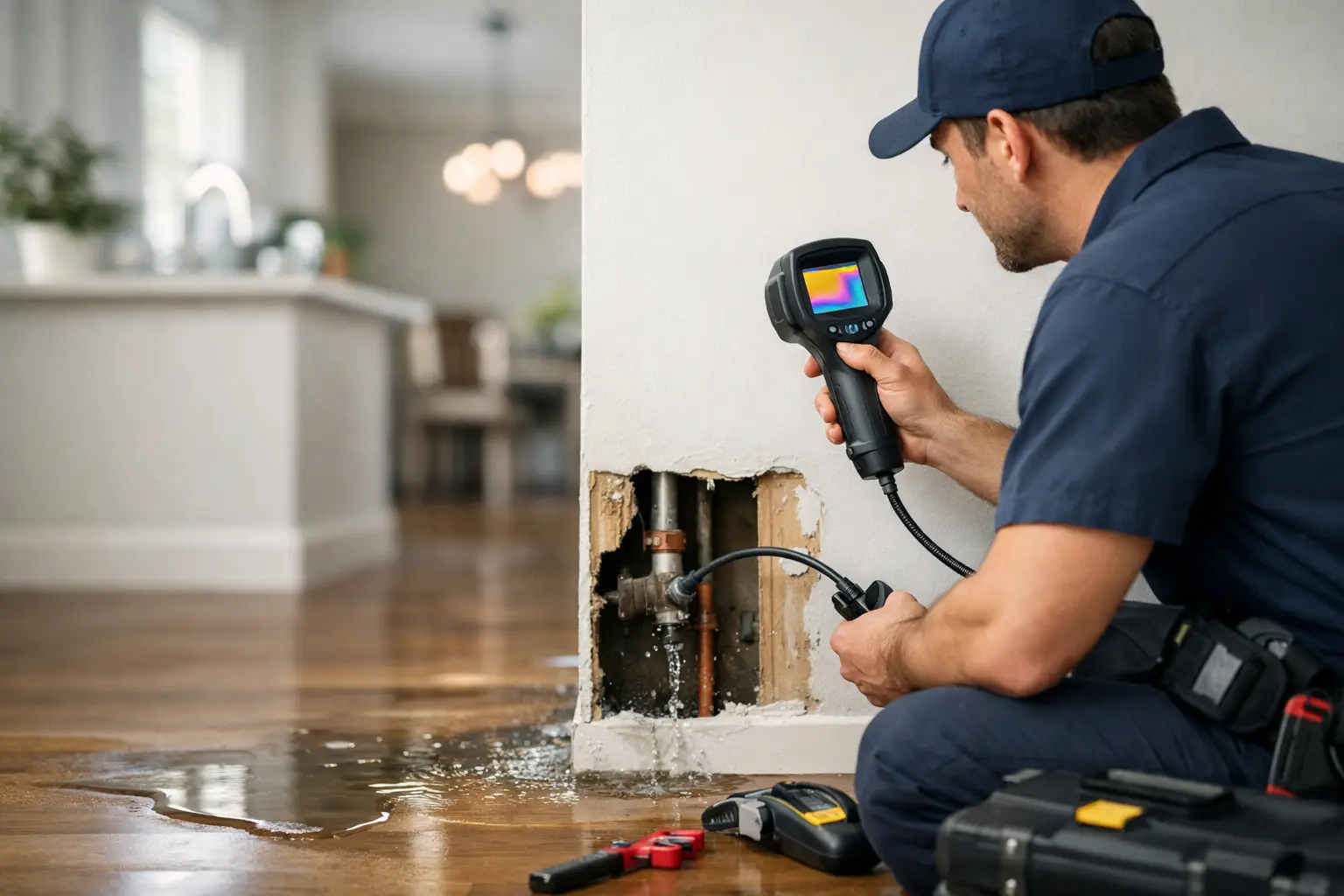
Thermal cameras identify unusual temperature patterns at a surface. A hot-water leak may create a warmer track beneath flooring, while a chilled-water or cold-water issue may show as a cooler area. Thermal imaging is fast and non-invasive, but it does not see through concrete or prove that moisture is present. It provides valuable directional evidence that should be confirmed alongside pressure testing, moisture measurement or another suitable method.
Tracer gas testing
Where acoustic testing is limited by depth, low leak noise or complex construction, a safe tracer gas can be introduced into an isolated and drained pipe section. The gas escapes at the fault and can be detected at the surface with highly sensitive equipment. This method is often valuable for concealed pipework beneath slabs, tiled areas and difficult-to-access routes, particularly when a precise repair point is required.
Pressure testing and isolation
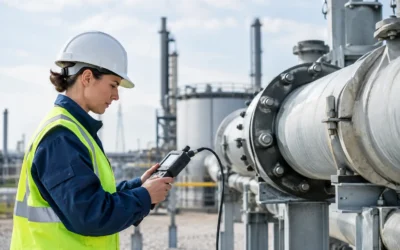
Pressure testing confirms whether a section of a pipe system can maintain the required pressure over a controlled period. By isolating zones, technicians can narrow a problem from an entire property to a specific circuit, riser, bathroom group or external line. It is one of the most useful ways to avoid testing every pipe route unnecessarily.
Moisture meters, endoscopic inspections and visual checks support these primary methods. For drainage leaks, where the pipe is not continuously pressurised, dye testing, controlled water tests and camera inspection may be more appropriate than acoustic methods. The correct approach depends on what is leaking and where the pipe is located.
What a clean investigation should achieve
The objective is not simply to declare that a leak exists. A well-managed investigation should provide enough certainty for the repair to proceed with minimal disruption. That means identifying the likely leak type, the affected line, the tested area, the detection method used and the recommended repair location.
For property managers and insurers, documented findings also help separate active water loss from historic damage. This can support repair approvals, contractor coordination and future maintenance planning. In larger sites, a clear report reduces the risk of one contractor opening finishes while another is still trying to establish whether the water is from plumbing, waterproofing or air-conditioning condensate.
Precision has a direct financial value. Targeted opening works protect tiles, marble, joinery, ceilings and tenant areas that do not need to be disturbed. They also shorten the period in which mould can develop behind finishes and reduce the likelihood of repeat visits caused by repairing the wrong pipe.
When urgent action is justified
Some situations should not wait for a convenient maintenance window. Arrange immediate investigation when there is active water emerging from walls or ceilings, an electrical risk, rapid pressure loss, pooling near plant equipment, a sharp increase in consumption, or water affecting occupied rooms and critical operations.
Where safe to do so, isolate the suspected supply at the nearest valve or stopcock and protect nearby electrical equipment from water exposure. Avoid repeatedly turning a leaking system on and off to “check” whether the issue has stopped. This can increase damage and make pressure-test results less clear. Take photographs of visible symptoms, note meter readings and record when the problem appears. These details can speed up diagnosis.
For hotels, hospitals, schools, malls and industrial facilities, the response plan should also consider operational continuity. Isolating an entire building may be unacceptable, but leaving a failed line live may be worse. Sectional isolation, phased testing and out-of-hours work can often reduce disruption, provided the site team shares accurate drawings and access information.
Prevention is cheaper than repeated repair
Not every hidden leak can be prevented, especially in ageing pipe networks or systems affected by poor installation. However, regular checks can identify early warning signs before a small failure becomes a refurbishment project. Monitoring consumption trends, reviewing unexplained pressure drops, inspecting wet areas and testing critical pipework during planned maintenance all provide useful early intelligence.
Smart water monitoring adds another layer of protection for villas, rental portfolios and managed properties. Systems that monitor flow and pressure continuously can identify unusual consumption patterns and, where configured, shut off the supply automatically. They do not replace a technical diagnosis, but they can limit water loss when a failure occurs during an empty property, overnight period or holiday closure.
LeakDtech approaches concealed water failures as an engineering problem rather than a demolition exercise. The priority is to identify the fault accurately, protect the asset and give the repair team a defensible location to work from.
If a meter will not settle, a pressure line will not hold or a damp area keeps returning after cosmetic repairs, treat it as a live diagnostic issue. Early testing can turn a disruptive repair into a contained one – and preserve the parts of the property that are still performing exactly as they should.