A few centimetres of storm water entering a garage can damage far more than the floor. It can reach electrical points, stored equipment, plasterboard linings, insulation, vehicles and the base of internal walls before anyone notices. Effective garage storm protection is therefore not just about keeping visible water outside. It is about controlling the route water takes, preventing pressure from building at openings and identifying the small failures that turn a heavy downpour into an expensive repair.
For villa owners, facilities managers and community teams, garages are often a weak point in the building envelope. They sit at or below external ground level, have wide vehicle openings, and commonly contain drainage runs, water heaters, pump equipment or electrical infrastructure. Storm preparation needs to account for each of these risks rather than relying on a single seal around the garage door.
Why garages fail first during heavy rain
A garage door is designed to operate reliably, not necessarily to resist standing water. Standard bottom weather strips can reduce dust and minor splashback, but they are rarely a dependable flood defence. When water ponds across a driveway, it can push beneath the threshold, pass around side seals or enter through gaps where the door meets an uneven slab.
The problem may also begin outside the door. Blocked channel drains, poorly graded paving, cracked driveway joints and undersized gullies allow rainfall to collect against the garage opening. In Dubai, intense storms can overwhelm drainage that appears adequate during routine irrigation or wash-down. Water then seeks the lowest available route – often the garage.
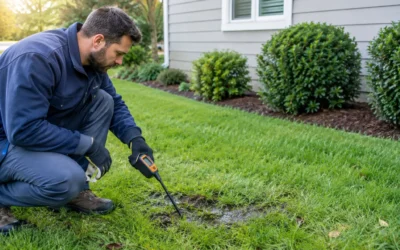
There is a second, less obvious risk: water entering from within the structure. A leaking irrigation line, failed external pipe joint, roof downpipe discharge or backflow through a drain can mimic storm ingress. Treating every wet garage as a door-seal issue can lead to repeated repairs without resolving the source.
Garage storm protection starts with water management
The most cost-effective protection is to keep water moving away from the opening before it reaches the threshold. Inspect the driveway after cleaning or rainfall. If water remains against the door after several minutes, the fall of the surface or capacity of the drainage system needs attention.
Check that channel drains and grates are clear of sand, leaves, paint residue and landscaping debris. A drain may look open at surface level while its outlet pipe is partially obstructed. Where water has previously backed up, professional drain cleaning and a flow test provide more certainty than a visual inspection alone.
Downpipes deserve equal attention. Roof runoff should discharge into a functioning drainage point or a location that directs water away from the garage. It should not be allowed to spill beside the driveway and run towards the door. Similarly, irrigation should be isolated or closely managed during storm periods. Overwatering saturated soil beside external walls creates additional pressure on waterproofing and may conceal a separate leak.
If the garage floor falls towards the house rather than towards a drain, surface improvements alone may not be enough. Depending on the layout, the appropriate solution could be regrading external paving, installing a correctly sized linear drain, improving the internal floor drain or creating a raised threshold. Each option has trade-offs. A higher threshold can impede water entry but must still allow safe vehicle access, while a new drain only performs if its discharge route has sufficient capacity.
Protect the garage opening, not just the door seal
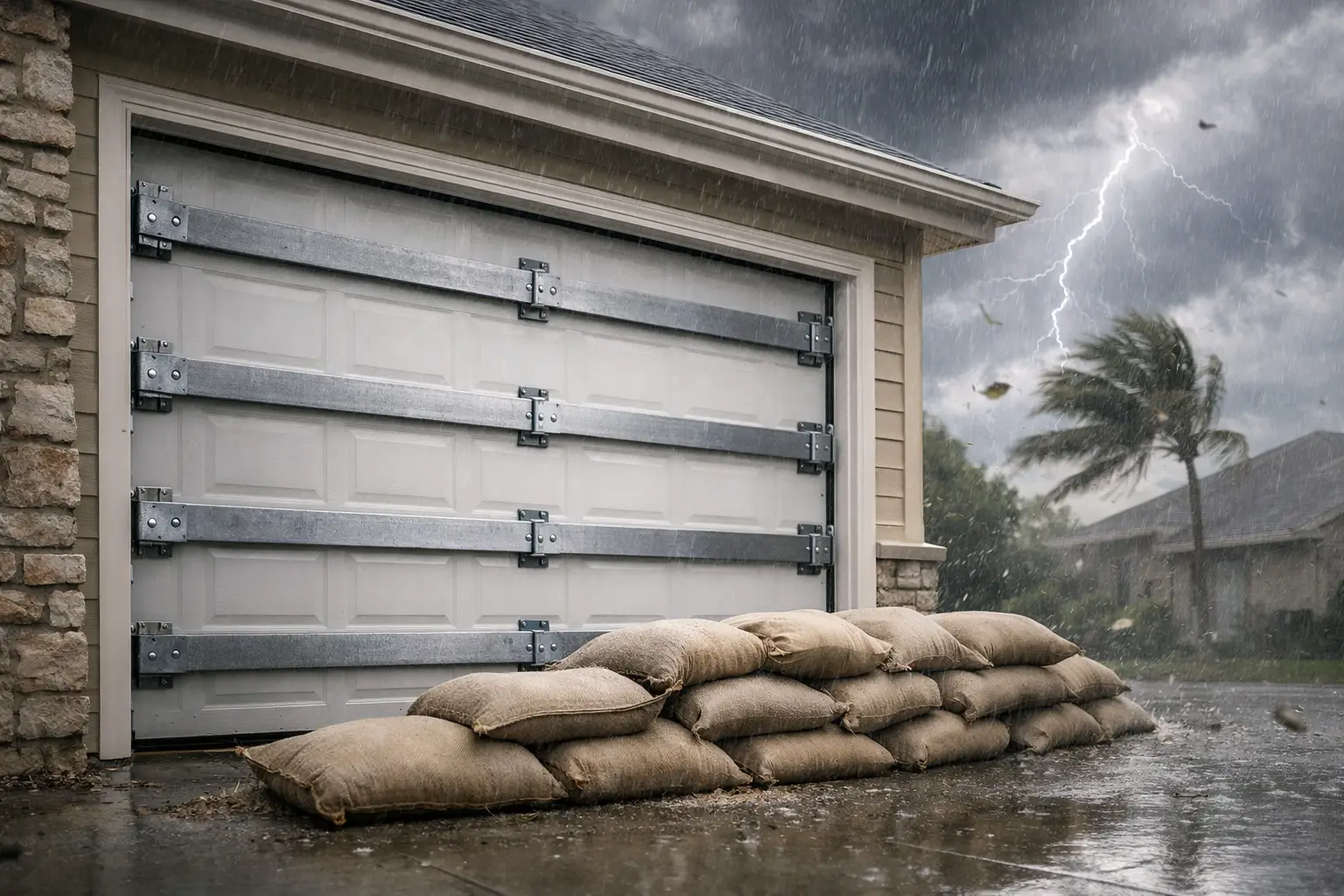
For properties exposed to surface flooding, a reusable flood barrier can provide a far more reliable line of defence than improvised sandbags. The right barrier should match the width and condition of the opening, seal against the surrounding surfaces and be quick enough to deploy when weather warnings are issued. Tool-free systems that can be installed in minutes are particularly useful for homeowners and site teams who may have several vulnerable openings to secure.
The surrounding frame matters as much as the barrier itself. Cracked render, loose tiles, damaged side walls and uneven concrete can create bypass paths. Before relying on any flood barrier, inspect the jambs and threshold for voids, movement and deterioration. Repairing these defects protects the performance of the whole system.
Garage doors should also be checked for worn bottom seals, gaps at the corners and poor alignment. Replacing a damaged seal is worthwhile for everyday weather resistance, dust control and pest exclusion. It should not, however, be presented as a substitute for flood protection where standing water is expected.
Do not overlook side doors and service penetrations
Many garages have a pedestrian door, ventilation louvre, pipe penetration or cable entry point that sits lower than the vehicle door threshold. These are common paths for water ingress. Inspect external sealant around pipe sleeves and conduits, and check whether vents require a raised detail or purpose-designed cover that maintains airflow without admitting driven rain.
Where electrical sockets, control panels or pumps are mounted low on the wall, arrange an assessment before storm season. Water and electricity create an immediate safety issue. Equipment may need to be isolated, protected, relocated or inspected after an incident before it is returned to service.
Find the source before authorising repairs
Not every damp patch after rainfall proves that rainwater has penetrated the garage. Moisture can travel beneath floor finishes, migrate through wall cavities or emerge at the lowest point away from its origin. This is why repeated sealing works often fail: they target where water appears, not where it entered.
A technical inspection can distinguish between surface ingress, plumbing leakage, drainage failure and moisture rising through a defective waterproofing layer. Thermal imaging can help identify abnormal moisture patterns, while pressure testing, acoustic methods and tracer gas testing can investigate concealed pipework without opening floors and walls unnecessarily. For larger properties and managed sites, documented findings also make it easier to prioritise budgets and demonstrate that corrective work was based on evidence.
LeakDtech approaches these cases as a diagnostic problem first. That reduces speculative demolition, limits disruption and helps property owners invest in the repair that addresses the actual failure mechanism.
Protect what is already inside
Even a well-prepared garage can be affected by an exceptional storm, drain blockage or neighbouring runoff. Reduce the consequence of an incident by keeping valuable items off the floor. Storage shelving should be raised, stable and positioned away from external walls where possible. Cardboard boxes, spare timber, soft furnishings and chemicals are particularly vulnerable to moisture and should not sit directly on concrete.
Keep a clear route to drains and electrical isolation points. A garage filled wall-to-wall with stored items makes it difficult to identify the direction of water flow, clear a blocked gully or safely remove affected materials. For facilities teams, a simple pre-storm checklist should confirm drainage access, barrier location, electrical responsibilities and the contact route for emergency attendance.
Consider the following four checks before forecast heavy rainfall:
- Clear driveway channels, gullies and drain grates, then confirm water can discharge freely.
- Inspect the garage threshold, door corners, side doors and service penetrations for visible gaps or cracked sealant.
- Place flood barriers where they can be deployed immediately, rather than storing them behind vehicles or heavy equipment.
- Lift stored assets, isolate non-essential electrical equipment where appropriate and keep emergency access clear.
What to do when water has entered the garage
Safety comes before clean-up. Do not enter standing water if there is any possibility that electrical circuits, appliances or equipment are energised. Once it is safe, remove water promptly, ventilate the area and document affected finishes, contents and the apparent direction of flow. Photographs taken before extensive cleaning can be valuable for insurance records and technical investigation.
Do not simply dry the visible floor and assume the problem is resolved. Moisture behind skirting, within plasterboard, below raised flooring or inside wall insulation can lead to mould, corrosion and material breakdown later. A targeted moisture assessment helps determine whether drying is sufficient or whether selected finishes need to be opened and repaired.
A storm should also be treated as performance evidence. If water entered through one gap, drained slowly, or emerged from an unexpected location, use that information to improve the system before the next event. The most effective garage protection is rarely one product or one repair. It is a coordinated approach that manages external water, secures openings, protects services and verifies the real source whenever the pattern is unclear.
A dry garage after the next heavy storm is not a matter of luck. It is the result of identifying the weak point while access is easy, then fixing it before water has the chance to expose it.