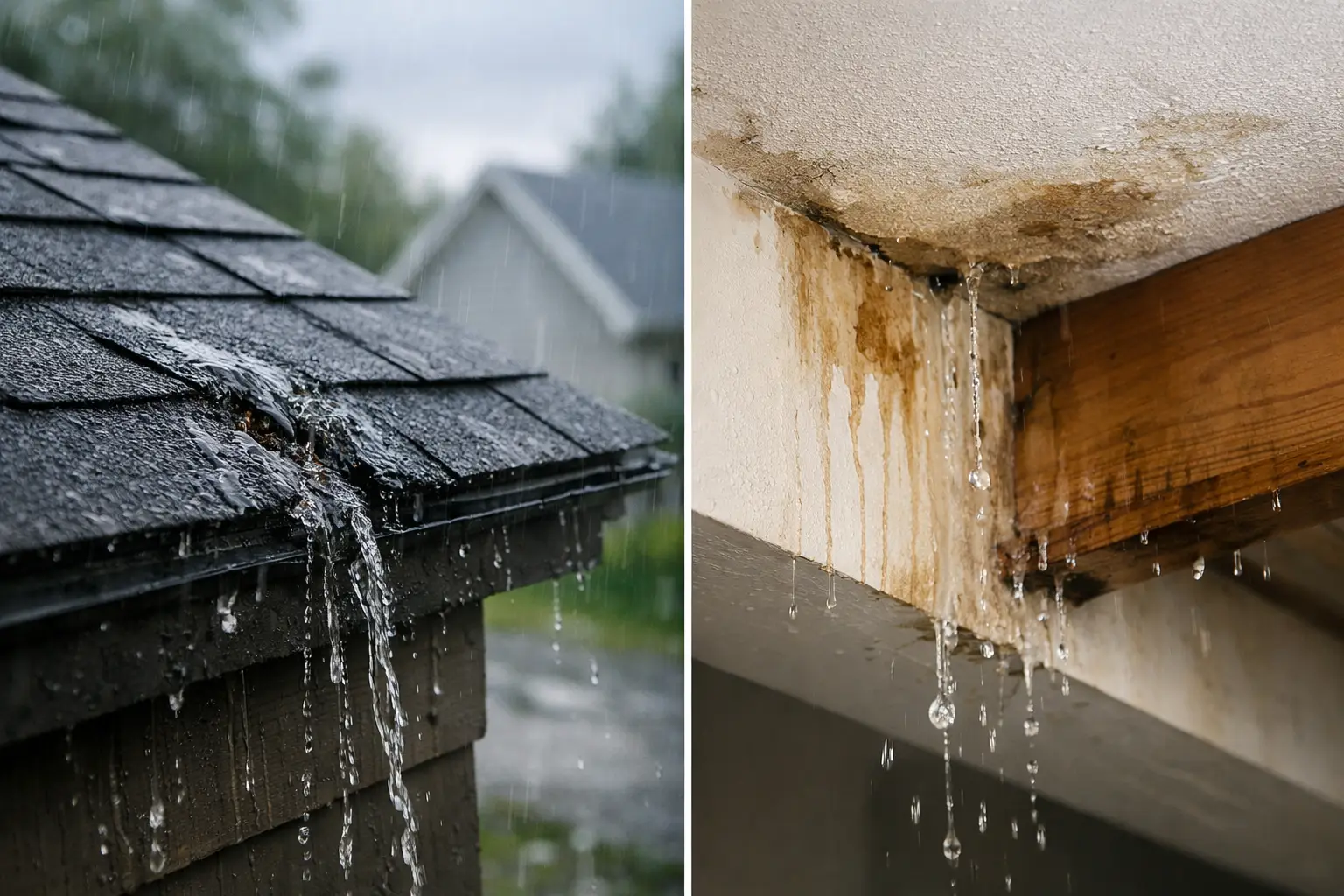
A ceiling stain that appears after a storm is rarely just a cosmetic issue. By the time water reaches a ceiling tile, plasterboard soffit or occupied room, it may already have travelled across insulation, slabs, service penetrations and structural junctions. This guide to roof water ingress explains how to recognise the problem early, separate likely causes and make repair decisions based on evidence rather than assumptions.
Roof leaks are especially disruptive in villas, towers, schools, hotels, warehouses and commercial facilities because the visible damage is often some distance from the actual entry point. A quick patch at the stain may hide the symptom, but it will not restore the failed waterproofing detail or prevent further deterioration.
What roof water ingress actually means
Roof water ingress occurs when rainwater, wash-down water or accumulated ponding water bypasses the roof’s waterproofing system and enters the building fabric. The failure may sit within the membrane itself, but it is often found at vulnerable details: parapet upstands, roof drains, expansion joints, pipe penetrations, skylights, AC bases, flashings and interfaces between different materials.
Flat roofs are common across Dubai and require particular attention. High temperatures, ultraviolet exposure, thermal movement and maintenance foot traffic can age membranes and disturb previously sound details. Intense rainfall can then expose weaknesses that remained invisible during dry periods. A roof may look acceptable from ground level while water is tracking beneath the membrane or through a poorly sealed penetration.
Not every wet ceiling means the roof is at fault. Leaking chilled-water pipework, domestic plumbing, condensate drains, fire lines and façade defects can produce similar symptoms. This is why diagnosis should begin with testing and inspection, not demolition or blanket waterproofing work.
Early signs of roof water ingress
The first sign is not always active dripping. Property teams should treat small, repeatable changes as useful evidence, especially when they follow rain, roof cleaning or periods of ponding.
Common indicators include:
- Brown or yellow staining on ceilings, walls or soffits
- Peeling paint, bubbling finishes or swollen gypsum boards
- Damp or mouldy odours in top-floor rooms and service corridors
- Drips around light fittings, diffusers, access panels or ceiling joints
- Damp insulation, corroded metalwork or water in roof voids
- Persistent ponding on the roof after rainfall or cleaning
- Cracked sealant, lifted membrane laps or loose flashing around penetrations
The timing of the issue is often as valuable as the mark itself. Water appearing only during or shortly after rainfall points towards the roof envelope, drainage capacity or façade interfaces. Moisture that continues in dry weather may instead indicate a pressurised pipe leak, condensate discharge or a tank-related issue.
Electrical risk changes the priority immediately. If water is near lights, distribution boards, plant controls or critical equipment, isolate the affected area through a qualified electrical team and arrange a technical investigation without delay. In hospitals, hospitality sites, data-sensitive offices and industrial facilities, the cost of a short planned response is usually far lower than the cost of an unplanned shutdown.
Why visible damage rarely identifies the leak source
Water follows the path of least resistance. Once it enters beneath roof finishes, it can travel along a concrete slab, metal deck, insulation layer, cable conduit or suspended ceiling channel before emerging indoors. The leak source may be several metres away from the visible stain.
This creates a common and expensive failure cycle. A contractor applies sealant above the damaged room, the leak appears to stop, and the next heavy rain sends water through a different route. Repeated patching can also make later diagnosis harder by covering the original defect without resolving moisture trapped within the roof build-up.
A reliable investigation considers the roof as a system. The membrane, drainage falls, outlets, parapets, movement joints, mechanical penetrations and internal services must be assessed together. It also considers recent work. Solar installations, antenna mounts, AC servicing and roof access can all introduce punctures or poorly reinstated seals.
A practical guide to roof water ingress investigation
The right method depends on roof construction, access, occupancy, weather conditions and the consequence of failure. The aim is to confirm the water pathway with the least disruption possible.
Start with a controlled visual inspection
A detailed roof inspection should document membrane condition, lap joints, terminations, drains, standing water, cracking, blistering and all penetrations. Indoors, technicians should map staining, take moisture readings where appropriate and inspect ceiling voids or accessible service areas.
Photographs and marked plans matter. For landlords, facilities managers and insurers, documented findings create a defensible record of the defect, its probable cause and the recommended scope of repair. They also help distinguish a new event from a recurring issue or an outstanding defects liability period concern.
Use non-destructive testing where evidence is unclear
Visual inspection alone cannot always identify a concealed pathway. Thermal imaging can reveal temperature anomalies associated with damp materials, particularly when conditions allow a meaningful temperature contrast. Moisture meters can help define the extent of affected finishes, although readings need interpretation because salts, metal and substrate type can influence results.
For difficult cases, controlled flood testing may be used to isolate roof zones or details. Water is introduced methodically, one section at a time, while the internal areas are monitored. This is not simply hosing the entire roof. Uncontrolled testing can spread water into unaffected areas and produce misleading results.
Depending on the construction, specialist techniques such as electronic leak detection may help locate breaches in waterproofing membranes. Acoustic methods, tracer systems and pressure testing are more relevant where a pipework leak remains a competing explanation. The key is choosing the method that answers the actual question rather than using a generic test.
Rule out drainage and service-related causes
Blocked roof outlets and undersized drainage can turn a minor defect into a serious ingress event. Check leaf guards, outlet bowls, drain lines and overflow routes. Ponding that remains long after rainfall can increase hydrostatic pressure at laps and terminations while accelerating membrane deterioration.
At the same time, assess nearby AC condensate drains, irrigation lines, water tanks and pipework. A water source must be confirmed before waterproofing is specified. Replacing a roof membrane will not solve a leaking condensate line concealed above the ceiling.
Repair priorities: contain, prove, then reinstate
The first priority is safety and damage limitation. Protect occupants and equipment, remove standing water where practical, isolate affected electrical zones and use temporary measures only where they will not conceal the evidence needed for diagnosis.
Next, repair the confirmed defect. This may involve local membrane reinstatement, replacement of failed flashing, resealing penetrations, correcting drainage falls, clearing outlets or rebuilding a defective upstand detail. Local repairs are cost-effective when the roof is otherwise sound and the defect is clearly defined. If inspection shows widespread brittleness, multiple failed patches, saturated insulation or recurring leaks across several zones, partial or full waterproofing replacement may be the more economical decision.
Finally, reinstate internal finishes only after the building fabric has dried and the repair has been validated. Closing ceilings too early can trap moisture, encourage mould growth and conceal ongoing damage. A post-repair water test or monitored inspection provides confidence that the intervention has worked.
Preventing repeat roof leaks
A planned inspection programme is more effective than waiting for ceiling damage. Roofs should be checked before the wetter season, after major storms and after any contractor has worked around penetrations or plant equipment. Drains require regular cleaning, while sealants and movement joints should be assessed before they visibly fail.
For managed portfolios, keep a roof history that records inspections, repairs, test results, photographs and warranties. This helps facilities teams identify recurring locations, plan capital works and challenge poor-quality repairs before they become a larger claim. LeakDtech can support this process with evidence-led, non-invasive investigations where the source is uncertain or previous repairs have failed.
Water ingress rewards speed, but not guesswork. A stain may be small today; the concealed moisture, electrical exposure, mould risk and refurbishment cost behind it may not be. The most effective next step is to establish the source accurately, repair the failed detail properly and verify the result before the next storm tests the building again.