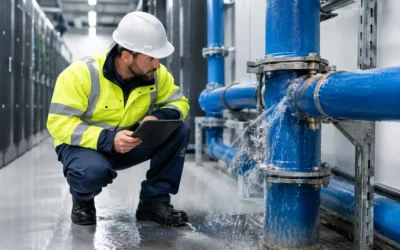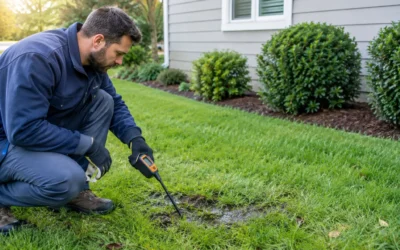
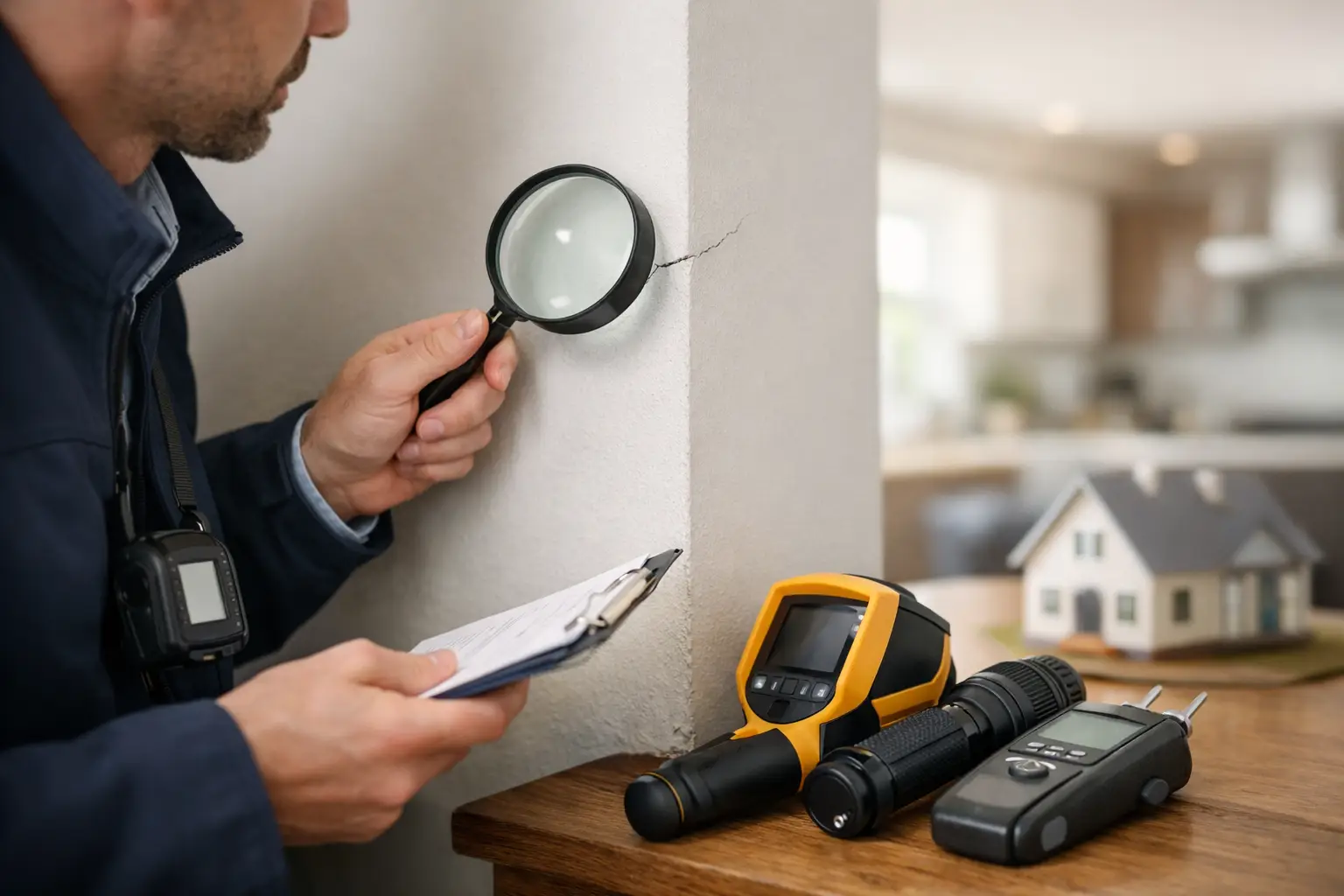
A high DEWA bill, a damp patch beneath fresh paint or a recurring ceiling stain is rarely the fault itself. It is evidence of a failure somewhere else in the building. A proper property diagnostics guide helps owners, facilities teams and asset managers move beyond visible symptoms, identify the source accurately and make repairs that last.
The financial difference is significant. Repairing a failed pipe fitting before moisture reaches finishes may be a contained maintenance job. Finding it after mould develops, ceilings sag and neighbouring units are affected can involve reinstatement, claims, tenant complaints and lost operating time. Diagnosis comes before demolition, not after it.
What property diagnostics should cover
Property diagnostics is a structured assessment of a building’s condition and performance. It is not simply a visual inspection, nor is it an invitation to replace every ageing component. The purpose is to establish what is failing, where it is failing, why it has failed and what evidence supports the repair decision.
For most residential and commercial properties, water is the highest-priority risk. Pressurised water lines, drainage networks, waterproofing systems, irrigation pipework, swimming pools, roofs and air-conditioning condensate routes can all cause damage away from the original defect. Water follows gravity, joints, service voids and capillary paths, so the stain a resident sees may be metres from the leak.
A useful inspection also considers moisture ingress, poor drainage, defective sealants, thermal anomalies, corrosion indicators and workmanship defects. In larger facilities, the scope may extend to fire lines, chilled-water networks, tanks, process pipework and critical containment areas. The right scope depends on the building, its use and the consequence of failure.
Start with evidence, not assumptions
The fastest way to waste money is to treat the nearest visible symptom. A ceiling stain does not automatically mean a leaking pipe above it. It could result from a shower waterproofing failure, a blocked condensate drain, failed roof detailing or water entering through façade penetrations.
Start by collecting the operating evidence. Review water-consumption data, pressure behaviour, previous repair records, photographs, occupant reports and the timing of the issue. A sudden rise in consumption can indicate a pressurised leak. A stain that appears only after rain points towards envelope or roof ingress. Recurrent damage after several attempted repairs suggests the original diagnosis was incomplete.
This initial fact-finding shapes the inspection method. It also prevents invasive work being authorised on the basis of guesswork. For a villa owner, this may mean comparing meter readings when all fixtures are off. For a hotel or hospital, it may involve reviewing zone consumption and isolating sections without interrupting essential operations.
Warning signs that need prompt investigation
Some defects demand action before they become a refurbishment project. Persistent mould odour, peeling paint, unexplained water use, reduced system pressure, warm or cold floor areas, discoloured grout and repeated drain blockages should not be dismissed as cosmetic issues.
So should unexplained moisture around plant rooms, tanks, risers and service corridors. In commercial and industrial settings, a small anomaly can become a shutdown risk if it affects electrical systems, insulation, structural finishes or operational equipment.
Use the diagnostic method that matches the failure
No single tool finds every defect. Good property diagnostics combines non-invasive methods where possible, then uses targeted verification when evidence supports it. The aim is precision: open the right location once, rather than remove finishes across an entire room.
Thermal imaging can identify temperature differences associated with wet materials, concealed pipe routes, insulation gaps or active water movement. It is highly useful for narrowing an investigation, but a thermal image alone does not prove a leak. Surface temperature can be affected by sunlight, air conditioning, pipe temperature and material type. It must be interpreted alongside other evidence.
Acoustic leak detection listens for the sound created by pressurised water escaping from a pipe. Its effectiveness depends on pipe material, depth, pressure, background noise and access. It can be extremely accurate in the right conditions, particularly when combined with pressure testing and correlation techniques.
Tracer gas testing is often appropriate when a leak is concealed beneath floors, behind finishes or within complex pipe runs. A safe forming gas is introduced into an isolated system and rises through escape points, where sensitive equipment detects it. This is valuable when conventional methods cannot confidently isolate the source.
Moisture meters, borescopes, drain cameras, dye testing and pressure tests all have distinct roles. For waterproofing failures, controlled flood or water-tightness testing may provide clearer evidence than a pipe-focused method. For drainage issues, CCTV inspection can reveal cracks, blockages, displaced joints or root intrusion without excavation.
A practical property diagnostics workflow
An effective assessment follows a disciplined sequence. The process should be adapted for the property, but the principles remain consistent.
First, define the problem and potential impact. Is there active water loss, visible damage, health risk, tenant disruption or a critical operational exposure? This determines urgency and whether temporary isolation is needed.
Second, inspect the accessible areas and map the likely water path. This includes adjacent rooms, levels above and below, wet areas, risers, plant spaces and external elevations where relevant. The objective is to understand the building, not simply inspect the complaint location.
Third, test the relevant system using the least disruptive reliable method. The technician may establish whether a pipe loses pressure, whether a drain holds water or whether moisture is increasing within a wall assembly. Multiple tests are often necessary, especially where there are several possible sources.
Finally, document the findings and recommend a proportionate repair. A credible report distinguishes confirmed facts from possible contributing conditions. It should identify the tested area, methods used, results, likely source, suggested repair approach and any further investigation required. This gives owners, insurers and contractors a defensible basis for action.
Treat the cause, then verify the repair
A repair is not complete because the visible leak has stopped for a day. It should address the failure mechanism. If a shower wall is leaking because the membrane has failed, replacing silicone alone may delay the problem rather than solve it. If pressure loss is caused by a pinhole in a corroded line, patching one point without assessing the pipe condition may create repeat call-outs.
Verification matters. Re-test the repaired line, flood-test the waterproofed area where appropriate, confirm stable pressure, and monitor moisture drying over time. Drying is not instant, particularly in dense concrete, screed and plaster. Reinstatement should wait until the area is demonstrably dry enough to avoid trapping moisture behind finishes.
For difficult or recurring cases, LeakDtech applies engineering-led inspection methods to locate the source before unnecessary demolition begins. That approach protects the property while giving decision-makers clearer repair evidence.
Different buildings, different diagnostic priorities
A flat with a leaking bathroom requires a focused investigation that considers the unit above, shared risers and the waterproofing system. A villa may require attention to underground irrigation, pool pipework, roof drainage and external water tanks. In both cases, a high bill may be the first warning, but the repair route is not the same.
For facilities managers, diagnostics must account for continuity. Isolating a section of water supply at a school, clinic, hotel or retail centre requires planning, access control and clear communication. Testing may need to be undertaken out of hours or in zones so that the building remains operational.
Industrial and petrochemical environments raise the stakes further. Inspection planning must consider safety permits, process constraints, pipe contents, access requirements and the potential consequences of a release. Non-destructive testing and documented condition assessment are essential, but methods must suit the asset and site rules.
Turn inspections into planned asset protection
Property diagnostics is most valuable before an emergency exposes the weak point. Annual checks of high-risk wet areas, roofs, tanks, irrigation systems and mechanical services can reveal developing failures while repairs remain controlled and affordable.
The best inspection frequency depends on property age, occupancy, water demand, maintenance history and exposure. A newly handed-over building may need defect liability period audits to identify workmanship issues before responsibility shifts. An older, heavily occupied asset may benefit from targeted seasonal checks, particularly before periods of heavy rain or peak cooling demand.
Keep records of test results, repairs and recurring locations. Over time, this reveals patterns: repeated failures on one pipe material, a drainage route that blocks after landscaping work, or water ingress linked to a particular façade elevation. That information supports better budgets and fewer reactive repairs.
When water appears where it should not, speed matters. But speed without diagnosis often creates a second repair bill. Establish the source, use evidence-led testing, repair the underlying defect and verify the result. That is how a property remains dry, operational and worth protecting.