
A sudden spike in your water bill, damp patches spreading across a wall, or a plant room that never quite dries out usually raises the same question first – what will this cost to investigate properly? Water leak detection services cost can vary widely, but the bigger issue is usually not the inspection fee itself. It is the cost of delay, failed repairs, damaged finishes, and unnecessary demolition when the source is guessed rather than proven.
For homeowners, landlords, facilities teams and industrial operators, leak detection should be treated as a technical diagnostic service, not a general call-out. A low upfront price can look attractive until it leads to exploratory breaking, repeated visits, business interruption or a repair that misses the actual failure point. Accurate diagnosis is what controls total spend.
What affects water leak detection services cost?
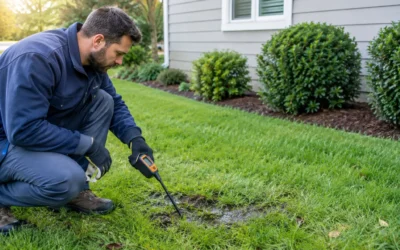
The price of leak detection is shaped by complexity, risk and the level of technical investigation required. A simple domestic leak in an accessible pipe run is not priced the same way as a concealed failure beneath tiled floors, within a chilled water network, or inside an industrial process line.
Property type is one of the biggest factors. In a flat or villa, the scope may involve tracing a hidden potable water leak, checking bathrooms, pressure testing isolated lines and verifying moisture migration. In a hotel, hospital or school, the same symptom can affect occupied areas, critical services and multiple possible systems. That means more zones to inspect, more reporting requirements and tighter control around disruption.
Access also matters. If pipework is exposed, leak tracing is faster. If the suspected leak sits below screed, behind fitted joinery, above decorative ceilings or beneath external hardscape, the investigation becomes more technical. The goal is still non-invasive detection, but reaching a reliable conclusion may require several methods rather than one.
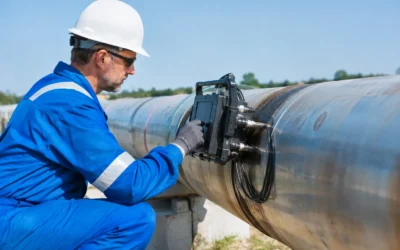
The type of system under investigation changes pricing as well. Domestic water supply lines, irrigation systems, pools, fire lines, district cooling pipework, tanks and drainage networks all fail differently. Each requires different test procedures and different equipment.
Finally, urgency affects cost. A planned inspection during normal working hours is different from an emergency response to active flooding, loss of pressure, operational shutdown risk or severe water ingress.
Typical pricing ranges and why they vary
There is no single flat rate that applies to every site, but most leak detection jobs fall into a practical range based on scope. For a straightforward residential inspection, pricing often starts at the lower end where access is reasonable and the likely leak source is limited to one area or one system. Costs increase when the issue is intermittent, concealed, spread across several areas, or linked to previous failed repairs.
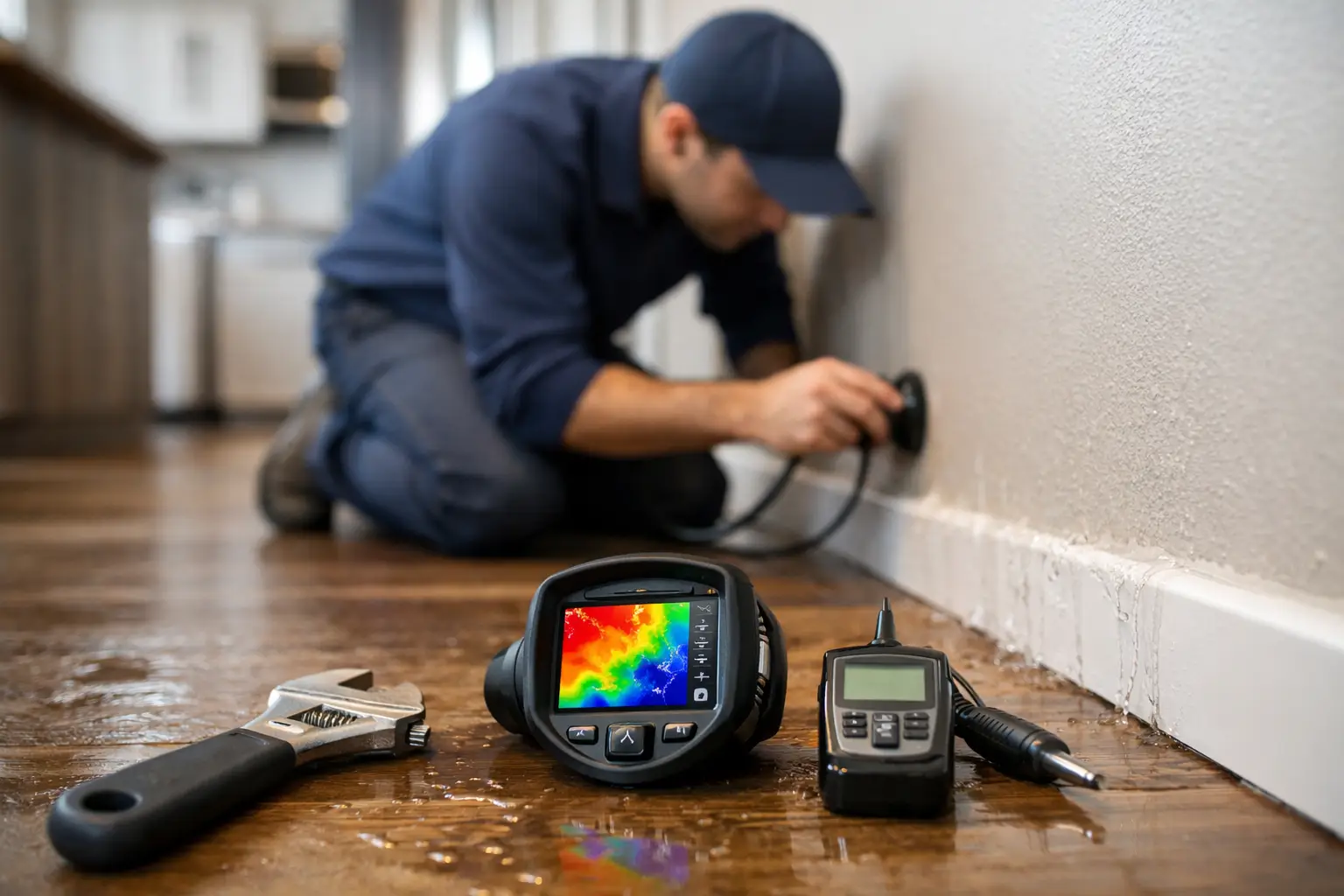
Mid-range pricing usually reflects a more detailed investigation with multiple test methods. That may include acoustic testing, thermal imaging, pressure testing and moisture mapping to separate the actual leak source from secondary damage. This is common where a client has symptoms but no visible pipe failure, or where water is travelling from one location and presenting somewhere else.
Higher-end leak detection costs are usually tied to complex commercial or industrial environments. These may involve large networks, safety constraints, after-hours access, specialist reporting, technical coordination with maintenance teams, or systems where downtime carries a significant financial impact. In those settings, the cost of expert diagnosis is often small compared with the cost of disruption.
That is why comparing quotes only on headline price is risky. Two providers may not be quoting for the same level of certainty, the same equipment, or the same reporting standard.
The methods behind the price
The tools used on site are a major reason prices differ between providers. Proper leak detection is not a guess-and-break exercise. It is a process of narrowing failure points using evidence.
Acoustic leak detection listens for the sound signature of pressurised water escaping from a pipe. It can be highly effective, particularly on buried or concealed pipework, but results depend on pipe material, background noise and site conditions. Thermal imaging helps identify temperature anomalies linked to moisture or active flow, which is useful in walls, ceilings and under floors. Tracer gas testing is more specialised and often used where other methods are less conclusive, especially on difficult concealed lines. Pressure testing confirms whether a system is actually losing integrity and helps isolate which section is affected.
In practice, the best results often come from combining methods. That raises the value of the service because it improves accuracy and reduces the chance of opening the wrong area. Clients are not simply paying for equipment. They are paying for interpretation, system knowledge and the ability to distinguish a leak source from moisture spread, condensation, drainage defects or waterproofing failure.
Why the cheapest option often becomes the expensive one
Many costly leak cases follow the same pattern. A contractor makes an assumption, opens finishes in the likely area, carries out a repair, and the leak continues. Then another area is opened. Then another. By that point, the client is paying not only for repeated labour but also for reinstatement, decoration, lost time and frustration.
For domestic properties, that may mean replacing tiles, joinery, ceilings or painted finishes unnecessarily. For commercial sites, it can mean room closures, complaints from occupants, disruption to trading hours or delays to handover. In industrial and petrochemical settings, poor diagnosis can escalate into shutdowns, safety concerns and expensive maintenance overruns.
This is where engineering-led detection changes the economics. Precision reduces strip-out, shortens repair time and gives contractors a much clearer target. If a leak is pinpointed accurately, the repair scope becomes smaller, faster and easier to cost.
When a higher leak detection fee is justified
A more expensive quote is not automatically better, but there are situations where it is justified. One is when the provider is dealing with a technically difficult leak that others have failed to resolve. Another is when the property environment is sensitive, such as occupied hospitality spaces, hospitals, schools, live retail environments or process facilities where disruption must be tightly managed.
It is also justified when documentation matters. Insurance claims, defect liability disputes, quality assurance reviews and contractor accountability often require clear findings, test records and photographic evidence. A basic site visit with a verbal opinion may not be enough.
Companies such as LeakDtech operate in this higher-value space because the job is not simply to attend site. It is to identify the cause with minimal disruption and give the client a usable technical basis for repair decisions.
Questions to ask before approving the job
If you are comparing providers, ask what is included in the price. Does the fee cover just a call-out, or a full diagnostic inspection? Will multiple technologies be used if needed? Is pressure testing included? Will you receive a written report? If the leak is not on the first suspected system, how is additional scope handled?
It is also worth asking whether the team has experience with your type of asset. A domestic bathroom leak is one thing. A leak in a chilled water line, irrigation main, fire system or holding tank is another. Relevant experience saves time because the technician knows how these systems fail and how to rule out false leads quickly.
The right question is not only, “What does leak detection cost?” It is, “What level of certainty am I buying, and what cost am I avoiding?”
Water leak detection services cost versus repair cost
Clients often look at leak detection as an extra expense before repair. In reality, it is usually the step that prevents repair costs from growing. Without it, repair contractors may have to price for wider opening-up, greater uncertainty and more time on site. Once the source is confirmed, repair work becomes more targeted and more economical.
This matters even more when water damage is already spreading. A hidden leak left unresolved can affect flooring, plaster, ceilings, insulation, electrical areas, stock, equipment and indoor air quality. In larger sites, it can also affect compliance, service continuity and tenant satisfaction. Against those risks, the inspection fee is often the smallest line item in the whole incident.
If you are seeing unexplained consumption, damp, mould, loss of pressure or recurring water ingress, the sensible approach is to act early and commission a proper investigation. The right diagnosis does not just find the leak. It protects the budget, the asset and the time you would otherwise spend fixing the wrong problem.