A pool that needs topping up every few days is not simply inconvenient. It can signal a leak beneath the deck, behind the tiles, in the pipework or within the filtration equipment. In Dubai, where heat and wind accelerate evaporation, genuine pool water loss is often dismissed for too long. That delay can turn a manageable repair into damaged finishes, higher DEWA bills, chemical imbalance and costly plant-room work.
The practical question is not whether a pool loses water. Every outdoor pool does. The question is whether it is losing water at a normal rate for the conditions, or whether water is escaping through a fault that needs technical investigation.
How much pool water loss is normal?
Evaporation changes with air temperature, water temperature, humidity, wind exposure, sunlight and how often the pool is used. Heated pools, infinity-edge pools and pools with active water features can all lose more water than a shaded, covered pool.
As a broad working benchmark, a pool may lose a few millimetres of water per day through evaporation in hot weather. In peak summer conditions, the figure can be higher. However, a drop that is sudden, persistent or visibly greater than nearby pools should not be assumed to be weather-related.
A pool cover can reduce evaporation substantially when the pool is not in use. If water loss remains high with the cover in place, the likelihood of a leak increases. Likewise, a pool that loses noticeably more water while the circulation pump is operating may have a pressure-side pipe leak, a faulty filter component or an issue around the pump and returns.
The bucket test: a useful first check
The bucket test cannot locate a leak, but it provides a clear comparison between evaporation from the pool and evaporation from a small container of pool water. It is most useful when carried out over 24 hours with the pool unused.
Fill a bucket with pool water and place it on a pool step so the water inside the bucket is at roughly the same level as the surrounding pool water. Mark the water level inside the bucket and the pool water level on the outside of the bucket. Switch off auto-fill systems before starting, otherwise they will mask the result.
After 24 hours, compare the two levels. If the pool level has dropped more than the bucket level, the difference is likely to be leak-related rather than simple evaporation. Repeat the test with the circulation system running and then switched off, if possible. A greater loss while equipment is running points towards pipework or plant equipment. A similar loss in both conditions may indicate the pool shell, fittings, skimmer, lights or hydrostatic components.
This is a screening exercise, not proof of a specific fault. Wind, splash-out and rain can affect the result, and the test does not account for a pool that has more than one leak source.
Signs that point to a hidden pool leak
Water level is only one indicator. Pools frequently show secondary signs before the main leak becomes obvious. A technician will consider the whole system, from the pool structure to the balance tank and circulation lines.
Look for a persistent need to add water, unexplained increases in water consumption, or a chemical demand that seems disproportionate to pool use. A leaking pool constantly introduces fresh water, diluting chlorine, salt and balancing chemicals. That creates more frequent treatment costs and makes water quality harder to control.
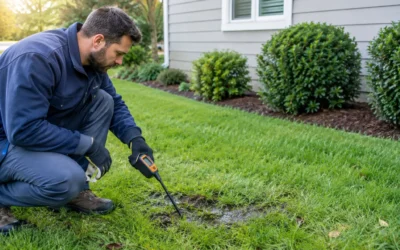
Wet patches near the pool, soft or sinking paving, cracked coping stones and loose tiles are also significant. Escaping water can wash out bedding material beneath finishes and undermine the surrounding deck. In landscaped areas, unusually lush patches can be a clue, although irrigation leaks must be ruled out separately.
Equipment symptoms matter as well. Air entering the system, a pump that needs repeated priming, pressure changes on the filter gauge, poor circulation, or water around valves and equipment connections may all indicate a leak. For infinity pools and pools with balance tanks, unexplained water level changes in the tank should be investigated promptly. These systems have additional components and pipe runs, so diagnosis needs to be methodical rather than based on guesswork.
Why guessing is an expensive repair strategy
Pool leaks are often repaired badly because the visible symptom is treated instead of the actual failure point. Regrouting tiles, resealing a random joint or replacing sections of paving might temporarily change the water loss, but it can also add unnecessary refurbishment cost while leaving the leak active.
A reliable investigation starts by separating structural loss from plumbing loss. Pressure testing can assess whether suction and return lines hold pressure. Acoustic testing may identify the sound created by water escaping from buried pipework. Tracer gas can be introduced into isolated lines and detected at the surface, allowing technicians to trace a leak with limited disturbance. Thermal imaging can support the inspection where temperature differences reveal moisture patterns, though it must be used under suitable site conditions.
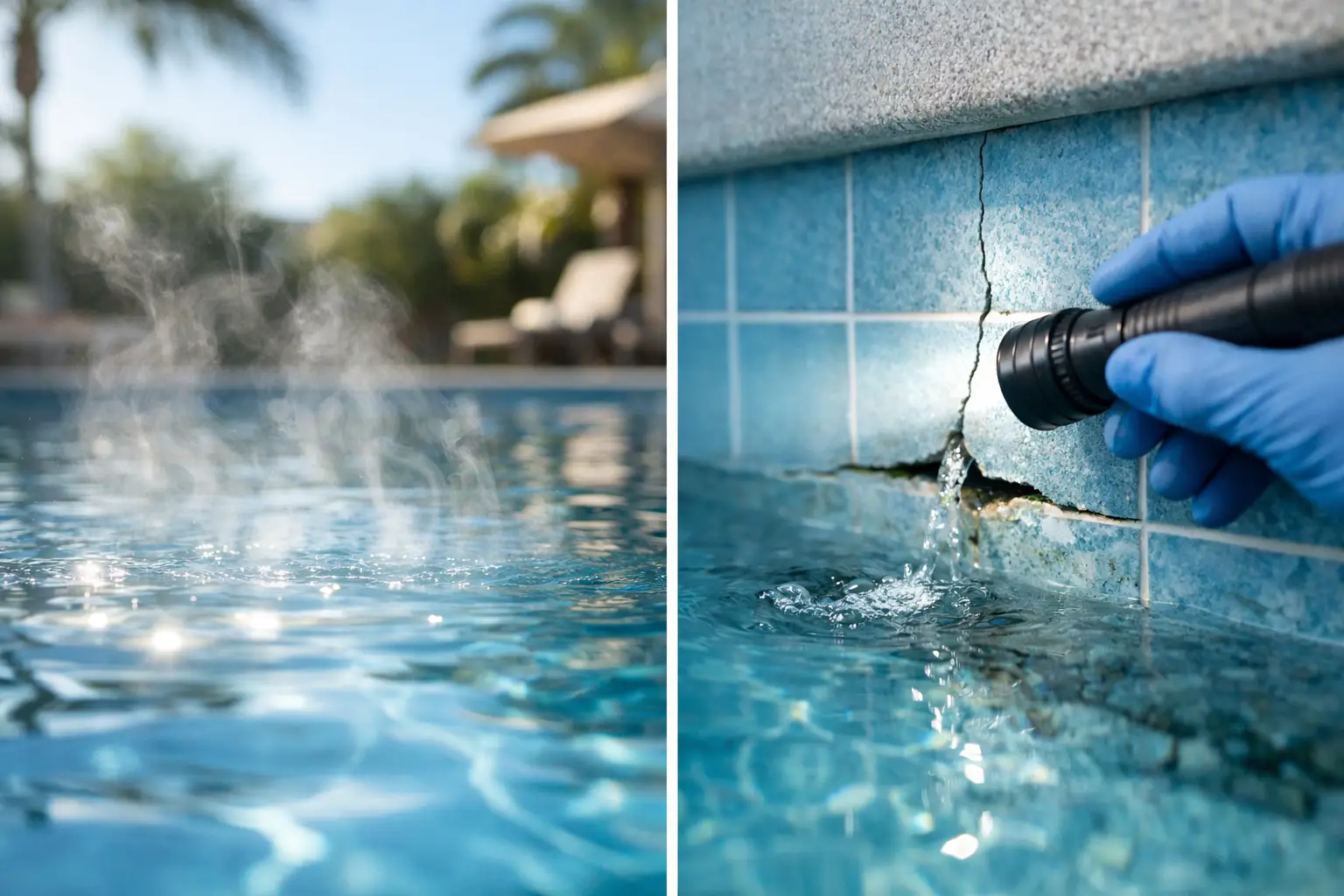
Dye testing around fittings, lights, skimmers and visible cracks may also help identify localised movement of water. In some cases, divers can inspect the pool without draining it, avoiding downtime and the risks associated with emptying a pool. The appropriate method depends on the pool design, access, finishes, suspected leak location and whether the circulation system can be isolated.
For commercial properties, the cost of an inaccurate repair extends beyond water. Hotel pools, schools, residential communities and leisure facilities can face guest complaints, restricted access, lost operating time and reputational damage. A documented technical diagnosis gives facilities teams a defensible scope of work rather than a series of reactive repairs.
Common causes of pool water loss
The source can be as minor as a worn O-ring or as complex as a fractured underground return line. Common failures include defective skimmer connections, cracked pipework, leaking pool lights, failed expansion joints, damaged waterproofing membranes, loose fittings and faults around main drains.
Movement is a major consideration in pools with tiled finishes. Settlement, temperature cycles and inadequate joint detailing can open pathways behind tiles or through the shell. The visible crack may not be the only issue, which is why testing should confirm whether it is actively leaking before cosmetic repairs begin.
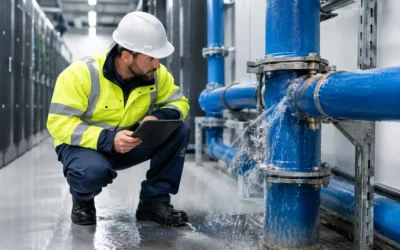
Plant rooms deserve equal attention. Multiport valves, filters, pumps, heater connections and chlorination equipment can leak slowly, especially where seals have aged or vibration has loosened fittings. These leaks may drain into a floor gully or evaporate before they are noticed, yet still create a substantial annual water cost.
What to do when you suspect a leak
First, stop relying on the auto-fill system as a solution. It keeps the pool operational, but it hides the scale and pattern of the loss. Record water level changes over several days, note whether the pump was running, and photograph any wet areas, cracked finishes or equipment leaks.
Do not drain the pool without professional advice. Groundwater pressure can damage some pool structures when they are emptied, particularly if hydrostatic relief arrangements are absent, blocked or unsuitable. Draining can also make a leak harder to identify if it is linked to a fitting that only leaks at a particular water level.
If the loss is material or persistent, arrange a non-invasive pool leak investigation. The objective should be to isolate the fault, confirm the evidence and provide a repair scope that targets the failed component. LeakDtech uses technical testing methods to help property owners and facilities teams find difficult leaks without committing immediately to disruptive demolition.
A pool should be an asset, not a recurring source of unexplained water use and repair bills. Measuring the loss early and diagnosing it properly protects the structure, keeps the plant working efficiently and lets you repair only what has genuinely failed.