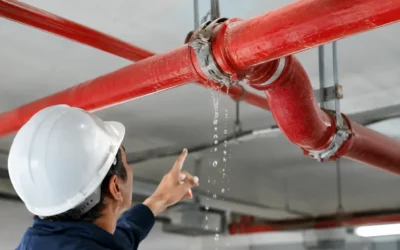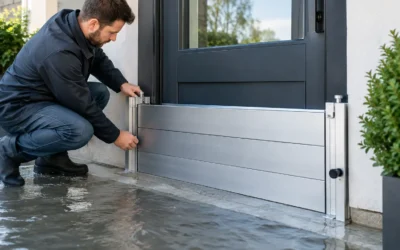
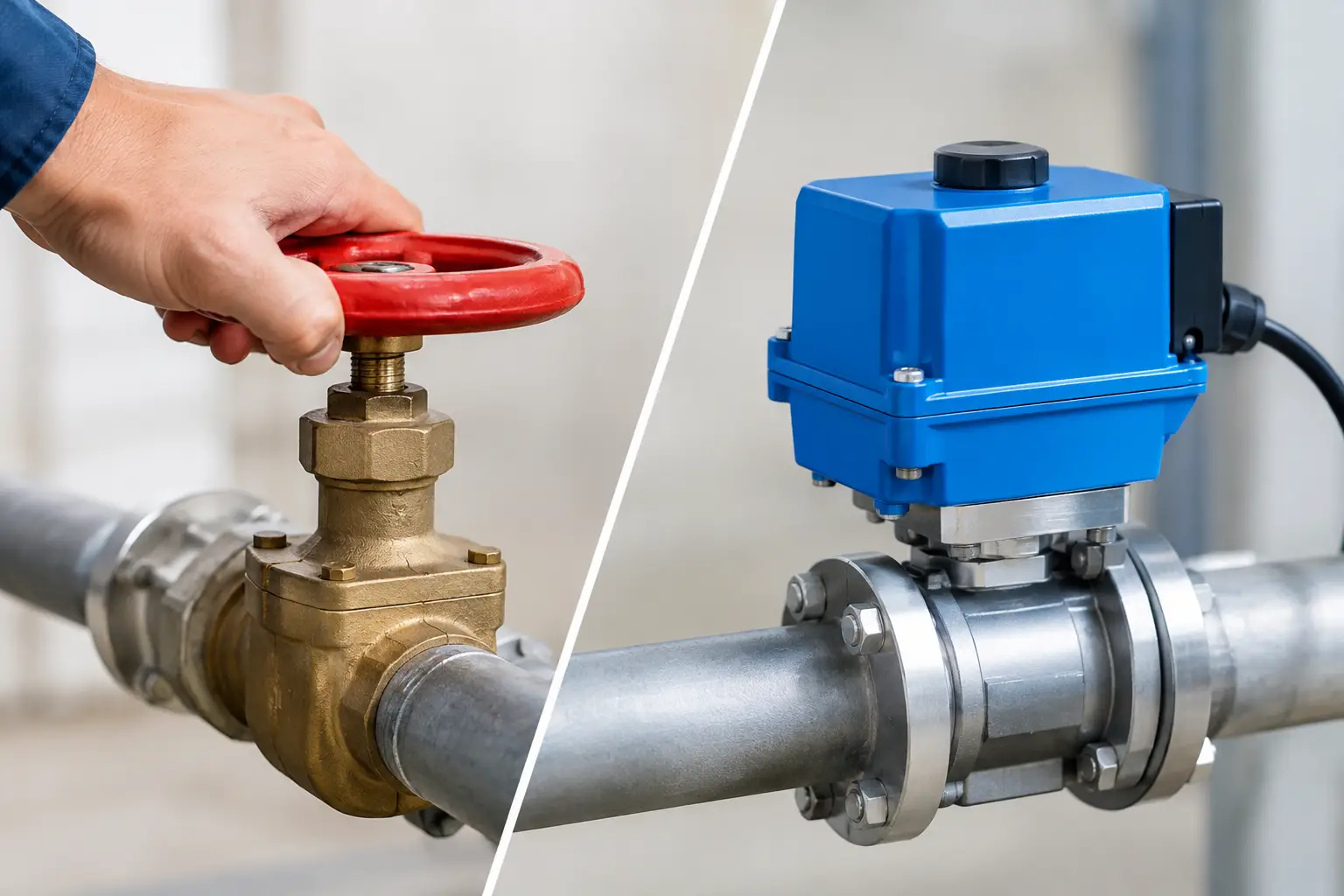
A leaking flexi hose beneath a basin can release hundreds of litres before anyone notices. In that moment, the manual versus automated shutoff decision is not theoretical: it determines whether water stops when a person arrives or when the system detects abnormal flow.
For villa owners, landlords and facilities teams, both approaches have a place. A manual isolation valve is essential infrastructure. An automated shutoff valve adds continuous monitoring and rapid intervention when the property is empty, occupied by tenants, or operating outside normal maintenance hours. The right choice depends on the risk, the building use and the consequences of delayed response.
What manual shutoff does well
A manual shutoff relies on a person locating and closing an isolation valve. This may be the main incoming water valve, a valve serving a particular bathroom or kitchen, or a dedicated valve on an appliance supply. It is simple, familiar and usually inexpensive to install.
Its greatest strength is certainty of command. Once a competent person identifies the correct valve and closes it, the water supply is physically isolated. There is no software configuration, sensor threshold or internet connection involved. For planned plumbing works, a visible manual valve remains the correct and necessary control method.
Manual isolation also suits low-risk locations where someone is consistently present and knows the building services. A small office with a trained facilities operative on site, for example, may be able to respond quickly to a visible issue. Local isolation valves also allow one fixture to be repaired without shutting down the entire property.
The weakness is response time. A valve cannot react to a burst pipe at 3 am, during a holiday, or while a vacant flat is waiting for new tenants. It also depends on people knowing where the valve is, being able to reach it, and being confident that it is the correct one. In many properties, main stopcocks are hidden in cupboards, ceiling voids, service risers or external chambers. They may be stiff, corroded, inaccessible or simply never tested.
Manual versus automated shutoff: the operational difference
An automated shutoff system monitors water behaviour and closes a motorised valve when it identifies a condition consistent with a leak. Depending on the system and its settings, this may include continuous flow beyond a defined period, unusually high consumption, pressure changes, or flow patterns outside the normal profile of the property.
The key operational advantage is that the response is not dependent on occupancy. A smart valve can monitor the incoming supply around the clock, send an alert to a mobile phone, and isolate the water before a small failure becomes a major reinstatement project. This is particularly valuable in Dubai villas, rental properties and holiday homes where air-conditioning condensate, irrigation systems, under-sink pipework and concealed bathroom connections can fail unnoticed.
Automated shutoff is not a replacement for diagnosis. It limits the water escaping from a failed line; it does not confirm the precise fault location or repair the underlying cause. If the system flags repeated abnormal flow, the next step is a technical inspection. Non-invasive leak detection, pressure testing, acoustic methods or thermal imaging may be required before opening finishes or replacing pipework.
Response speed is where damage costs are decided
Most serious water damage is not caused by the initial defect alone. It is caused by the time between failure and isolation. A pinhole leak may take weeks to reveal itself through a stained ceiling, but a failed appliance hose or cracked flexible connector can cause immediate flooding.
With manual shutoff, the response sequence is notice, access, decision and action. Someone sees water, contacts a responsible person, finds the valve and closes it. Even a well-managed property can lose valuable time if the incident happens overnight or if the responsible contact is off site.
With automated shutoff, the response sequence can be detection, alert and closure. That can reduce the volume of escaped water dramatically. For landlords, this may mean avoiding damage to a tenant’s belongings and preventing water migration into neighbouring units. For hotels, clinics, schools and retail sites, it can mean protecting operations that cannot tolerate a closed area, contaminated finishes or emergency refurbishment.
Speed must be balanced against accuracy. A poorly configured system may interpret legitimate use as a leak and close the supply at an inconvenient time. This is why installation should begin with an assessment of the property’s normal water demand rather than a one-size-fits-all setting.
Where automated systems deliver the strongest return
Automated shutoff is most effective where a leak can remain undetected or where the cost of disruption is high. That includes unoccupied villas, rental portfolios, staff accommodation, premium residential properties, server rooms with nearby plumbing, kitchens, laundries and buildings with a history of water damage.
It is also valuable where water bills are difficult to control. A smart water management valve can identify persistent flow that may otherwise appear only as an unexpectedly high DEWA bill. Slow toilet leaks, irrigation faults, leaking storage tank connections and concealed pipe failures often waste water long before they create visible damage.
For property managers, remote visibility is as useful as automatic closure. It creates an auditable record of alerts and unusual consumption, helping teams prioritise attendance and avoid repeated call-outs based on guesswork. AquaSentra Smart Water Management, for example, combines continuous flow and pressure monitoring with automatic shutoff and remote notifications for this type of residential and managed-property risk.
When manual control remains the better choice
Automated isolation should not be applied blindly to every water line. Systems supplying fire protection, process equipment, critical cooling arrangements or life-safety functions require a carefully engineered strategy. An automatic valve that closes at the wrong time can introduce operational or compliance risks greater than the leak risk it was intended to manage.
Industrial, petrochemical and large commercial environments need segregation by system. Domestic water, irrigation, washroom services, process water, fire lines and cooling networks do not have the same criticality or acceptable shutoff conditions. Pressure testing, valve mapping and operating procedures should guide the design. In these settings, monitored alarms with defined escalation may be more appropriate than automatic closure on certain lines.
Manual shutoff may also be sufficient where the supply is low risk, accessible and continuously supervised. The sensible question is not whether automation is more advanced. It is whether the likely savings from faster isolation exceed the installed cost and any operational complications.
Reliability depends on installation and maintenance
Neither option is dependable if it has not been maintained. Manual valves should be labelled, accessible and exercised periodically so they do not seize when needed. Occupants and staff should know the location of the main isolation point and the procedure for reporting a suspected leak.
Automated systems require professional installation on the correct incoming line, stable power, appropriate communication settings and realistic leak thresholds. They should be tested after installation and reviewed when the building use changes. A villa that is occupied by a family has a different water profile from the same villa left vacant for summer.
False alarms should be investigated, not simply disabled. They may be caused by a setting that needs adjustment, but they can also reveal intermittent toilet filling, irrigation leakage or pressure instability. Equally, an alert should never be treated as proof that a pipe has failed. Verification protects against unnecessary repairs while ensuring genuine defects are found accurately.
A practical decision for property owners and managers
Choose manual shutoff as the baseline. Every property needs clear, usable valves and people who know how to operate them. Add automated shutoff where delay is likely, occupancy is inconsistent, water damage exposure is high, or remote oversight would improve control.
A combined approach is usually the strongest solution: accessible manual isolation for planned work and emergency attendance, plus automated monitoring for the periods when nobody is there to act. Before installing any system, understand the property’s water layout, identify critical supplies that must not be interrupted, and resolve existing unexplained consumption.
Water damage rarely announces itself at a convenient time. The most cost-effective shutoff strategy is the one that stops water quickly without creating a new operational problem, then gives you the evidence needed to repair the real fault properly.