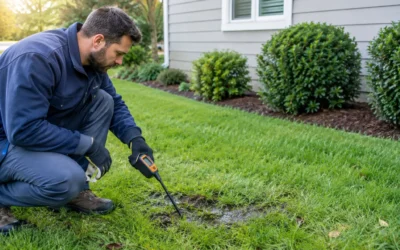
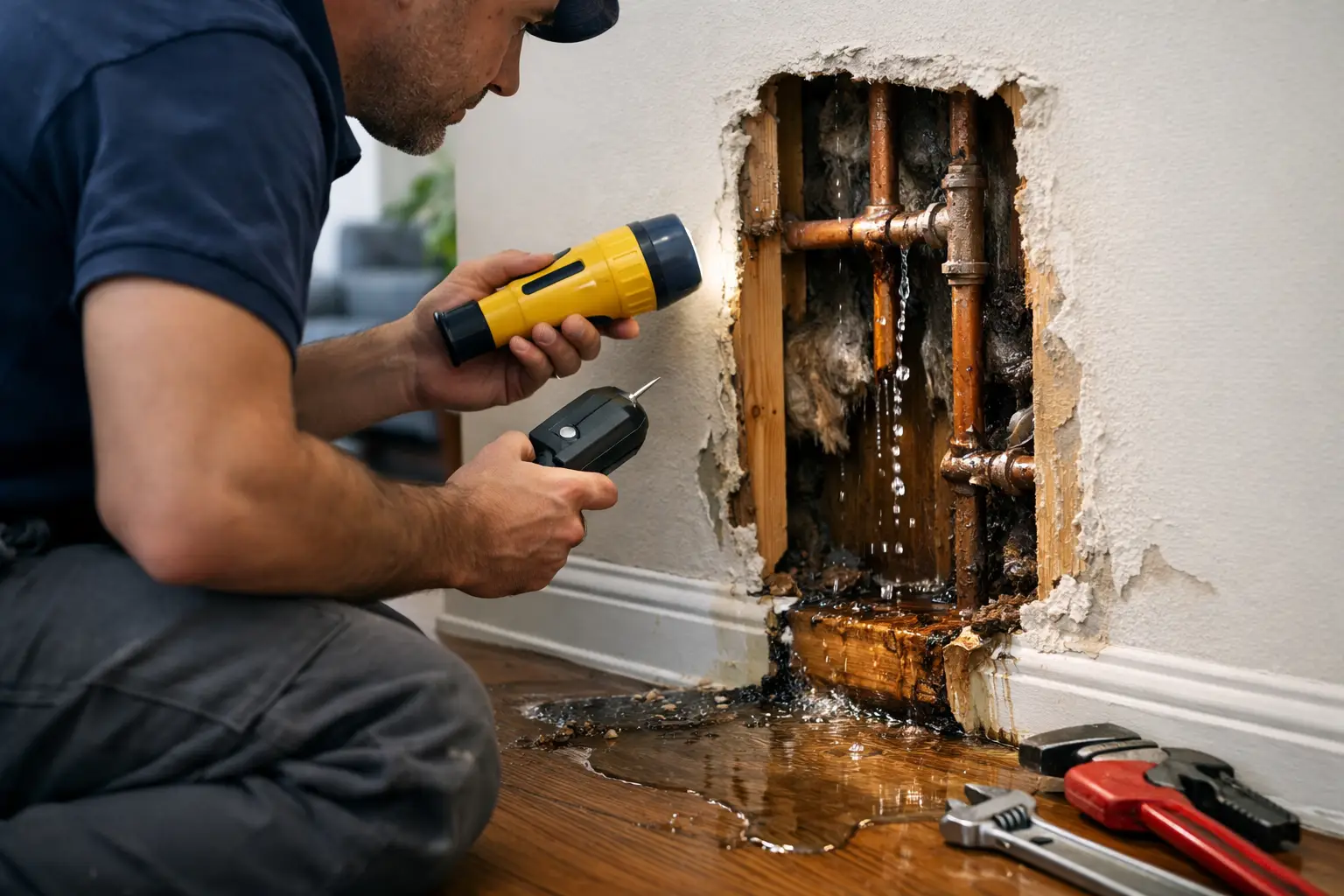

A water bill that jumps without explanation is rarely a paperwork issue. More often, it is the first sign that you need to find hidden pipe leak indoors before it turns into damaged finishes, mould growth, swollen joinery, or a major repair bill.
Indoor leaks are difficult because the pipe is often not the problem you can see. The visible symptom might be a damp skirting board, a peeling patch of paint, a musty smell in a hallway, or warm flooring in the wrong place. The actual leak could be behind a wall, under screed, above a ceiling void, or within a concealed service riser. That gap between symptom and source is where costs climb.
Why hidden indoor pipe leaks are missed
Many indoor leaks start small and stay small for weeks or months. A pinhole in a pressurised line may release only a fine spray. A poor joint may seep slowly into surrounding materials. In both cases, water travels. It follows the easiest route through plaster, insulation, blockwork, ceiling cavities, and floor finishes. By the time the stain appears, the leak may be several metres away.
That is why guesswork repairs often fail. Replacing a visible section of ceiling or re-sealing a sanitary fitting may treat the symptom rather than the pressure leak feeding it. For homeowners, that means repeat damage. For landlords, FM teams, and commercial operators, it means disruption, rework, tenant complaints, and avoidable cost.
Signs you need to find hidden pipe leak indoors fast
The first warning is often financial. If your water consumption rises but your habits have not changed, a concealed leak should be considered early. For properties in the UAE, unexpected DEWA increases are one of the most common triggers for a proper leak investigation.
Physical signs matter just as much. Persistent damp patches, bubbling paint, warped timber, stained ceilings, cracked plaster around wet areas, mould returning after cleaning, or a constant sound of running water when all outlets are off can all point to a hidden leak. In some buildings, you may also notice reduced pressure at outlets or the pump cycling more frequently than normal.
There are also subtler indicators. A chilled water line leak may create unusual cold spots or condensation patterns. A hot water leak can produce localised warmth under flooring or behind tiled walls. In hospitality, healthcare, and education settings, unusual humidity in one area can be the clue that leads to a concealed pipe failure.
How to find hidden pipe leak indoors without causing damage
The right approach is staged. Start with simple checks, then move to technical testing if the evidence points to a concealed line.
Check whether the leak is on the internal supply
Begin by shutting off all known water outlets and ensuring no appliances are drawing water. If the meter continues to move, that strongly suggests an active leak on the system. This does not tell you where it is, but it confirms the problem is real and ongoing.
If the property has separate isolation valves for different zones or fixtures, isolate them one by one. This can help narrow the suspect area. For example, if the meter stops moving when the bathroom branch is isolated, the leak is likely downstream of that valve. In larger properties and commercial sites, zoning is often the fastest way to reduce the search area before testing starts.
Read the building, not just the stain
Once a leak is confirmed, inspect the surrounding structure carefully. Look at the edge of the damage, not just the centre. Water rarely presents neatly. A ceiling stain below a bathroom may come from a pressurised supply pipe, a waste pipe, failed waterproofing, or condensation. Each has different behaviour.
Pressurised pipe leaks usually remain active regardless of whether a fitting is in use. Waste leaks tend to show up when water is discharged. Waterproofing failures often appear after showers or cleaning. Condensation is influenced by temperature difference and ventilation. Distinguishing these patterns matters, because the wrong diagnosis leads to unnecessary opening works.
Use pressure testing to confirm a concealed pipe issue
Pressure testing is one of the clearest ways to verify whether a pipe section is losing integrity. A controlled test can identify whether a line is holding pressure as it should or dropping over time. This is especially useful when the visible evidence is inconclusive or when several possible causes exist in the same area.
It is not a stand-alone answer. Pressure loss confirms a defect within the tested section, but not the exact point. Still, it separates pipe failure from surface-level moisture issues and gives a technical basis for the next step.
Best methods to find hidden pipe leak indoors accurately
When a leak is concealed, non-invasive detection is usually the most cost-effective route. The goal is not simply to prove that water is escaping. It is to pinpoint the source precisely enough that repairs can be limited to the smallest practical area.
Thermal imaging
Thermal cameras identify temperature differences on surfaces. In the right conditions, they can reveal heat from hot water leaks, cooling from evaporative moisture, or anomalies linked to wet materials behind walls and floors. Thermal imaging is fast and clean, but it is not magic. Reflections, ambient conditions, and insulation layers can affect interpretation. It works best as part of a wider diagnostic process.
Acoustic leak detection
Pressurised leaks create sound. Acoustic equipment listens for the vibration and noise produced as water escapes from a pipe under pressure. This can be highly effective for concealed internal supplies, particularly where the building layout or finishes make visual inspection unreliable. Background noise, pipe material, and system pressure can all affect results, so operator experience matters.
Tracer gas testing
Where other methods are less definitive, tracer gas can be introduced into isolated pipework. The gas escapes through the defect and is detected above the surface with specialised sensors. This is particularly useful in floor systems and complex concealed networks where moisture spread makes visual clues misleading.
Moisture mapping and inspection tools
Moisture meters, borescopes, and technical inspection methods help verify whether a suspected zone is actively wet, how far the moisture has spread, and whether the issue is consistent with a plumbing leak. In buildings with expensive finishes, this evidence is essential before any opening works are approved.
When the source is not actually a pipe leak
Not every indoor water problem comes from a burst or pinholed pipe. Failed grout lines, cracked shower trays, damaged waterproofing membranes, leaking flexible connectors, overflowing condensate trays, and blocked drains can all mimic a hidden supply leak.
This is where an engineering-led diagnosis saves money. If a contractor starts breaking tiles without testing, the property owner pays twice – once for the unnecessary opening works and again for the actual repair that follows. Accurate leak detection is really about avoiding wrong repairs.
Why speed matters
A small concealed leak can cause disproportionate damage. Plasterboard weakens, timber swells, electrical risk increases, mould develops, and decorative finishes fail long before the leak becomes dramatic. In commercial and industrial settings, the consequences can be wider: room downtime, interrupted operations, compromised stock, unsafe flooring, and reputational impact.
Speed also affects repair scope. If the leak is located early and accurately, the fix may involve one localised access point and a straightforward pipe repair. If it is left to run, reinstatement often becomes the expensive part – ceilings, flooring, cabinetry, paintwork, drying, and mould treatment.
When to call a specialist
If the meter is moving, the damage is spreading, or previous repairs have not solved the issue, it is time to stop guessing. The same applies if the leak appears to be under a slab, behind tiled walls, within a riser, or in a building where shutdowns and disruption carry real cost.
A specialist service should be able to test, isolate, and locate the fault using non-destructive methods wherever possible. That means less mess, faster repair planning, and clearer reporting for owners, tenants, facilities teams, and insurers. For difficult or recurring cases, companies such as LeakDtech are brought in precisely because accurate diagnosis is cheaper than repeated failed repair attempts.
The smartest way to deal with an indoor leak is to treat it like a technical fault, not a cosmetic nuisance. Find the source properly, limit the damage, and make one repair with confidence rather than three repairs based on guesswork.