A burst pipe can release hundreds of litres before anyone sees water on a ceiling, through a wall, or across a plant room floor. So, can valves detect pipe bursts? Some can detect the flow and pressure changes associated with a burst, then close the water supply automatically. But the answer depends on the valve technology, where it is installed, the type of pipe failure, and how water is being used at the time.
For villa owners, landlords and facilities teams, a smart shut-off valve can be a strong first line of defence. It is not, however, a replacement for professional diagnosis when water has already escaped or a recurring pressure loss points to a hidden failure.
How smart valves recognise a possible pipe burst
A conventional isolation valve does one job: it opens or closes the water supply when someone operates it. It does not monitor the pipework, interpret water use or react to a failure.
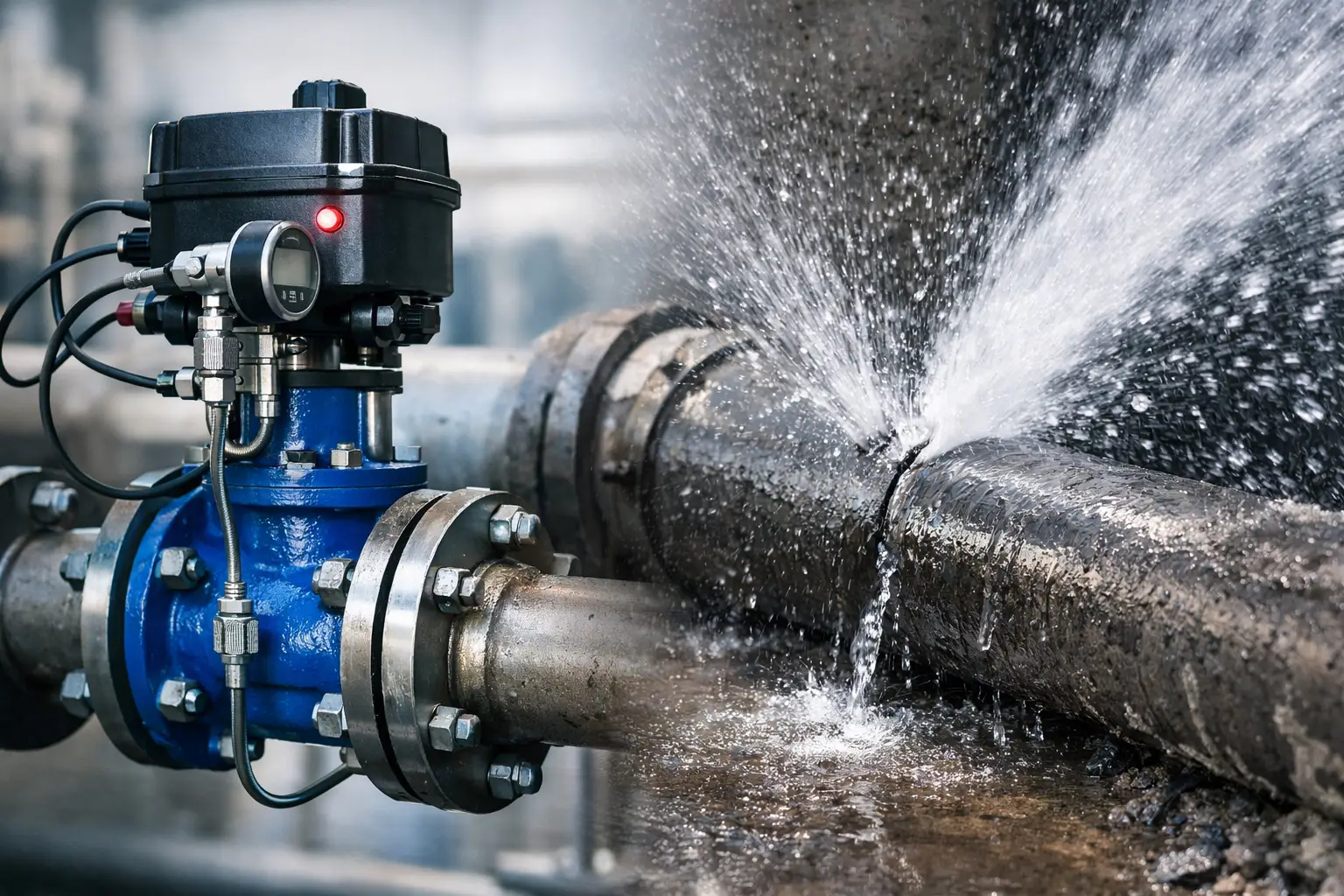
A smart water valve adds sensors and control logic. Installed on the incoming water line, it monitors variables such as flow rate, flow duration and pressure. The system learns, or is configured around, expected consumption patterns. When it sees water moving in a way that does not match normal use, it can issue an alert and, on suitable systems, shut off the supply.
A sudden burst commonly produces one or both of two signatures: unusually high continuous flow and a sharp pressure change. If a pipe fails behind a bathroom wall while a property is empty, the valve may identify uninterrupted flow beyond a permitted time or volume and isolate the mains before damage becomes extensive.
That response matters most when nobody is present. A leak under a kitchen sink may be spotted quickly. A burst flexible hose in an unoccupied villa, vacant flat, hotel room or remote plant area may run for hours.
What the valve is actually detecting
The valve is generally detecting abnormal water behaviour, not visually confirming a split pipe. This distinction matters. A high-quality system can be extremely effective at limiting water loss, yet it cannot state with certainty whether the cause is a burst, a leaking irrigation line, a failed toilet fill valve or an appliance left running.
It also does not pinpoint the failure location. Once the supply is isolated, the affected pipework still needs inspection and testing to establish where the water escaped and what repair is required.
Can valves detect pipe bursts in every situation?
No. Smart valves perform best where there is a clear, measurable change in flow or pressure and the valve controls the water supply feeding the failed line. They are less reliable when a fault is small, intermittent or located downstream of a separate supply.
A major pipe rupture is normally easier to identify than a pinhole leak. The latter may lose only a modest amount of water each hour, particularly on a long underground line or beneath a slab. It can still create a high bill, weaken finishes and cause mould, but it may remain below the valve’s alarm threshold for some time.
The same applies to slow losses in concealed pipes, concealed cistern faults and seepage from waterproofing defects. These problems require a different diagnostic approach, including acoustic testing, thermal imaging, tracer gas, pressure testing or moisture investigation, selected according to the construction and suspected source.
There are also operational exceptions. A valve may interpret legitimate high demand as a leak if it has not been configured properly. Pool filling, irrigation cycles, water tank top-ups, cleaning operations, cooling-system use and high-occupancy periods can all create substantial flow. Poor setup can result in nuisance shut-offs, which are inconvenient in a home and potentially disruptive in a commercial facility.
For that reason, the best systems allow users to set consumption profiles, create authorised-use periods and receive an alert before automatic closure where appropriate. Critical sites may need a carefully designed isolation strategy rather than a simple whole-building shut-off.
Where smart shut-off valves deliver the greatest value
The strongest use case is a property with a single monitored incoming water supply and a meaningful risk of unnoticed water use. That includes occupied and vacant villas, rental properties, holiday homes, staff accommodation, small commercial units and common-area systems.
In Dubai, vacant properties and high ambient temperatures can make unnoticed plumbing failures especially costly. A failed fitting or irrigation line may continue running until the next inspection, increasing DEWA charges and potentially damaging finishes, joinery and neighbouring areas.
For landlords and property managers, remote alerts provide accountability as well as protection. A manager can see that an abnormal event occurred, take immediate action and arrange investigation with a clear time record. That is far preferable to discovering damage after a tenant reports staining or water begins affecting another unit.
For larger facilities, a smart valve is most useful as part of a wider water-management plan. Buildings with multiple risers, tanks, booster sets, fire lines, chilled-water networks or process services need sectional monitoring. One valve at the mains may stop domestic water losses, but it may not monitor every pressurised network on site.
A valve prevents escalation. It does not replace leak detection.
Automatic isolation limits the quantity of water released. That can save a ceiling, flooring, electrical equipment and the cost of emergency refurbishment. Yet closing the supply does not identify the failed component, prove the extent of moisture migration or confirm that repairs have restored system integrity.
After a burst alert, the right next step is controlled investigation. The supply should remain isolated or be restored only in a managed way. A technician can pressure-test the relevant line, inspect visible connections and use non-invasive methods to locate concealed losses without opening walls or floors unnecessarily.
This is particularly important after an apparent false alarm. If the valve reports continuous flow overnight, do not assume it was a software error because no water is visible. A toilet valve, underground irrigation pipe, tank overflow or concealed hot-water leak can consume significant water without leaving an obvious puddle.
LeakDtech approaches these cases by separating detection from diagnosis: the valve identifies an abnormal event, while targeted testing establishes the source, repair scope and evidence needed for maintenance records or insurance discussions.
Choosing a valve that can respond to burst risk
Not all smart valves offer the same level of protection. Before installation, assess whether the device measures both flow and pressure, whether it can shut off automatically, and whether alerts can reach the responsible person remotely. Battery backup, manual override and compatibility with the existing pipe size and material also matter.
Installation position is equally important. The valve should sit where it can isolate the highest-risk downstream plumbing, while avoiding arrangements that could compromise essential services. A competent installer should check access, bypasses, water meters, filtration equipment, booster pumps and any separate irrigation or tank-fed supplies.
Ask how the system handles normal demand. A practical setup should distinguish between an expected shower period and an unexplained continuous flow event at 3 am. It should also allow the owner or facilities team to test alerts and shut-off operation regularly. A safety device that has never been tested is an assumption, not a control measure.
For complex properties, it may be better to install several monitored zones rather than rely on one main valve. Zoning reduces the chance that a small fault is hidden by general demand and avoids shutting down an entire building for a localised issue.
Build protection around the valve, not around hope
A smart valve is a valuable investment because it can act within minutes, even when a property is empty. It can reduce water loss from sudden pipe bursts and persistent abnormal flow, while giving owners a record of what happened.
Its limits should be understood from the outset. It cannot detect every small or intermittent leak, locate a hidden failure, assess water damage or replace planned inspections. Combine automatic shut-off with sensible maintenance, pressure checks and prompt investigation of unexplained consumption. That is how a valve becomes part of a reliable property-protection system rather than a device you only think about after the damage is done.