
A sudden rise in a DEWA bill is often the first warning, but it is rarely the only one. The top signs of underground pipe leaks can appear above ground long before a pipe fails completely: a patch of unusually green landscaping, water pressure that has weakened without explanation, or paving that begins to sink. Treat these changes as evidence to investigate, not minor inconveniences to watch.
An underground leak wastes water continuously, damages soil and structures, and can turn a contained repair into a costly excavation project. For homes, villas, commercial sites and industrial facilities, fast diagnosis protects both the asset and day-to-day operations.
Why underground pipe leaks are difficult to spot
Pipes beneath floors, driveways, landscaped areas and car parks do not offer the obvious drip or puddle associated with an exposed plumbing failure. Water may travel through soil, along utility trenches or beneath slabs before becoming visible. The wet area is therefore not always directly above the leak.
The source also matters. A leak on a domestic cold-water line behaves differently from a pressurised irrigation main, fire line, chilled-water network or process pipe. Ground conditions, operating pressure, pipe material and the presence of drainage all affect the symptoms. This is why replacing visible damaged paving or sealing a surface crack rarely solves the underlying problem.
Top signs of underground pipe leaks to act on
A water bill that rises without a matching change in use
If consumption increases despite normal occupancy and irrigation routines, water is likely leaving the system somewhere. A single high bill does not prove an underground leak – seasonal landscaping demand, a filling pool or a faulty meter can produce similar results. However, repeated unexplained increases deserve prompt pressure testing and meter checks.
For managed properties, compare current consumption with previous periods while accounting for occupancy, irrigation schedules and operational changes. That comparison creates a clearer case than relying on one invoice alone.
The water meter moves when all outlets are off
With taps, appliances, irrigation and water features isolated, a moving meter can indicate a leak on the supply side of the system. This is one of the most useful early checks for a villa or small property, but it has limits. Automatic tank filling, concealed equipment and shared services can affect the reading.
Record the meter position, wait for a controlled period with no intended water use, then check it again. If movement continues, arrange a professional investigation rather than assuming the meter itself is at fault.
Damp ground, pooling or unusually healthy vegetation
Persistent damp patches on soil, lawns, service corridors or paving are a classic indicator, particularly during dry weather. Leaking water can also make one area of grass greener or faster-growing than the surrounding landscape. In Dubai, where irrigation is closely managed and rainfall is limited for much of the year, unexplained moisture should be taken seriously.
Do not assume every wet patch is a supply-line leak. A blocked drain, over-irrigation, air-conditioning condensate discharge or groundwater issue may be responsible. The practical question is whether the moisture returns after irrigation and other known sources have been stopped.
Cracked paving, sinking tiles or changing ground levels
Water escaping under pressure can wash fine soil away from beneath interlock, external tiles, driveways and pathways. As voids develop, surfaces may settle, crack or sound hollow underfoot. What begins as a cosmetic defect can become a trip hazard or affect access routes for vehicles and maintenance teams.
This sign requires urgency where the affected area is near a building foundation, retaining wall, road, pool deck or service chamber. Surface repairs should wait until the source of water loss has been identified and repaired. Otherwise, the same damage is likely to return.
Falling water pressure or pumps that run too often
A noticeable reduction in water pressure can signal a loss on a pressurised line, especially where fixtures previously performed normally. Booster pumps may cycle more frequently as they attempt to maintain system pressure. In larger buildings, a pressure trend that gradually worsens may be visible in plant-room records before occupants report a problem.
Pressure loss is not always a leak. A failing pressure vessel, faulty valve, partially blocked filter or pump control issue can create similar symptoms. Proper testing separates a pipe failure from a mechanical fault and prevents unnecessary repairs.
Water stains, damp walls or warm floor areas near buried services
Underground leaks can migrate upwards into floors and walls, causing staining, peeling coatings, mould growth or a persistent musty smell. A warm area of floor may point to a hot-water or heating pipe leak, while cool dampness can be associated with cold-water lines or condensation. Neither should be diagnosed by touch alone.
Moisture meters, thermal imaging and targeted inspection help establish whether the problem is active water ingress, a historic event or condensation. That distinction matters before opening finishes or making an insurance claim.
Recurring mould, efflorescence or damaged finishes
White mineral deposits on masonry, flaking paint and repeated mould treatment can indicate moisture moving through the building fabric. These signs are particularly relevant in ground-floor rooms, basement areas, plant rooms and service corridors adjacent to buried pipework.
Mould treatment addresses the visible consequence, not the moisture source. If it repeatedly returns after cleaning, investigate the water pathway before redecorating or replacing finishes.
Unexplained sounds or water flow
A faint hissing, rushing or vibration beneath a floor, along an external wall or within a valve chamber may be produced by pressurised water escaping. The sound may be more noticeable at night, when normal building noise is lower. Acoustic leak detection can amplify and interpret these signals, but background noise from pumps, traffic and plant equipment can complicate the work.
For this reason, experienced technicians use acoustic findings alongside pressure data and other tests rather than relying on one instrument reading.
When the risk is greater than a high bill
Some underground leaks demand immediate escalation because their failure consequences extend beyond water waste. A leak close to electrical infrastructure, foundations, lift pits, roadways or critical plant can create safety and operational risks. For hotels, hospitals, schools, malls and industrial sites, uncontrolled excavation can be as disruptive as the leak itself.
Fire-line and process-pipe issues require particular care. A pressure drop may affect compliance, system readiness or production continuity. These assets should be assessed under a controlled testing plan, with clear reporting, isolation procedures and repair priorities agreed before intrusive work begins.
How accurate detection avoids unnecessary excavation
The aim is not simply to confirm that water is being lost. It is to identify the likely location, depth and pipe section with sufficient confidence to make a focused repair. A technical inspection normally starts by reviewing the system layout, meter history, pressure behaviour and visible evidence.
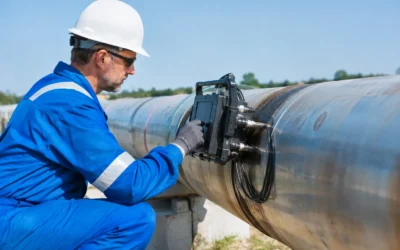
Specialists may then use acoustic sensors to listen for leak noise, thermal imaging to identify temperature anomalies, tracer gas to locate hard-to-reach failures, and pressure testing to verify the affected circuit. Each method has strengths and limitations. Thermal imaging, for example, cannot see through every material or confirm every leak, while acoustic testing can be difficult near noisy machinery or flowing water.
Using methods in combination reduces false assumptions and limits demolition. LeakDtech applies non-invasive diagnostic techniques to help property owners and facilities teams isolate the true source before they commit to breaking floors, lifting paving or shutting down services.
What to do when you suspect a leak
Start by documenting what has changed: meter readings, bills, photographs of damp areas, pressure observations and the times when symptoms occur. Avoid covering a wet patch with soil, paint or new paving before it has been assessed. That can remove useful evidence and delay an accurate diagnosis.
If water is surfacing, affecting electrical areas, undermining access routes or causing active internal damage, isolate the relevant supply where it is safe to do so and request urgent technical support. For less immediate cases, schedule testing before the next landscaping, refurbishment or waterproofing project. Investigating early is generally less expensive than repairing water-damaged finishes, failed paving and contaminated soil after the fact.
The right response is measured but decisive: verify the loss, locate it accurately, repair the pipe, then confirm that pressure and consumption have returned to normal. That is how a hidden leak stays a targeted maintenance issue rather than becoming a major property failure.