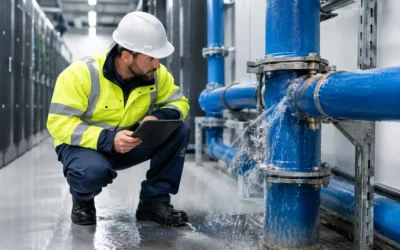
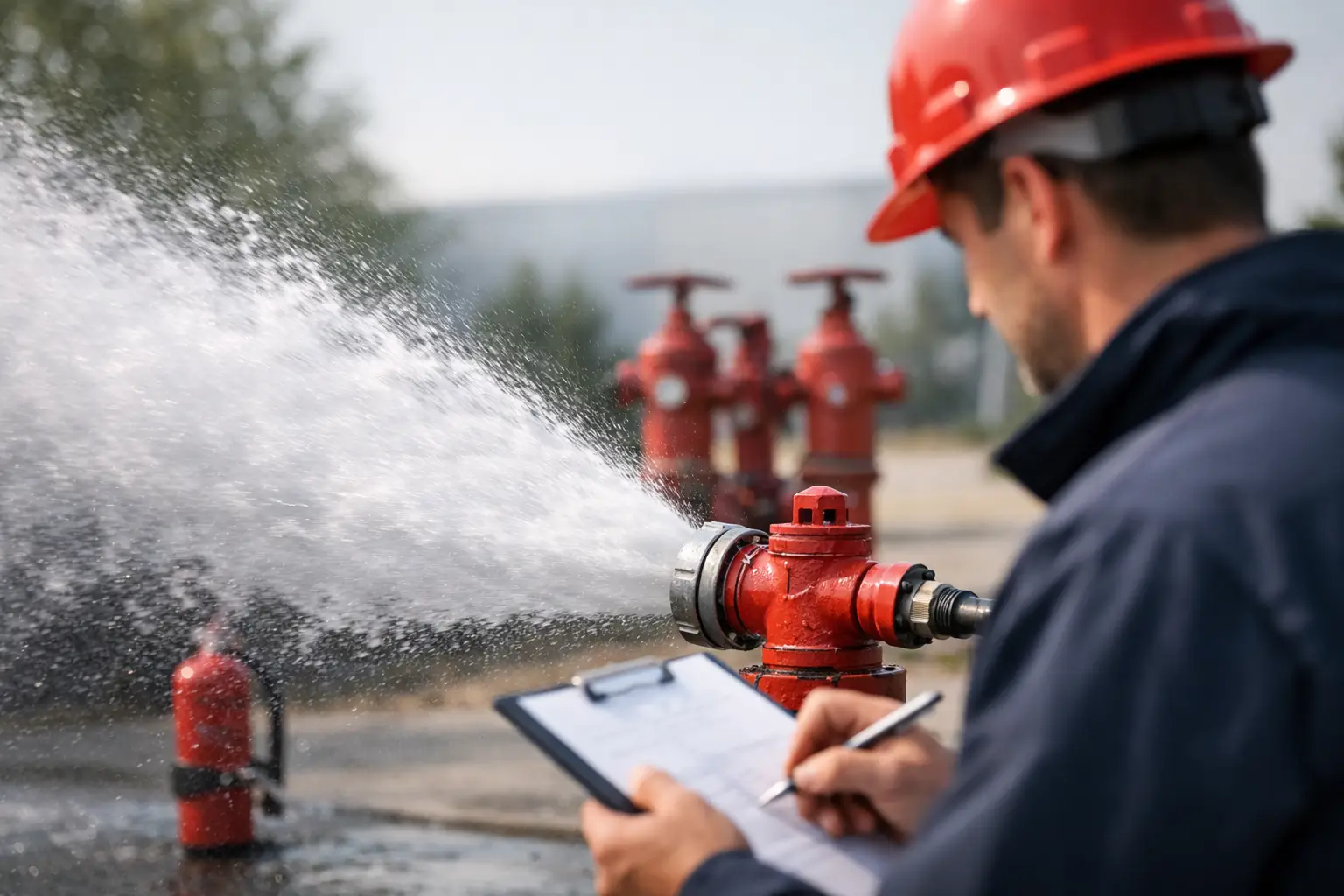
A fire line can appear perfectly healthy until the moment a pump starts, a valve opens, and pressure falls away. That is why fire line testing is not a paperwork exercise. It is the practical process of proving that a fire-water network can hold pressure, deliver water where it is needed and remain available when a building is under its greatest stress.
For villa owners, facilities managers and industrial operators, the cost of an undetected fire-line leak reaches far beyond wasted water. It can compromise life-safety readiness, trigger costly remedial work, create corrosion beneath floors or within service corridors, and leave a site with incomplete evidence for insurers, auditors or authorities. The right test identifies the actual condition of the system before an emergency exposes it.
What Fire Line Testing Is Designed to Prove
A fire line is the dedicated pipework that supplies fire-fighting equipment, such as hydrants, hose reels, sprinklers and fire pumps. Depending on the property, it may run underground around a development, through risers in a tower, across a warehouse, or alongside process infrastructure in an industrial facility.
Testing assesses more than whether water is present in the pipe. It examines whether the line maintains pressure over an agreed period, whether joints and valves remain tight, whether isolation arrangements work correctly, and whether the system can provide the required flow without an unacceptable pressure drop.
The testing method must suit the system and the objective. A newly installed line may require commissioning and acceptance testing. An existing network with unexplained pressure loss needs fault diagnosis. A property approaching handover, renovation or an insurance review may need condition evidence and a documented test record. Treating each situation as the same job is how defects are missed.
Why Pressure Loss Requires Immediate Investigation
A gradual reduction in pressure may be blamed on temperature change, a faulty gauge or normal system behaviour. Occasionally that is true. More often, it is the first visible sign of a problem that is hidden underground, behind walls or within a plant room.
Common causes include failed mechanical joints, corroded steel pipework, damaged underground sections, passing valves, leaking hydrant assemblies, defective check valves and incorrectly isolated branch lines. In older properties, unrecorded modifications can also create confusion about where a fire line begins, ends or connects with other water services.
A visible puddle is not required. Water from a buried fire main can migrate through soil, escape into drainage, or appear many metres from the defect. In a commercial site, the first warning may be repeated pump cycling, unexplained make-up water use or a pressure gauge that never settles. In a villa community, it may be damp landscaping, soft paving or a persistently high water bill.
The commercial risk is clear: repairing a known, precisely located defect is normally far cheaper than opening large areas of hardscape, ceilings or finishes to search for it. More importantly, a leak should never be allowed to become the accepted condition of a life-safety system.
A Controlled Fire Line Testing Process
A credible test starts before any pressure is applied. The technician needs to understand the system layout, available drawings, fire pump arrangement, source of supply, connected equipment and operational restrictions. On occupied sites, testing also requires careful coordination to avoid accidental alarms, impaired protection or disruption to tenants and operations.
Establishing a Reliable Baseline
The first task is to confirm that gauges are suitable and calibrated, relevant valves are in their correct position, and the section being tested is properly defined. A pressure reading is only useful when the test boundary is known. If a branch remains connected or an isolation valve passes internally, the result can be misleading.
The line is then filled and vented correctly. Trapped air is a major source of false results because it compresses under pressure and can make a system seem as though it is leaking. Once stable, technicians record initial pressure, ambient conditions where relevant and the agreed test duration.
Holding Pressure and Locating the Defect
During a hydrostatic pressure test, the system is raised to the specified test pressure and monitored for loss. The required pressure and hold time depend on the design, pipe material, governing standard, consultant specification and local authority requirements. A generic pressure target should not be copied from another project.
If the line fails to hold, the next step is not automatic excavation. This is where technical diagnostics save time and reinstatement costs. Acoustic listening equipment can detect the sound generated by escaping water. Thermal imaging may reveal abnormal moisture patterns near accessible surfaces. Tracer gas can be used in suitable isolated sections where conventional methods cannot pinpoint the loss. Correlation methods can help narrow the location of a buried leak between known access points.
LeakDtech applies non-invasive diagnostic methods to reduce unnecessary demolition, particularly where fire lines pass beneath landscaped areas, roads, finished floors or operating facilities.
Verifying Flow, Valves and System Performance
Pressure retention alone does not prove full fire-system performance. Flow testing may be required to assess whether hydrants, hose reels or other outlets can deliver water at the expected pressure. Fire pumps, pressure-maintenance pumps, alarms and control valves may also require separate functional checks by appropriately qualified fire-system specialists.
This distinction matters. A line may pass a static pressure test yet have a partially closed valve, obstructed pipework or pump issue that restricts water delivery under demand. Conversely, a flow test can expose a problem that is not visible when the network is at rest.
The Risks of Testing Without Planning
Fire-water networks are life-safety assets. Testing them casually can create an impairment at the exact time protection is needed. Before work begins, the responsible person should understand what part of the system will be isolated, how long the impairment may last, what notification process applies and what temporary precautions are necessary.
On larger premises, this may involve facilities management, security, the fire-system contractor, the insurer and the relevant authority or civil-defence requirements. In Dubai, the applicable project specification and authority expectations should guide the testing and documentation process. A testing contractor should work within that framework rather than substitute its own informal standard.
There are also technical trade-offs. Raising pressure can help reveal a weak point, but excessive or poorly controlled pressure may damage compromised components. Opening hydrants for flow testing can affect site water use and drainage. Acoustic methods are highly effective for pressurised leaks, but background noise, pipe material and site access influence results. The best approach combines the test method with the actual construction and operating conditions.
When Should a Fire Line Be Tested?
Testing is sensible at clear decision points: after installation, after repair, before handover, following unexplained pressure loss, after ground movement or construction near buried mains, and as part of planned asset inspections. Properties with ageing pipework, frequent pump activity or a history of water ingress should not wait for a visible failure.
For facility managers, planned testing creates a useful maintenance record. It helps establish whether a pressure change is new or longstanding, supports budget planning for renewal work and gives contractors a defined starting point when faults emerge. For developers and owners, it provides evidence that concealed infrastructure was checked before expensive finishes are completed.
Documentation should record the tested section, date, instruments used, initial and final readings, test duration, observed defects, corrective action and retest outcome. Clear reporting matters because a vague statement that a line was “tested” does not show what was tested, under what conditions or whether it passed.
Do Not Confuse a Passing Test With a Permanent Guarantee
A successful test confirms the condition of the defined system at that time. It does not guarantee that an ageing pipe will never fail, that future construction will not damage a buried main, or that every connected fire component has been maintained correctly. That is why testing works best as part of a broader inspection and maintenance programme.
The practical goal is certainty. If a fire line holds pressure and performs as specified, the property team has evidence to support readiness. If it does not, a targeted diagnostic investigation can turn an unknown risk into a controlled repair scope before water damage, compliance issues or an emergency make the decision far more expensive.
When a pressure gauge starts telling a different story, treat it as an early warning rather than a minor maintenance irritation. A timely, properly controlled test can protect the system that is expected to protect everyone else.