
A factory can lose thousands of litres before anyone sees a wet floor. Water may be escaping beneath slabs, within process pipework, through ageing valves or into drainage systems that were never designed to carry continuous flow. Factory water loss is therefore not simply a utilities issue. It is a direct threat to operating cost, production reliability, asset condition and, in some facilities, safety and compliance.
The difficult cases rarely announce themselves with a visible burst pipe. They appear as a higher water bill, unexplained pressure loss, frequent pump cycling, damp areas near equipment or a meter that continues moving during a planned shutdown. Treating these signs as routine maintenance noise allows a manageable fault to become an expensive repair programme.
Why factory water loss becomes an operational problem
In industrial environments, water is often distributed through a mixture of domestic supply lines, process networks, cooling systems, washdown points, fire lines, irrigation systems and storage tanks. Each system has different operating pressures, materials, access constraints and consequences if it fails.
A leak on a low-use welfare line may primarily inflate consumption. A leak on a process-water line can affect production consistency, create slip hazards or contaminate sensitive areas. Losses from cooling or chilled-water systems can reduce equipment efficiency and increase energy use. Where a fire-water network is involved, pressure integrity is a life-safety concern rather than a maintenance inconvenience.
The financial exposure extends beyond the cost of water. Persistent moisture can corrode structural steel, weaken finishes, damage electrical infrastructure and encourage mould growth in enclosed areas. If the source sits below a production floor, repairing it without proper diagnosis may mean unnecessary excavation, lost working time and disruption to machinery routes.
In Dubai, high consumption combined with demanding operating conditions makes small losses worth investigating early. Heat, ground movement, vibration, pressure cycling and ageing fittings can all shorten the service life of pipework, seals and joints.
The signs that warrant a technical investigation
Water loss should be investigated when a facility sees a sustained variation from its normal consumption profile, not only when a major failure occurs. A well-managed site knows its baseline usage by shift, production volume and operating zone. When the meter data no longer aligns with those patterns, the next step is to isolate the cause.
Pressure drops are equally significant. A system that cannot maintain static pressure after isolation may have a leak, although the interpretation depends on pipe material, temperature change, valve condition and test duration. A pressure test alone identifies a loss of integrity. It does not necessarily identify the exact point of failure.
Other warning signs include unexplained dampness, soft flooring, recurring drain blockages, localised cracking, corrosion around pipe penetrations, unusual acoustic noise and pumps that cycle when there should be no demand. In tank-fed systems, frequent refill activity can also expose losses that a main meter does not clearly separate.
One warning sign does not prove a leak. It does, however, justify a structured diagnosis before approving invasive repairs.
Diagnosing factory water loss without unnecessary demolition
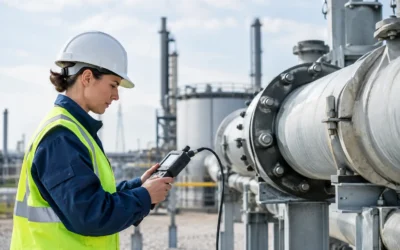
The correct method depends on the network, the suspected leak type and the site’s operational constraints. A production facility cannot always shut down a line for hours, and a petrochemical or food-related environment may impose additional safety and access controls. The aim is to gather reliable evidence while keeping disruption proportionate to the risk.
Start with data and system isolation
A technical inspection should begin with drawings where available, recent water bills, meter readings, maintenance history and an understanding of how the site operates. This establishes whether the apparent loss is likely to be a genuine leak, a process change, faulty metering or an uncontrolled consumption point.
Technicians can then isolate zones and monitor flow or pressure. Dividing a large network into smaller sections prevents a vague site-wide issue from becoming an equally vague repair scope. It also helps identify whether the problem sits on incoming supply, internal distribution, a tank, an external buried line or a specific process area.
Use non-invasive detection methods where they fit
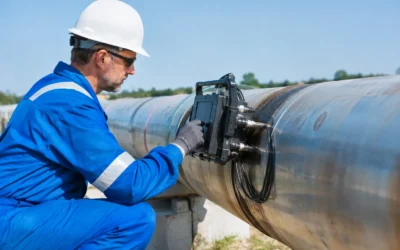
Acoustic leak detection can identify the sound created by pressurised water escaping from a pipe, particularly on suitable metallic or rigid pipe materials. Its effectiveness depends on pipe depth, background noise, pipe material, pressure and the nature of the leak. A busy factory floor may require testing during quieter periods or after selected equipment is stopped.
Thermal imaging can reveal temperature anomalies caused by moisture or leaking hot and cold lines. It is useful for identifying areas for closer investigation, but it does not see through every floor finish or confirm every leak on its own. Moisture mapping and thermal evidence need to be interpreted alongside site conditions.
Tracer gas testing is valuable where pipework can be isolated and drained or where acoustic methods are limited. A safe trace gas is introduced into the system, then detected as it escapes through the ground or surface finishes. This can be particularly effective for buried, concealed or complex pipe routes.
Pressure testing remains central to proving line integrity, while targeted moisture measurement can establish the extent of secondary damage. For industrial tanks, specialised inspection may also include visual assessment, ultrasonic thickness testing and checks around liners, joints and penetrations.
The best investigation is not the one with the most equipment. It is the one that produces a defensible location, a clear repair recommendation and evidence that the repair has resolved the loss.
Prioritise risk, not just litres lost
Not every leak requires the same response. A minor loss on a non-critical irrigation line can be planned around operations. A suspected leak beneath a high-traffic production area, close to electrical systems or on a fire line needs immediate escalation.
Facilities teams should consider four factors: the volume of water being lost, the function of the affected line, the potential for damage or safety exposure, and the practical cost of access. This avoids two common mistakes – overreacting with broad demolition, or delaying action because no visible damage has appeared.
A small underground leak may cause little immediate disruption but steadily undermine sub-base materials. Conversely, a visible drip at an accessible valve may look dramatic while being inexpensive to correct. The severity of the fault is defined by consequence and location, not appearance alone.
Preventing repeat losses after the repair
A repair should close the incident, not merely stop the visible symptom. If a failed fitting is replaced without checking pressure conditions, water quality, vibration or installation quality, the same failure pattern may return elsewhere on the network.
After repair, verify the result through pressure testing, meter monitoring or a repeat inspection appropriate to the system. Update drawings and maintenance records with the confirmed pipe route and fault location. This reduces investigation time if a future issue develops nearby.
For sites with variable occupancy or round-the-clock operations, continuous monitoring can provide earlier warning than monthly bill review. Smart flow and pressure monitoring is useful for domestic and welfare networks, while enterprise liquid leak detection systems may be more suitable for high-risk plant rooms, data-sensitive spaces or critical infrastructure. The right level of monitoring depends on the cost of downtime and the consequences of an undetected release.
Planned inspections also matter. Annual checks of tanks, exposed pipework, valves, drains and high-risk penetrations can identify deterioration before it turns into a loss event. In facilities with repeated incidents, trend data is often more valuable than isolated call-outs because it reveals whether the root cause is ageing infrastructure, pressure instability or workmanship.
When specialist support is justified
Specialist leak detection is justified when water loss is unexplained, repairs have failed, pipework is concealed, or shutdown and excavation carry meaningful commercial risk. It is especially valuable for factories with mixed networks, buried services, sensitive equipment, controlled environments or high water consumption.
LeakDtech approaches these cases as an engineering diagnosis rather than a search for the nearest wet patch. The objective is to identify the source with the least disruption possible, document the findings clearly and give the maintenance team a repair scope they can act on with confidence.
The most cost-effective time to investigate factory water loss is usually before damage makes the decision unavoidable. A controlled inspection during planned access is far cheaper than responding to a flooded plant room, a compromised floor or an unplanned production stoppage.