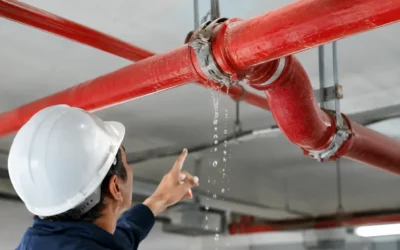
A concealed flexi hose can release hundreds of litres before anyone notices a wet ceiling below. For villa owners, landlords and facilities teams, an automated leak sensor review is therefore not about buying another smart-home accessory. It is about deciding whether a device can detect abnormal water use early enough to prevent damage, disruption and an avoidable DEWA bill.
The right system can monitor flow and pressure continuously, alert the responsible person and, where configured to do so, close the incoming water supply automatically. The wrong system can create false alarms, miss low-flow failures or become difficult to manage once it is installed across a portfolio. The difference lies in what is being measured, how decisions are made and whether the installation suits the building.
What an automated leak sensor should do
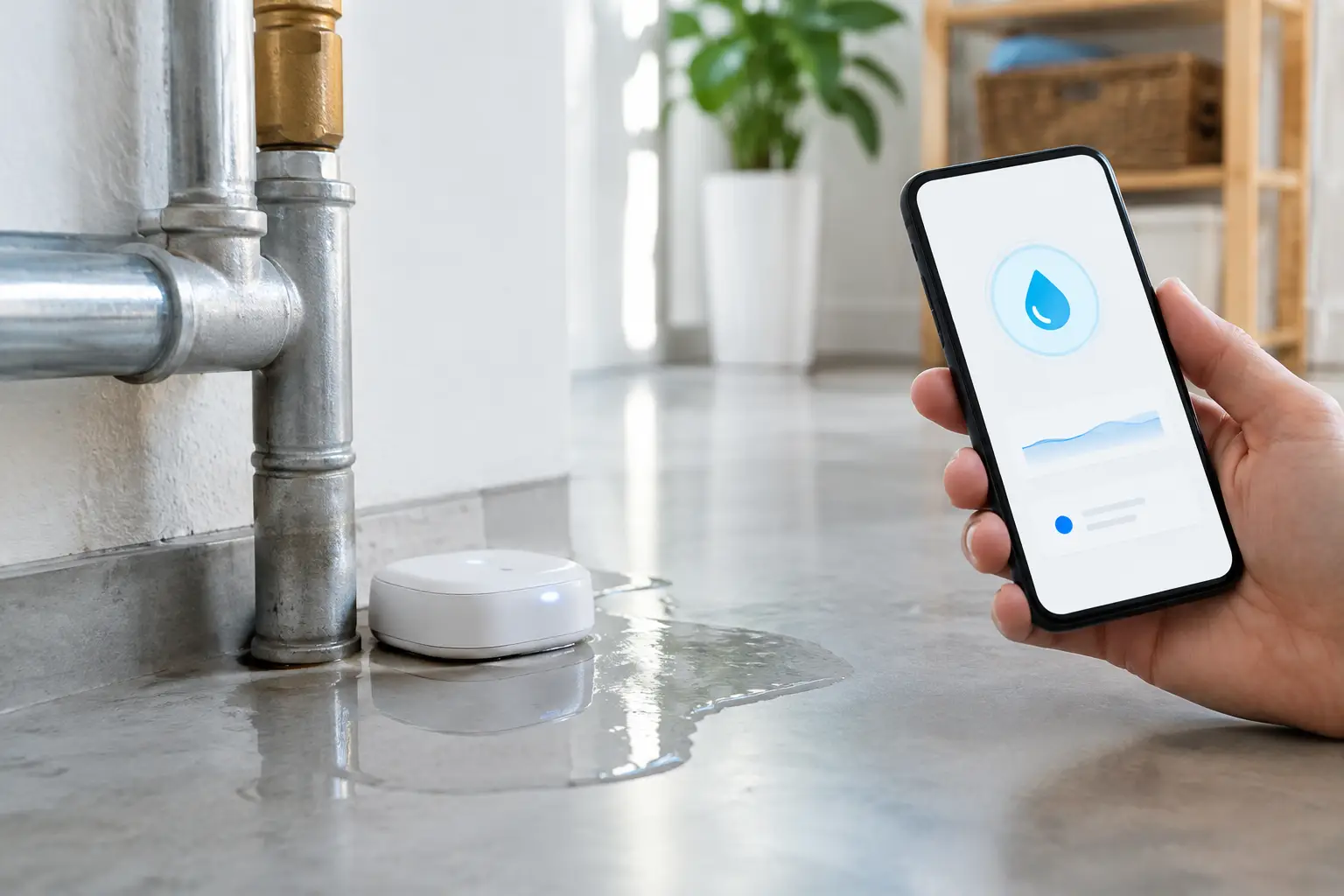
There are two broad product types, and they solve different problems. Point sensors sit under a washing machine, beneath a sink, beside a plant room drain or near a water heater. They react when water physically reaches their probes. They are inexpensive and useful at known risk points, but they cannot identify a leak inside a wall, under a floor or on an external buried line until water appears where the sensor is located.
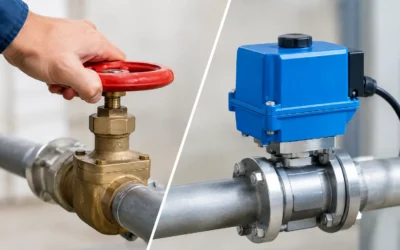
An automated whole-property system is installed on the incoming water main. It measures flow patterns, pressure changes or both. Software then looks for behaviour that does not match normal consumption, such as continuous overnight flow, an unexpectedly long draw-off period or a pressure loss when the property should be static. A motorised valve can isolate the supply after a confirmed event.
For most occupied villas, rental properties and commercial premises, whole-property monitoring delivers stronger protection because it covers the supply rather than a small area of floor. Point sensors still have a role as an additional layer around appliances, pump rooms, raised floors and critical equipment.
Detection is not the same as diagnosis
This distinction matters. A smart valve may correctly identify continuous flow at 02:00 and shut the water off. It has protected the asset, but it has not necessarily identified whether the cause is a toilet fill valve, irrigation solenoid, concealed pipe joint or underground supply line.
When the cause is unclear, non-invasive investigation remains necessary. Acoustic testing, thermal imaging, pressure testing and tracer gas methods are used to locate the failure accurately before repairs begin. This avoids the familiar and expensive cycle of opening finishes, replacing the wrong section and discovering that the leak persists.
Automated leak sensor review: the criteria that matter
The strongest systems are not judged by the number of app screens. They are judged by whether they make a reliable decision under real site conditions.
1. Sensitivity to small and intermittent leaks
A major burst is easy to recognise. The harder task is identifying a slow toilet overflow, a leaking irrigation valve or a pinhole fault that only presents when pressure rises. Ask for the minimum detectable flow rate and how the device distinguishes a small, genuine leak from legitimate low usage.
A setting that is too sensitive can generate nuisance alerts from ice makers, filtration systems or pool top-up lines. A setting that is too forgiving can allow a persistent leak to run for weeks. Buildings with irrigation, pools, staff accommodation or night-time operations need thresholds configured around their actual consumption profile, not generic default settings.
2. Automatic shut-off logic
Automatic isolation is the feature that changes the financial value of a system. Alerts are useful only when someone sees them, understands them and can act. A valve can limit loss even when a property is vacant, a tenant is travelling or a facilities team is handling another incident.
However, shut-off should be considered carefully in sites where water is essential. Hospitals, hospitality sites, data-sensitive facilities and premises with fire protection interfaces require a proper risk assessment. The potable water supply, fire line, irrigation network and process systems should not be treated as one undifferentiated pipe. In some cases, alert-only monitoring or controlled isolation of a specific branch is the safer design.
3. Valve reliability and manual override
The sensor is only part of the system. If the actuator cannot close reliably, the protection claim is weak. Confirm the valve type, pipe compatibility, power requirement, battery backup arrangements and what happens after a power or internet outage.
A practical installation must also allow manual override. Residents and maintenance staff need to know how to restore water safely after an event, while the appointed manager needs a clear record of who received the alert and why the valve closed. For managed portfolios, this operational detail is often more valuable than a polished mobile interface.
4. Alerts, remote access and reporting
A useful alert tells the recipient what happened, when it happened, whether the supply was isolated and what action is required. A vague message saying “water issue detected” leaves the building team to investigate blindly.
Look for notification escalation to more than one contact, event history and consumption visibility. Landlords and community managers benefit from being able to check status remotely between inspections. For commercial properties, downloadable incident records can support maintenance planning, tenant communication and insurance discussions following a water-loss event.
5. Installation quality
No monitoring device compensates for a poor installation. The system should be fitted where it can measure the intended supply, remain accessible for servicing and avoid unnecessary restrictions to flow. Pipe material, diameter, pressure, meter location, filtration and existing valves all affect the installation approach.
A pre-installation survey should establish whether there are multiple incoming supplies, booster pumps, tanks, bypasses or separate irrigation lines. In Dubai villas, it is particularly common to find systems altered during refurbishments, extensions or landscaping works. If a branch bypasses the sensor, it can continue leaking without being monitored.
Where automated systems deliver the best return
The case is strongest where a leak can remain undiscovered for hours or days. Vacant homes, holiday properties, landlord-owned villas, unoccupied retail units and plant rooms are obvious examples. A single failed connector can damage ceilings, joinery, electrical finishes and neighbouring units long before a routine inspection.
For facilities managers, the calculation extends beyond repair cost. Water incidents create access issues, tenant complaints, contractor call-outs, disrupted trading and reputational damage. In hotels, schools and healthcare premises, even a contained leak can take rooms or areas out of service. Early isolation protects continuity as much as the building fabric.
AquaSentra Smart Water Management is designed around this use case, combining 24/7 flow and pressure monitoring with automatic shut-off and remote oversight. At an installed price of AED 1,999, it can be a proportionate safeguard for a single villa or rental property, provided the site survey confirms that the main risks sit downstream of the valve.
The limitations to consider before buying
Automated monitoring is not a substitute for sound plumbing, scheduled inspection or professional leak detection. It cannot repair deteriorated pipework, correct poor waterproofing or guarantee that every leak source will produce an identifiable flow pattern. A leak on the external side of the monitored main, for example, may fall outside its protection zone.
It also needs ownership. Someone must respond to alerts, review unusual consumption and act when the valve closes. For a landlord with several properties, that may mean assigning notifications to both the property manager and maintenance contractor. For a commercial site, it should sit within the escalation procedure rather than becoming an isolated app nobody checks.
False positives deserve attention too. If occupants repeatedly override the device because it closes during legitimate use, they may eventually disable it. Careful commissioning, appropriate sensitivity settings and a short period of consumption learning reduce that risk.
A sensible decision process
Start with the failure you are trying to prevent. If the concern is a washing machine hose in a flat, strategically placed point sensors may be sufficient. If the concern is a concealed pipe failure while a villa is empty, a monitored main valve offers a much higher level of control.
Then map the water system before selecting equipment. Identify the incoming mains, storage tanks, booster sets, irrigation circuits, pool equipment and any life-safety services. Confirm who receives alerts, who can attend the site and what authority they have to restore supply. This turns the device from a notification tool into an effective damage-prevention measure.
The most valuable automated leak sensor is not necessarily the one with the longest feature list. It is the one installed on the right line, configured for the way the property uses water and supported by a clear response plan when it identifies something that should not be happening.