
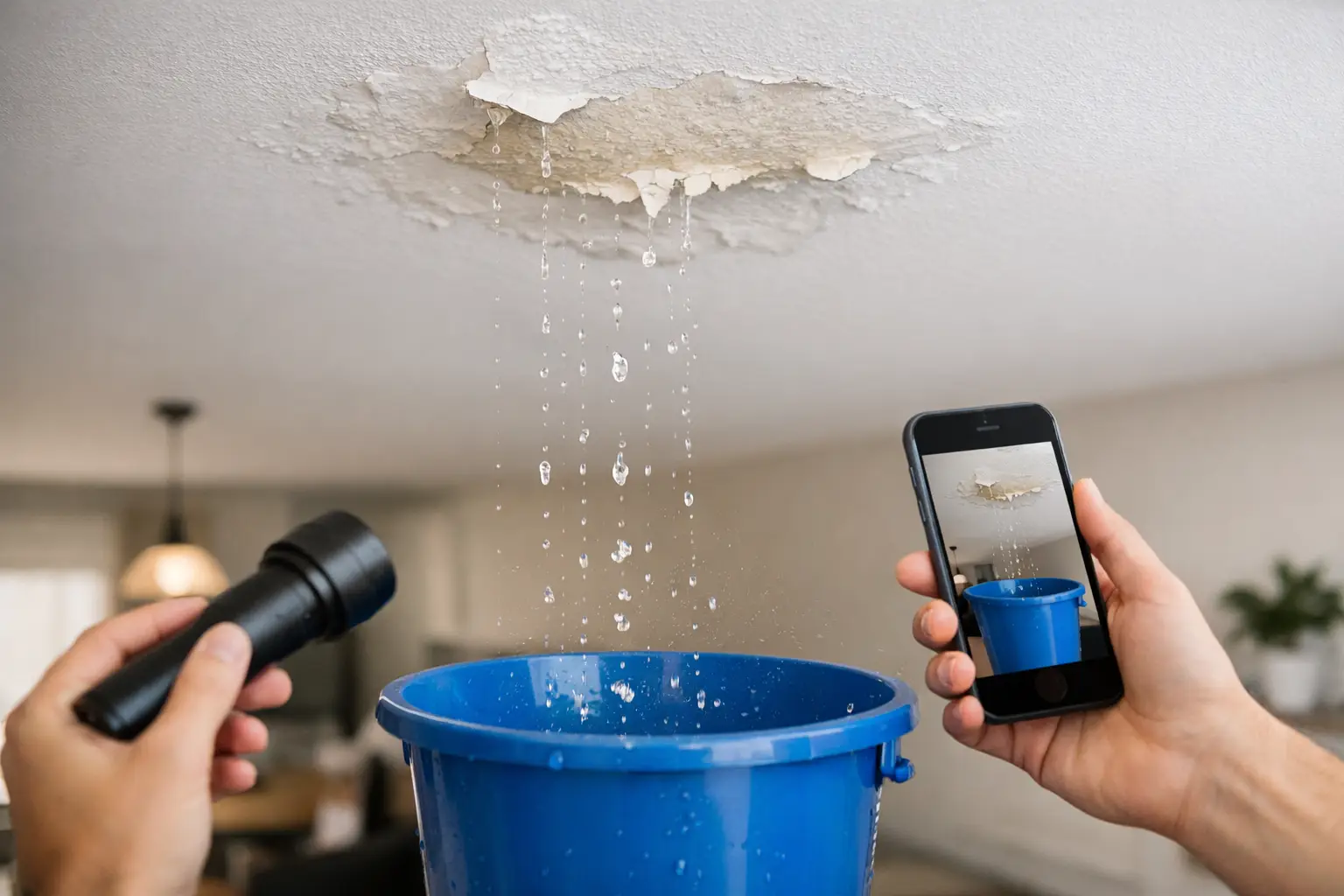
A brown ring spreading across a ceiling is not the problem. It is evidence that water has already travelled through part of the building fabric, often some distance from where it entered. That is why ceiling leak causes need to be investigated properly rather than covered with paint or patched at the first visible stain.
For a homeowner, the immediate concerns are damage, mould and a rising water bill. For a facilities manager, hotel operator or landlord, the risks also include tenant disruption, electrical hazards, claims exposure and repeat refurbishment costs. The right response is to make the area safe, contain the impact and identify the source with evidence.
Ceiling Leak Causes: Where the Water Usually Comes From
The source depends heavily on what sits above the affected ceiling. A bathroom, roof, plant room, balcony, kitchen, chilled-water line or neighbouring flat can all produce similar staining. The appearance of the ceiling alone rarely provides a reliable diagnosis.
Failed waterproofing in bathrooms, balconies and roofs
Waterproofing failure is one of the most common causes of leaks into ceilings below bathrooms and balconies. Grout and silicone may look tired, but they are not normally the waterproofing layer itself. Water can pass through cracks at tile joints, around drains, behind wall finishes or through failed membranes beneath the tiles.
In Dubai properties, exposed roofs and balconies face intense heat, movement and occasional high-volume rain. Membranes can crack, terminate poorly at thresholds or fail around drainage outlets. The leak may appear only after rain, washing down a balcony or using a shower, which is a valuable clue but not proof of the exact entry point.
Leaking concealed water supply pipes
A pressurised hot or cold-water pipe can leak continuously inside a wall, floor slab or ceiling void. These failures are often caused by pipe corrosion, poor joints, ageing flexible hoses, pressure fluctuations or damage from earlier works. Even a small pinhole leak can release enough water over time to saturate plasterboard, insulation and concrete finishes.
A concealed supply leak may be accompanied by a higher-than-normal DEWA bill, a water meter that continues to move when fixtures are off, reduced pressure at taps or warm areas on the floor from a hot-water line. However, none of these signs should be used as a substitute for testing.
Drain, waste and AC condensate leaks
Unlike supply lines, drainage leaks usually occur only when water is being discharged. A loose waste connection beneath a shower tray, a cracked drainpipe, a blocked floor drain or a failed toilet seal may leak during use and then appear to stop.
Air-conditioning condensate lines are another frequent cause, particularly where pipework runs above false ceilings. Blockages, poor falls, disconnected joints and overflowing drain pans can release water gradually. The stain may worsen when the AC has been running for long periods, even though there is no plumbing leak at all.
Appliance, tank and mechanical-room failures
Washing machines, dishwashers, water heaters, booster pumps and storage tanks can all leak into ceilings below. A failed appliance hose may produce a sudden, obvious incident. By contrast, a slow leak at a tank fitting, valve or overflow line can remain hidden until the ceiling finish softens or mould develops.
In commercial buildings, investigate mechanical rooms, chilled-water networks, fire lines and domestic water risers with the same discipline. The operational cost of guessing is much higher when a leak affects occupied rooms, critical equipment or business continuity.
Water migration from another property
In flats and multi-occupancy buildings, the affected ceiling may sit beneath a neighbour’s bathroom, kitchen or balcony. Water can also migrate laterally through slabs and services penetrations before it becomes visible. The wettest point is therefore not always directly below the source.
This matters for access and responsibility. A repair to the visible ceiling, or even a repair to one suspect fitting, may fail if the actual path of water has not been confirmed. Documented testing helps building managers, owners and insurers make decisions based on findings rather than assumptions.
Signs That Need Prompt Action
A ceiling does not need to be dripping to justify investigation. Early intervention can avoid major reinstatement works and reduce the chance of mould growth or material failure. Treat these signs seriously:
- Yellow or brown water marks that expand after showers, rainfall or AC operation.
- Blistering paint, sagging plasterboard, peeling finishes or a ceiling that feels soft to the touch.
- A musty smell, visible mould or repeated staining after previous repairs.
- Water droplets around light fittings, electrical points or ceiling-mounted equipment.
- Unexplained water consumption, low pressure or a meter reading that rises when no water is in use.
If water is close to electrics, isolate power to the affected circuit only if it is safe to do so, keep people away from the area and arrange urgent professional assistance. Do not touch a wet light fitting or puncture a swollen ceiling beneath electrical wiring.
Why Visual Inspection Often Fails
Many ceiling leaks are misdiagnosed because the first contractor sees a stain and selects the nearest possible cause. Regrouting tiles, resealing a shower screen or applying waterproof coating can sometimes help, but these are repairs, not investigations. If the source is a concealed pipe, a drain connection or failed membrane behind finishes, the leak will continue.
An accurate inspection considers timing, water usage, pipe routes, building layout, moisture distribution and previous repairs. It also distinguishes between active leakage and residual moisture. A ceiling can remain damp after a leak is fixed, while a seemingly dry area may conceal an active fault within a slab or cavity.
Non-invasive diagnostics reduce unnecessary demolition. Depending on the suspected system, this may involve pressure testing water lines, thermal imaging to identify abnormal temperature patterns, acoustic listening equipment for pressurised leaks, tracer gas testing or controlled flood testing of wet areas. Each method has limitations, so the best approach is selected according to the building and the evidence available.
For example, thermal imaging can help identify moisture patterns or a warm leak path, but it does not see through every material or prove a pipe leak by itself. Pressure testing can establish whether a water line is losing pressure, but it may not locate the exact point without further investigation. Sound diagnosis comes from combining methods, not relying on one tool.
What to Do Before Repairs Begin
First, photograph the staining, dripping or damaged area and note when it occurs. Record whether it follows shower use, appliance operation, rain or air-conditioning use. These details can significantly shorten the diagnostic process.
Next, reduce water exposure where practical. Avoid using the suspected bathroom or appliance until the source is assessed. If the issue appears after rain, check for obvious roof drainage blockages from a safe location, but do not walk on roofs or remove finishes without appropriate access and safety controls.
Avoid repainting, drilling drainage holes or replacing ceiling boards before the source has been confirmed. Drilling can damage concealed services, while cosmetic repairs hide useful evidence and may need to be removed again. Where a ceiling is visibly bulging or structurally compromised, isolate the area and treat it as an urgent safety issue.
For occupied villas, flats and commercial spaces, request a clear report that separates the suspected source, tests performed, findings, recommended repair scope and any moisture-drying requirements. This is particularly useful where several parties are involved or a recurring issue has already led to unsuccessful repairs.
Repair the Cause, Then Restore the Ceiling
A lasting repair follows a sequence: identify the source, stop the water, verify that the repair holds, dry affected materials and then reinstate finishes. Skipping the verification stage is how recurring leaks become expensive cycles of ceiling replacement and repainting.
The repair itself may be relatively small – a pipe joint, drain seal, AC connection or local waterproofing detail. The wider cost often comes from delay: damaged joinery, mould treatment, disrupted tenants, electrical works and repeated contractor visits. LeakDtech uses targeted, non-destructive testing to help property owners locate difficult failures before opening large areas unnecessarily.
A ceiling stain is a warning that water has found a route through your property. Act on the pattern early, insist on evidence before demolition, and repair the actual failure rather than the mark it left behind.