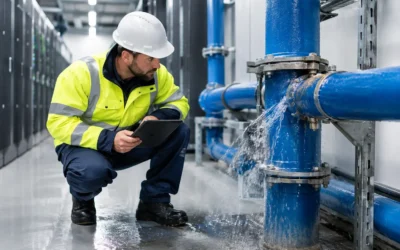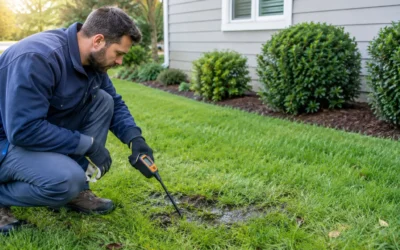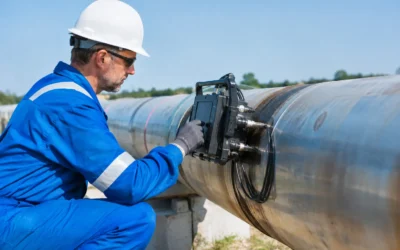

A water leak rarely announces itself when it starts. It shows up later as an unexplained DEWA bill, damp finishes, mould growth, falling pressure or a tenant complaint that has already become an expensive repair. AI leak trends are changing that sequence. Rather than waiting for visible damage, property owners and facilities teams can use continuous flow data, pressure behaviour and automated alerts to identify abnormal water use early.
For villas, managed communities and commercial assets in Dubai, this is not simply another smart-building feature. It is a shift from reactive maintenance to evidence-led water risk management. The value lies in knowing when a problem needs an immediate shut-off, when it needs specialist diagnosis, and when a variation in usage is entirely normal.
Why AI leak trends matter to property owners
Traditional leak detection remains essential. Thermal imaging, acoustic testing, tracer gas, pressure testing and technical inspection are the methods used to locate the source of a concealed failure accurately. Artificial intelligence does not replace those investigations. It improves the point at which they are triggered.
An AI-enabled water monitoring system observes patterns that people do not have the time to review continuously. It can compare current flow and pressure against a property’s normal operating profile, looking for activity that is inconsistent with occupancy, irrigation schedules, cleaning cycles or expected equipment use. A small continuous flow at 3am, for example, may indicate a running WC, leaking irrigation valve or concealed pipe loss long before water reaches a ceiling below.
That early warning matters because water damage costs rarely stay small. A modest leak can lead to damaged joinery, failed finishes, mould treatment, disruption to occupants, elevated utility charges and disputes over responsibility. In hospitality, healthcare, retail and industrial facilities, it can also compromise operations. The commercial case is straightforward: prevent escalation, reduce waste, and direct technical resources to the right location faster.
The main AI leak trends changing detection
From threshold alarms to behavioural analysis
Basic water alarms are useful, but many work on a fixed threshold. If flow exceeds a set level, an alert is sent. The weakness is obvious: buildings do not use water at one fixed rate. A family home, a school, a hotel kitchen and a cooling-related network all have different consumption patterns.
AI-led monitoring is moving towards behavioural analysis. Instead of treating every increase in flow as a leak, it builds a baseline from historical data and identifies deviations. This can reduce nuisance alarms and make notifications more meaningful. It also allows facilities managers to see gradual changes, such as a slowly increasing overnight base flow, that may not breach a simple threshold for weeks.
The quality of the outcome depends on the quality of the data. Incorrect meter sizing, intermittent connectivity, poorly configured zones or a system that has not been given enough operational context can create false positives. AI is most effective when paired with a proper site survey and clear commissioning process.
Automatic shut-off is becoming a practical safeguard
The most significant trend for residential properties is the combination of smart monitoring with an automatic isolation valve. When a major abnormal flow event is detected, the system can shut off the water supply before a burst pipe or failed flexible hose causes widespread damage.
This approach is particularly relevant for vacant villas, holiday homes, landlord-owned properties and units with limited daily supervision. Remote alerts provide visibility, while automatic shut-off limits exposure when nobody is available to act. A system such as AquaSentra Smart Water Management combines 24/7 monitoring with an AI-powered valve designed to detect leaks and isolate the supply automatically.
Automatic shut-off is not suitable for every line without consideration. Fire protection systems, process water, critical medical services and certain industrial operations require carefully designed isolation strategies. The priority is always to protect people and operational continuity, not to shut down a critical service because of an unverified alert.
Better segmentation for complex sites
A single master meter can tell a property manager that water is being lost. It cannot always tell them where. The next stage in AI leak trends is greater segmentation: monitoring separate zones, buildings, risers, irrigation networks, plant rooms or high-risk equipment.
For a large development, this means data can be narrowed from an entire site to a specific area. For a hotel, it may distinguish guest-floor consumption from laundry, kitchens and irrigation. For industrial sites, zoned monitoring can support maintenance planning around tanks, pipelines and process equipment without relying on one broad reading.
There is a cost trade-off. More meters and sensors provide better diagnostic resolution, but they add installation, integration and maintenance requirements. The right design depends on the asset’s value, water-use profile, failure history and consequences of downtime.
AI is strengthening, not replacing, field diagnosis
A dashboard can identify unusual consumption. It cannot confirm whether the cause is a leaking underground pipe, an overflowing tank, a faulty solenoid, a malfunctioning flush valve or legitimate operational use. That distinction still needs engineering judgement and targeted testing.
The strongest workflow is therefore layered. AI monitoring flags a credible anomaly. A technician reviews the data and site conditions. Non-invasive leak detection methods then pinpoint the fault before unnecessary excavation or demolition begins. This is where asset owners avoid the familiar cycle of repeated repairs, damaged finishes and unresolved water loss.
For difficult cases, field evidence remains decisive. Acoustic equipment responds to sound characteristics, thermal cameras identify temperature anomalies, tracer gas can locate concealed losses, and pressure testing verifies system integrity. AI can help prioritise the investigation, but it should not be presented as a substitute for physical verification.
Where the financial return is clearest
The return on intelligent leak monitoring is usually strongest where a leak could run undetected for a long period or cause high consequential damage. Villas with landscaped gardens and irrigation systems are a common example. A failed valve may waste substantial water without leaving an obvious indoor sign.
Managed residential buildings benefit when systems provide a record of alerts and response actions. That documentation can help clarify whether a loss occurred within a unit, a common area or a particular service line. It also supports more informed conversations with maintenance providers, owners and insurers.
Commercial and industrial users often assess value differently. Their concern may be production interruption, tenant impact, safety exposure or the cost of emergency access and reinstatement. In these environments, monitoring data can inform planned interventions before a minor failure becomes a shutdown event.
The savings are not guaranteed merely by installing a device. Alerts must reach someone accountable, escalation procedures must be agreed, and faults must be investigated promptly. A smart valve that is ignored after repeated notifications becomes another source of false confidence.
What to ask before investing in AI water monitoring
Start with the property’s failure risks, not the technology brochure. Establish whether the primary issue is unexplained water consumption, burst-pipe exposure, irrigation loss, recurrent leakage, tenant damage claims or the need for better reporting across multiple assets.
Then consider how the system will operate in practice. Who receives alerts after hours? Can the supply be safely isolated? Is remote access required? Are there separate water zones that need individual monitoring? Will the data be reviewed by an in-house facilities team or an external maintenance provider?
It is also worth checking the limits of the installation. Smart monitoring may reveal a problem, but it does not repair defective pipework or remove the need for inspections. Where a site has an existing unresolved leak, establish the source first. Otherwise, monitoring may generate repeated alerts without addressing the underlying loss.
Turning data into a faster response
The most useful AI leak systems do not create more noise for busy property teams. They create a clear decision path: normal use, investigate, isolate, then repair and verify. That process protects budgets because it reduces the time between abnormal water behaviour and informed action.
For properties with recurring or high-consequence water risks, the best result comes from combining intelligent monitoring with specialist non-destructive testing. LeakDtech can support that transition by using technical inspection and precise leak-location methods to turn an alert into a confirmed cause and an efficient repair plan.
Water risk will always require practical judgement. AI can make that judgement faster, more targeted and better documented, provided the technology is matched to the building and backed by a response team that knows what the data cannot see.