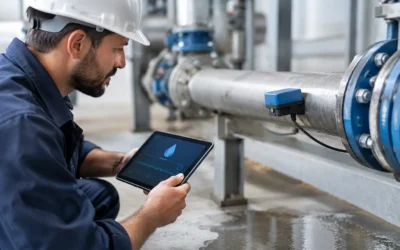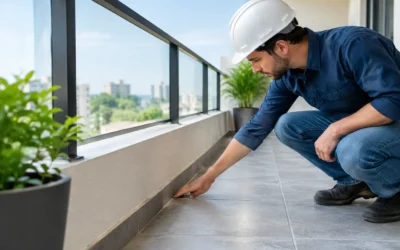
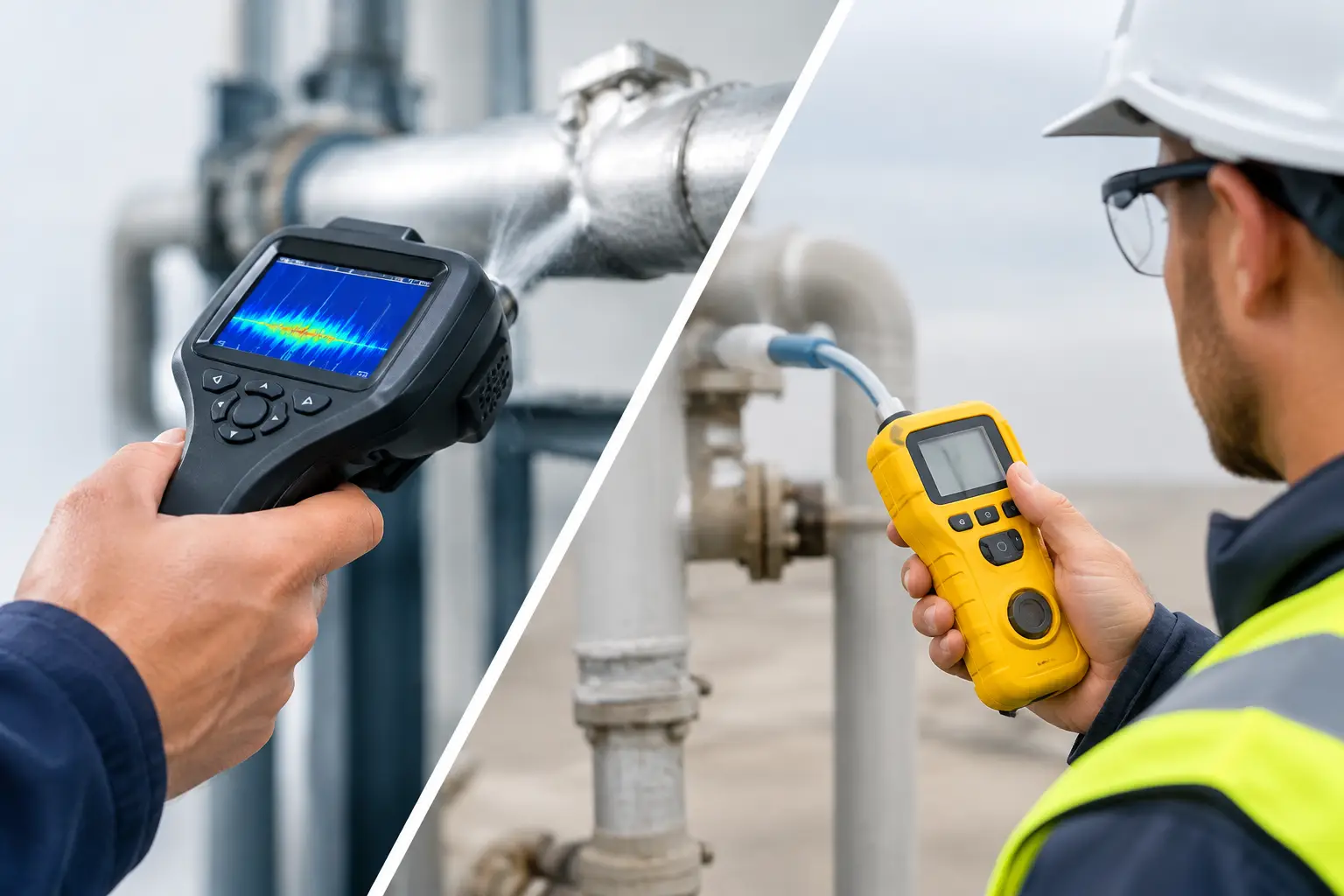

A rising water bill, unexplained pressure loss or damp patch does not automatically point to one testing method. Acoustic sensors versus tracer gas is a decision based on the pipe material, leak behaviour, depth, access conditions and the cost of getting the diagnosis wrong. The most efficient investigation is not the one that uses the most equipment. It is the one that identifies the leak location with enough certainty to make a targeted repair.
For a concealed pipe leak in a Dubai villa, hotel, tower or industrial facility, the difference can be substantial. Choosing the wrong method may mean wasted access works, unnecessary tile removal, prolonged water loss or an avoidable shutdown. Both acoustic and tracer gas techniques are non-invasive and highly valuable, but they answer different site conditions.
Acoustic sensors versus tracer gas: the core difference
Acoustic leak detection listens for the noise created when pressurised water escapes through a defect. A technician uses sensitive ground microphones, listening devices and correlating equipment to identify the sound signature and narrow down its strongest point. It is often extremely effective on pressurised water lines where the leak is actively producing a clear, repeatable noise.
Tracer gas detection works differently. After the relevant pipe section is isolated and drained where required, a safe forming gas mixture, typically hydrogen and nitrogen, is introduced under controlled pressure. Hydrogen molecules are very small and rise through surrounding materials at the point of escape. A specialist sensor detects the gas above the leak path, including through many floor finishes, screeds and landscaped areas.
In simple terms, acoustic methods listen for a leak. Tracer gas follows its escape route. Neither is automatically superior. The correct choice depends on whether the leak is making noise, whether gas can migrate to an accessible surface, and how much investigation can be undertaken without interrupting the property or operation.
When acoustic sensors are the stronger option
Acoustic testing is usually the first choice when a pressurised line is known or strongly suspected to be leaking and conditions are favourable. It can deliver a fast result without introducing gas into the system, particularly on accessible external pipe routes, exposed service areas, pump rooms and hard surfaces with low background noise.
A leak in a metallic pipe often transmits sound well. The sound may travel along the pipe and into the surrounding ground, allowing a skilled technician to compare points along the route and identify the area of greatest intensity. With appropriate pressure and a meaningful leak flow, acoustic methods can be highly precise.
This approach also suits properties where the pipe network is relatively well understood. If drawings, valve locations and line routes are available, the inspection can focus on the correct circuit rather than searching an entire site. For facilities teams managing irrigation lines, domestic water feeds, fire lines or cooling-related networks, this can reduce diagnostic time significantly.
However, acoustic detection has practical limitations. Plastic pipes, deep pipework, low-pressure systems and very small leaks may produce too little detectable sound. Thick slabs, soft soil, heavily reinforced concrete and multi-layer floor finishes can weaken or distort the signal. Busy mechanical spaces, traffic, operating pumps and occupancy noise can also mask the leak sound.
A silent result does not prove that no leak exists. It may simply mean that the leak is not acoustically favourable.
Acoustic testing is particularly useful when
Acoustic sensors are often well suited to active, pressurised leaks on metallic lines, shallow buried routes and accessible hardstanding. They are also valuable as part of a wider investigation after pressure testing confirms loss on a specific circuit.
The key requirement is a leak that produces a usable sound signal. An experienced technician does not just listen for noise. They interpret pressure behaviour, pipe material, route information, environmental noise and the consistency of readings across the area.
When tracer gas is the stronger option
Tracer gas becomes particularly valuable when acoustic methods are inconclusive or when the pipework and building construction make sound difficult to detect. It is frequently selected for concealed water lines beneath tiles, screeds, slabs, landscaped areas and finishes where a small leak may not generate enough sound for reliable acoustic pinpointing.
The technique is especially effective for difficult leaks on plastic pipework. Plastic can absorb and dampen acoustic energy, while minor leaks may produce only a faint noise. Tracer gas provides another path to diagnosis by detecting gas migration rather than relying on water-noise transmission.
It can also be an efficient choice where a leak has been confirmed by pressure testing but its exact location remains uncertain. Rather than opening multiple areas based on assumptions, technicians can survey the surface above the suspected route and mark the strongest gas readings. This supports a focused repair plan and limits reinstatement costs.
Tracer gas is not a shortcut that ignores system preparation. The line must be properly isolated, and the test needs to be managed carefully to avoid cross-connection with other services. The gas must have sufficient time and pressure to travel through the leak path and reach a detectable surface. Dense membranes, deep foundations, waterlogged ground or complex layers of waterproofing can affect migration and require a considered testing strategy.
For sensitive sites such as hospitals, hotels, occupied residential buildings and operational industrial facilities, the benefit is often clear: a controlled diagnostic process can avoid broad demolition and help protect continuity of operations.
Accuracy depends on the system, not the sales claim
Claims that one method is always more accurate than the other should be treated cautiously. Accuracy comes from matching the method to the failure mode and confirming the result through supporting evidence.
Consider a small leak beneath a tiled bathroom floor. If the line is plastic, the slab is thick and the leak is intermittent, tracer gas may offer the clearer indication. In contrast, an active leak on a pressurised external water main may be located faster with acoustic equipment, especially when the pipe route is known and the site is quiet enough for listening.
In many high-value investigations, the most reliable approach combines methods. A pressure test first establishes whether the line is losing pressure. Thermal imaging may identify moisture-related temperature anomalies where conditions permit. Acoustic testing can narrow the search area, while tracer gas provides confirmation at surface level. This layered approach is not unnecessary duplication. It is how a difficult leak is diagnosed with confidence before costly opening works begin.
Cost, access and disruption
The price of a leak detection visit matters, but the larger cost is often the repair decision that follows. Opening the wrong section of ceiling, removing an intact bathroom floor or shutting down a critical line without confirmation can cost many times more than a properly scoped investigation.
Acoustic testing can be quicker and more economical where the conditions are ideal. There is usually less system preparation, and results may be available during the initial survey. Tracer gas can involve additional time for isolation, drainage, charging and monitoring, but that investment may be justified when it prevents extensive exploratory demolition.
Access is another deciding factor. Acoustic surveys need practical listening points and manageable background noise. Tracer gas surveys need a route for gas to migrate and a surface that can be scanned. Neither method can overcome every physical barrier, which is why route tracing, site inspection and system knowledge remain essential before testing begins.
For landlords and homeowners, the priority is often avoiding damage to finishes and returning the property to normal quickly. For facilities managers, it is limiting tenant disruption, water wastage and repeat call-outs. For industrial and petrochemical operators, the priority may be process safety, planned isolation windows and documented evidence for maintenance decisions. The method should reflect those operational realities.
A practical way to select the right test
Start by identifying what is known. Has pressure loss been proven? Is the affected line domestic water, irrigation, chilled water, fire protection or another service? What is the pipe material, approximate depth and likely route? Is the leak continuous, or does it only occur when a pump, valve or fixture operates?
Next, assess the environment. A quiet external route with a pressurised metallic line may favour acoustic testing. A concealed plastic line beneath a finished floor, especially after unsuccessful prior inspections, may favour tracer gas. Where the repair consequences are expensive, use more than one source of evidence before authorising demolition.
LeakDtech approaches this as an engineering diagnosis rather than a one-tool exercise. The aim is to isolate the correct system, interpret the site conditions and provide a clear location for repair, helping clients avoid repeated damage and unnecessary refurbishment.
The right question is not whether acoustic sensors or tracer gas is better. It is which method gives the clearest evidence for this pipe, this building and this leak. When the diagnosis is precise, the repair can be small, controlled and far less expensive than the damage caused by guesswork.