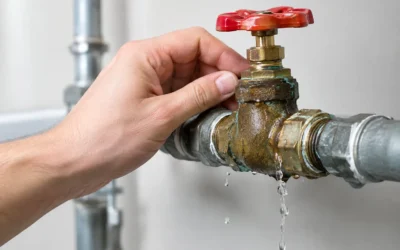


A leak beneath a raised floor, inside a plant room or around a critical tank can cause major damage long before it becomes visible. That is where the question, what is electronic leak monitoring, becomes commercially important. It is a permanent detection system designed to identify the presence and location of escaped liquid at the earliest practical stage – before a small failure becomes damaged finishes, equipment downtime, stock loss or a costly insurance claim.
Electronic leak monitoring is particularly valuable where water must not be allowed to spread unnoticed: data rooms, hospitals, hotels, laboratories, district cooling facilities, pump rooms, basements, tanks and high-value commercial property. Rather than waiting for a visual sign of failure, the system provides continuous surveillance of known risk areas.
What Is Electronic Leak Monitoring?
Electronic leak monitoring, often called ELD, uses specialised sensing equipment to detect liquid escaping from pipework, valves, tanks, drip trays or containment areas. Most systems consist of a monitoring panel, sensing cable or point sensors, connection leads and alarm interfaces. When liquid comes into contact with the sensing element, the panel registers the event and generates an alarm.
Depending on the design, the system may report a general zone, such as a plant room or corridor, or identify the leak location to a specific distance along a sensing cable. This level of precision gives maintenance teams a defined investigation area instead of asking them to remove ceilings, lift flooring or inspect every connection in a large space.
Unlike a one-off leak detection survey, electronic leak monitoring remains in place after installation. It does not repair a leak, but it creates an early-warning layer around assets where the consequences of delay are unacceptable.
How an electronic leak monitoring system works
The principle is straightforward: a conductive liquid bridges sensing elements within a cable or sensor, changing the electrical condition monitored by the control panel. The panel interprets that change as a leak event. It can then activate a local audible or visual alarm, notify a building management system, trigger an alert to a facilities team, or initiate a programmed response such as closing a valve.
The exact response depends on the installation. In a small equipment cupboard, a point sensor beneath a water heater may be enough. In a large chilled-water plant room, a length of sensing cable can be routed beneath pipework, valves, pumps and expansion joints to provide broader coverage. Around tanks or chemical storage areas, the system may be configured to monitor bunds, sumps and containment zones.
Addressable systems provide the strongest diagnostic value. They can locate an event along the cable, often to within a defined tolerance, helping engineers attend the right area quickly. Non-addressable systems are generally simpler and may be more economical, but they usually indicate only that a particular circuit or zone is wet.
Sensing cable versus point sensors
Sensing cable is used where a leak could occur anywhere along a route. Typical examples include beneath raised access floors, around perimeter pipework, below valve manifolds and inside long plant rooms. It is installed to follow the likely path of water, not simply the pipe itself. Water often travels along channels, floor gradients and cable trays before it reaches a drain or becomes visible.
Point sensors are placed at a specific low point or beneath an individual item of equipment. They are useful under domestic appliances, inside drip trays, near condensate pumps, below water tanks or at the base of risers. Their lower cost can make them suitable for targeted protection, although they cannot cover a wide area in the way sensing cable can.
A well-designed installation often uses both. Cable covers the wider risk zone, while point sensors protect known failure points and low spots where water is likely to collect first.
Where electronic monitoring delivers the most value
The strongest case for ELD is not simply that a pipe might leak. Every pipe might leak eventually. The case is that a delayed response would be expensive, disruptive or unsafe.
For a hotel, an undetected leak above guest rooms can mean room closures, damaged interiors and reputational cost. For a hospital or educational facility, water ingress can interrupt essential services and affect occupied areas. For commercial landlords and facilities managers, a failure in an unoccupied unit can continue for hours or days before anyone notices. In industrial and petrochemical environments, the concern may extend beyond property damage to containment, environmental exposure and operational continuity.
In Dubai, electronic monitoring is also relevant to assets affected by high cooling demand, including chilled-water pipework, fan-coil units, condensate systems and critical plant areas. Water losses can increase utility consumption, but the greater risk is often the damage created by a leak that remains hidden inside a ceiling void, shaft or equipment room.
It is particularly suited to these applications:
- Raised floors supporting servers, electrical infrastructure or communications equipment.
- Plant rooms containing pumps, valves, calorifiers, cooling equipment and pressurised pipework.
- Tank farms, bunded areas and containment systems requiring fast alarm notification.
- Pipe routes above sensitive finishes, tenant spaces, archives or valuable stock.
- Vacant properties and remote sites where routine visual checks are limited.
Electronic monitoring is not the same as smart water shut-off
Electronic leak monitoring and smart water management systems are complementary, but they solve different parts of the problem. An electronic monitoring system detects liquid where it reaches its installed sensors. A smart valve monitors water flow and pressure within the supply line, looking for patterns that may indicate a leak, burst pipe or abnormal consumption.
A flow-based smart valve may automatically isolate the water supply, which is highly effective for villas, flats, rental properties and buildings vulnerable to internal plumbing failures. An ELD cable, by contrast, is often the better choice where water could come from multiple sources, including condensate, external ingress, drainage failures or equipment leaks that may not be visible in the incoming water flow data.
For high-risk sites, the best approach may combine both: flow and pressure monitoring to identify abnormal usage, plus electronic sensing at the locations where water would cause the greatest harm. The right design depends on the asset, the likely leak mechanisms and the response time required.
Installation quality determines performance
Electronic leak monitoring is only as effective as its survey, layout and commissioning. A cable placed too far from likely water paths may not alarm until damage has already spread. A sensor placed on an uneven surface may miss a small leak that flows in another direction. Poorly protected cable can be damaged during cleaning, maintenance work or fit-out activity, creating false alarms or leaving an area unprotected.
Before installation, the system designer should assess pipe routes, floor falls, drainage points, equipment layouts, access constraints and the potential volume of a release. The team should also establish what happens after an alarm. Who receives the notification? Is the affected zone clearly labelled? Can a technician access it immediately? Is automatic valve isolation appropriate, or could it create a separate operational problem?
Commissioning should include wet testing of each sensing circuit, verification of panel alarms and confirmation that any building management system interface is reporting correctly. Documentation matters here. Facilities teams need an accurate cable layout, panel schedule, alarm logic and maintenance record, particularly in large or regulated buildings.
Limits and maintenance requirements
ELD is highly effective, but it is not a substitute for competent pipework installation, pressure testing or routine maintenance. It only detects liquid when that liquid reaches a monitored point. A leak contained within insulation, a wall cavity or a poorly covered area may not activate the system immediately.
The type of liquid also matters. Standard sensing systems are typically designed for conductive liquids such as water. Oils, deionised water and certain chemicals may need purpose-selected sensors or a different monitoring method. In industrial settings, material compatibility and hazardous-area requirements must be assessed before selecting equipment.
Periodic inspection is essential. Cables should be checked for contamination, physical damage and correct positioning. Panels need functional testing, and alarm contacts should be verified. After any refurbishment, equipment replacement or pipework modification, the monitoring layout should be reviewed rather than assumed to remain suitable.
Turning an alarm into a controlled repair
An alarm is most valuable when it leads to rapid, evidence-based action. Once electronic monitoring identifies the affected zone, a specialist investigation can confirm the source using pressure testing, thermal imaging, acoustic methods, tracer gas or targeted inspection. This avoids the common mistake of repairing the first visible wet area rather than the actual point of failure.
For complex properties, this sequence protects both time and budget: detect early, isolate where necessary, diagnose accurately, repair only what is required and verify that the system is dry and functioning afterwards. LeakDtech applies this engineering-led approach where property owners and facilities teams need certainty rather than repeated disruptive repairs.
The practical question is not whether a building can leak. It is whether the building will tell you early enough to keep a manageable maintenance issue from becoming a major loss.