Welcome to the LeakDtech Growth Hub

Your one-stop resource for water conservation tips, leak prevention, self-help guides, and industry updates.

Self-Help Videos

Blogs

Resources

Newsletter

Featured Episode

Residential High Bills

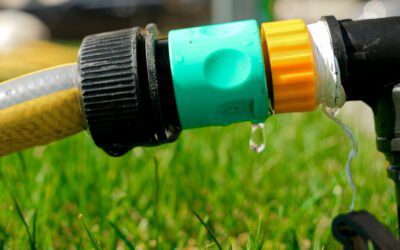
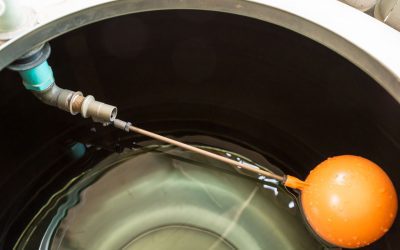
Make sure you take a look at the main tank and all your taps in case there is a leak in the garden, or alternatively make sure none of your toilets or shatafs are running. 

Season 2, Episode 4    |    38min

Self-Help Videos

Read Our Blogs

Are My District Cooling Lines Leaking?

Are My District Cooling Lines Leaking?

We are all looking for ways to reduce costs within our businesses in order to maximise profits. A large part of annual business expenses are taken up with maintenance and repairs, planned or otherwise. One way to reduce such costs is with the use of District Cooling Lines.

read more

Additional Resources

Read the LeakDtech Brochure

Read the Latest Global Climate & Environmental News

BBC • The Guardian • NASA Climate • Mongabay

  • Quantum computing and AI to get £2.5bn to stop UK tech 'drifting abroad', Reeves vows
    on March 17, 2026 at 7:19 am

    The chancellor tells the BBC she wants the "pattern to end" while also pledging closer ties with the EU.

  • A total hoot! Beautiful birds – in pictures
    by Guardian Staff on March 17, 2026 at 7:00 am

    From fluffy owlets to rosy-hued flamingos, Claire Rosen’s portraits of live birds took her on a journey that touched on colonialism, wallpaper design … and chickens Continue reading...

  • Accidental discovery reveals new climate threat to emperor penguins
    by Abhishyantkidangoor on March 17, 2026 at 5:42 am

    The plight of the emperor penguin might be more dire than previously thought. For the first time, scientists have used satellite data to discover new locations in Antarctica where the birds go to shed and replace their feathers every year, an event known as molting. However, they also found that these molting sites might have

  • A Bit of Gray on an Emerald Isle
    by Lauren Dauphin on March 17, 2026 at 4:01 am

    Ireland is best known for its many greens, but the striking grays of the island's Burren region also stand out in satellite images. The post A Bit of Gray on an Emerald Isle appeared first on NASA Science.

  • The hidden cost of fisheries subsidies
    by Rhett Butler on March 17, 2026 at 1:33 am

    In public finance, some costs are politely kept off the books. The ocean has long been one of them. Governments often speak of “blue growth” and “sustainable use,” yet many policies still treat marine ecosystems as a kind of free input: available, resilient, and cheap to replace. The result is ecological decline. It is also

  • PhysCOS Activities at APS – Tuesday 17 March 2026
    by Patricia Tyler on March 17, 2026 at 1:22 am

    If you’re attending the American Physical Society’s Global Physics Summit in Denver, CO, don’t forget to stop by the PhysCOS booth in the Hyatt Regency. The post PhysCOS Activities at APS – Tuesday 17 March 2026 appeared first on NASA Science.

  • Reduced physical activity due to global heating will lead to rise in health issues, study says
    by Chloé Farand on March 16, 2026 at 11:30 pm

    Researchers project that reduced activity could contribute to half a million additional premature deaths annually by 2050Rising temperatures are making physical activity undesirable and even dangerous in many parts of the world, and as global heating worsens, it will further affect how much people are able to move.Researchers analysed data from 156 countries between 2000 and 2022 and modelled how rising temperatures may affect physical activity globally by 2050. Continue reading...

  • NASA Eyes New Date for Artemis II Rocket Rollout
    on March 16, 2026 at 10:24 pm

    Teams are now targeting no earlier than Friday, March 20, to roll NASA’s Artemis II rocket from the Vehicle Assembly Building out to Launch Pad 39B, maintaining the opportunity for a Wednesday, April 1, launch attempt. Over the weekend at the agency’s Kennedy Space Center in Florida, engineers were completing closeout activities ahead of rollout, The post NASA Eyes New Date for Artemis II Rocket Rollout appeared first on NASA Science.

  • The Dutch Nitrogen Crisis
    by Alejandroprescottcornejo on March 16, 2026 at 9:48 pm

    What happens when biodiversity conservation and food systems collide? As the top meat exporter in the European Union, the Netherlands has become a case study in the ecological limits of industrial farming. When courts forced action to protect fragile ecosystems, it set off mass farmer protests, political upheaval, and a tug-of-war between regulation, technology and

  • Pharmaceutical companies move away from horseshoe crab biomedical testing
    by Bobbybascomb on March 16, 2026 at 9:24 pm

    Horseshoe crabs were crawling along the shallow sandy bottoms of Earth’s oceans 200 million years before the first dinosaurs came on the scene. But some populations have declined dramatically with the rise of humans, raising concerns they may be headed toward extinction. One of the biggest drivers of their population collapse is their unsustainable harvest

  • NASA Wallops to Support March Sounding Rocket Launches 
    on March 16, 2026 at 9:00 pm

    Two sounding rockets are scheduled for liftoff between March 17 and March 23 from NASA’s Wallops Flight Facility launch range in Virginia. The launch window each day is from 8 p.m. to midnight EDT. No real-time launch status updates or livestream will be available.   NASA Wallops provides services such as vehicle tracking, data telemetry, and range safety from NASA’s only owned and operated launch The post NASA Wallops to Support March Sounding Rocket Launches  appeared first on NASA Science.

  • Roman Knit Pattern
    by jmbrill on March 16, 2026 at 8:27 pm

    [From Nancy Grace Roman Space Telescope Spacecraft Systems Engineer, Missie Vess] Below you will find the color work pattern for the Roman emblem, the Wide Field Instrument focal plane, seen on figurine Nancy’s knitted blanket in the images below. This color work pattern can be incorporated into a myriad of different knitting projects such as The post Roman Knit Pattern appeared first on NASA Science.

  • Roman 3D Paper Model
    by jmbrill on March 16, 2026 at 8:13 pm

    Build your own 3D model of the Nancy Grace Roman Space Telescope! Try your hand as an engineer, and build a paper model of the Roman Space Telescope. Grab your scissors and glue (and safely) start building. Model Part Number: 1. Outer Barrel Assembly, Integrated Payload Assembly, Spacecraft Bus 2. Deployable Aperture Cover 3. Aperture The post Roman 3D Paper Model appeared first on NASA Science.

  • NASA Invites Media to Learn About Upcoming X-59 Test Flights
    on March 16, 2026 at 7:48 pm

    NASA will hold a media teleconference at 5:30 p.m. EDT on Thursday, March 19 to highlight plans for its X-59 quiet supersonic aircraft’s upcoming flight tests. The teleconference is set to take place after the X-59 is scheduled to complete its second flight, in California. For the media call, NASA leadership will join representatives from The post NASA Invites Media to Learn About Upcoming X-59 Test Flights appeared first on NASA Science.

  • SPARCS CubeSat ‘First Light’ Images
    by Rafael Alanis on March 16, 2026 at 6:52 pm

    Description This pair of images shows stars observed by the SPARCS (Star-Planet Activity Research CubeSat) space telescope simultaneously in the near-ultraviolet, left, and far-ultraviolet, right. These observations were recorded on Feb. 6, 2026, three weeks after the cube satellite, or CubeSat, launched aboard a SpaceX Falcon 9 on Jan. 11. The fact that one star The post SPARCS CubeSat ‘First Light’ Images appeared first on NASA Science.

  • To Protect Artemis II Astronauts, NASA Experts Keep Eyes on Sun 
    by Miles Hatfield on March 16, 2026 at 6:42 pm

    As four astronauts travel around the Moon on NASA’s Artemis II mission, they will venture beyond Earth’s protective magnetic field. The crew’s spacecraft, Orion, will carry and protect them as they journey into deep space and serves as the main protection against the Sun’s intense power.  During their 10-day flight, NASA and the National Oceanic and Atmospheric Administration (NOAA) will monitor the The post To Protect Artemis II Astronauts, NASA Experts Keep Eyes on Sun  appeared first on NASA Science.

  • The Guardian view on SUVs: London’s mayor is right to push back on supersize cars | Editorial
    by Editorial on March 16, 2026 at 6:40 pm

    Huge vehicles are popular with drivers, but their wider impacts on road safety and the environment must be tackledNo one who walks, cycles or drives around London, or many of the world’s big cities, could fail to notice the vastly increased size of the typical car. A type of vehicle once associated with rural settings and outdoor lifestyles is now ubiquitous. Heavily marketed as sports utility vehicles (SUVs), supersize cars are among the key consumer trends of recent decades. In 2022, they accounted for 46% of global new car sales.For manufacturers, these vehicles are big earners due to higher profit margins. For those inside them, they offer more space and a higher vantage point. But for those on the outside, SUVs have obvious downsides. The threat that they pose to pedestrians is one. Research shows that children are 77% more likely to die if struck by an SUV compared with other cars, due to their size and structure – particularly their raised bonnets. This finding was highlighted in an announcement from the London mayor, Sir Sadiq Khan, that such risks are being scrutinised as part of a wider review into SUVs’ environmental impact. This evidence will provide the basis for policy proposals that are expected to include higher charges for owners.Do you have an opinion on the issues raised in this article? If you would like to submit a response of up to 300 words by email to be considered for publication in our letters section, please click here. Continue reading...

  • Habitable Worlds Observatory SIG Seminar, 1 April 2026
    by Patricia Tyler on March 16, 2026 at 6:15 pm

    Habitable Worlds Observatory SIG Seminar. 1:00pm ET / 10:00am PT The post Habitable Worlds Observatory SIG Seminar, 1 April 2026 appeared first on NASA Science.

  • Trump’s war is bringing economic calamity to the UK – and another shock to our politics | Gaby Hinsliff
    by Gaby Hinsliff on March 16, 2026 at 6:08 pm

    Hard choices lie ahead for Downing Street if higher fuel prices spark resentment and trigger a renewed cost of living crisisSeventy years ago this winter, the streets of Britain fell eerily quiet. After one last panic buying spree, many garages shut, and traffic even in the heart of London dwindled away. The formal introduction of petrol rationing had begun, limiting drivers to 200 miles’ worth a month – with exceptions for farmers, doctors and vicars – after the Suez crisis blocked fuel supplies from the Gulf.Ancient history now, of course – or it would be if it weren’t for what looks increasingly like the US’s own version of Suez: a great power starting a war it seemingly doesn’t know how to finish, against an enemy it woefully underestimated. If the strait of Hormuz – the vital shipping lane now rendered unsafe for shipping by Iranian drones and mines – cannot soon be reopened, then Britain could be only weeks away from needing to ration fuel, the former BP executive (and government adviser) Nick Butler warned on Monday morning. Continue reading...

  • Glyphosate found in South African baby cereal; watchdog group calls for ban
    by Bobbybascomb on March 16, 2026 at 5:30 pm

    In February, the African Centre for Biodiversity (ACB) released a report documenting concentrations of glyphosate in wheat and maize that exceeded default maximum residue limits. ACB also found traces of the herbicide in bread and baby cereal. “Finding glyphosate in baby cereal was very disturbing. Babies are the most vulnerable. It shouldn’t be there. We

  • Cambodia’s Supreme Court denies release of five imprisoned environmental activists
    by Isabel Esterman on March 16, 2026 at 5:04 pm

    Five environmental activists in Cambodia will remain in prison, where they have been for more than 622 days, after the country’s Supreme Court decided not to allow them to go free as they appeal their convictions. On July 2, 2024, Ly Chandaravuth, Phuon Keoraksmey, Long Kunthea and Thun Ratha were sentenced to six years each

  • Realtime pollution alerts needed on Windermere, campaigners say after boy nearly dies
    by Sandra Laville on March 16, 2026 at 4:00 pm

    Exclusive: Claire Earley’s son Rex spent six weeks in hospital after contracting E coli from contaminated lakeRealtime pollution alerts are needed across Windermere urgently, campaigners have said, as the mother of a seven-year-old boy who kayaked on the lake described how he nearly died after contracting a dangerous strain of E coli from contaminated water.Claire Earley’s son Rex spent six weeks in hospital, and underwent two emergency operations, after a family kayaking trip on Windermere last August. Continue reading...

  • How a community defended its ancestral forest from logging
    by Rhett Butler on March 16, 2026 at 3:45 pm

      To the cartographers of the modern conservation world, the forests of northeastern Gabon can appear almost empty. Satellite images show a deep green canopy stretching across the Congo Basin. Global datasets classify large tracts as “intact forest landscapes”, areas supposedly free of industrial disturbance and largely untouched by people. On paper, such forests look

  • An ancient fishing tradition in Indonesia could help build a more sustainable fishery
    by Bobbybascomb on March 16, 2026 at 3:06 pm

    In the remote coastal areas of eastern Indonesia, a centuries-old tradition is providing a contemporary blueprint for sustainable development. The practice, known as Sasi Laut, imposes temporary fishing closures of six to 12 months to allow sedentary marine species such as sea cucumbers and shellfish to replenish. A new study published in Marine Policy reveals

  • Replacing 1m petrol cars with EVs could cut Australia’s reliance on foreign fuel by 1bn litres a year
    by Patrick Commins on March 16, 2026 at 2:00 pm

    Electric vehicles reduce exposure to global oil price shocks and shift energy consumption to electricity largely produced domestically, expert saysFollow our Australia news live blog for latest updatesGet our breaking news email, free app or daily news podcastAustralia could reduce its reliance on foreign fuel by more than 1bn litres a year if it replaced 1m petrol-fuelled cars with electric vehicles, as experts say boosting EV adoption is part of securing the nation’s long-term economic security.Hussein Dia, a professor of transport technology and sustainability at the Swinburne University of Technology, said electric vehicles can play a meaningful role in improving Australia’s energy sovereignty, as well as contributing to the national net zero emissions goal. Continue reading...

  • Oldest-known whale song recording provides new insight into ocean sounds
    by Associated Press on March 16, 2026 at 1:05 pm

    Recording of humpback whale from 1949 could also provide new understanding of how the huge animals communicateA haunting whale song discovered on decades-old audio equipment could open up a new understanding of how the huge animals communicate, according to researchers who say it is the oldest such recording known.The song is that of a humpback whale, a marine giant beloved by whale watchers for its docile nature and spectacular leaps from the water, and was recorded by scientists in March 1949 in Bermuda, said researchers at Woods Hole Oceanographic Institution in Falmouth, Massachusetts. Continue reading...

  • Brazil is both the world’s environmental treasure and its most exposed victim (commentary)
    by Rhett Butler on March 16, 2026 at 12:22 pm

    In May 2024, floodwaters submerged much of Porto Alegre. Brazil’s fourth-largest city lost bridges, hospitals, and months of economic output. Hundreds died. The images briefly commanded global attention. Then the news cycle moved on. What it left behind was something more consequential than headlines: a preview of what Brazil’s climate future looks like, playing out

  • Africa particularly vulnerable as Iran conflict disrupts supply chains, say experts
    by Carlos Mureithi in Nairobi on March 16, 2026 at 12:03 pm

    Food production in many African countries depends heavily on fertiliser imported from the Gulf through the strait of HormuzCountries in Africa, where farmers depend heavily on imported fertiliser and a large share of household income goes on food, are particularly vulnerable to supply chain disruptions caused by the war in the Middle East, experts have said.The conflict has drastically disrupted trade through the strait of Hormuz, a vital shipping lane not just for oil and gas but also for fertiliser, which is produced in vast quantities in the Gulf. Continue reading...

  • ‘We cannot replace USAID, but we can do big things’: conservation plots a future without American money
    by Michelle Nijhuis on March 16, 2026 at 12:00 pm

    The Trump administration’s cuts to biodiversity funding have imperiled species, habitats and the people who defend both. Now the world is seeking a new way forwardOn 22 January 2024, at the inauguration of the current Liberian president, Joseph Boakai, the US-based Liberian poet Patricia Jabbeh Wesley paid tribute to the west African nation’s tropical forests – one of the places where, she said, “our fathers came / centuries ago, and planted our umbilical cords / deep in the soil”.The forests of Liberia are among the most diverse on the planet, home not only to humans and their ancestral ties but also to rare species such as forest elephants, pygmy hippopotamuses and western chimpanzees. They are also chronically threatened by industrial development, including illegal logging and mining. Continue reading...

  • Elusive nightjar birds making remarkable comeback, conservationists say
    on March 16, 2026 at 11:13 am

    An ecological survey has found 109 nightjar territories in the lowland heaths of east Hampshire.

  • Climate-resilient housing models slow to gain ground in disaster-prone Bangladesh
    by Abusiddique on March 16, 2026 at 6:06 am

    Bangladesh’s low-lying terrain combined with the crisscrossed river network, which is cause for recurring floods, tidal surges and river erosion, and frequent cyclones make it vulnerable to climate change-related devastations. Between 2008 and 2024, the Internal Displacement Monitoring Centre (IDMC) recorded 123 disaster events that triggered huge displacement, including about 11.3 million people who experienced

  • Are government subsidies undermining conservation efforts in Australia?
    by Rhett Butler on March 16, 2026 at 12:43 am

    Australia has long struggled to reconcile its environmental ambitions with the structure of its economy. The country is both a global biodiversity stronghold and a major exporter of resources, agricultural commodities, and energy. A new study led by Paul Elton of the Australian National University suggests that this tension is embedded not only in land

  • Mining made this US tribal area a toxic wasteland. This Indigenous nation brought it back to life
    by Todd Price with photographs by Thalia Juarez in Picher, Oklahoma on March 15, 2026 at 2:00 pm

    The Quapaw Nation is the only US Native community to carry out a cleanup of one of the country’s worst sites of environmental contaminationThey call this land the Laue. In the late 1800s, part of these 200 acres of grassland inside the Quapaw Nation were allotted to tribal citizen Charley Quapaw Blackhawk. After forcing dozens of tribes into Indian territory before the civil war, the US government then parceled out reservations and property to individual members. It was part of the government’s attempt to “civilize” Native Americans by turning them into private, not communal, landholders and yeoman farmers in the model of Thomas Jefferson’s ideal citizen.Yet, for the last century, little grew on the Laue. Half of it was buried beneath towering mounds of toxic rock known as chat piles. The waste rock, laced with chemicals, was left after miners extracted millions of tons of lead and zinc from the Tri-State Mining District, where the valuable ores stretched across Kansas, Missouri and Oklahoma between 1891 and the 1970s. By 1983, the Environmental Protection Agency (EPA) had designated 40 sq miles that include nearly all the Quapaw Nation as the Tar Creek Superfund site, joining the EPA’s list of the most contaminated places in the country. Informally called a “megasite”, Tar Creek remains one of the largest and most complex environmental disasters in the country. Continue reading...

  • I love vultures, mosquitoes and, yes, even wasps. This is why you should too | Jo Wimpenny
    by Jo Wimpenny on March 15, 2026 at 1:00 pm

    No species is a ‘villain’ – and even humans’ least favourite creatures are part of a web that makes all life possibleA wasp has just flown into your kitchen. Do you: a) scream and run away; b) roll up a magazine and try to bash it; or c) open a window and usher it outside? Now imagine it’s a bee – do you respond in the same way?Our emotional responses towards the other animals on this planet are diverse, complicated and often irrational, and our contrasting perceptions of wasps and bees is a fantastic example. Bees are positively associated with honey, flowers and pollination, while wasps are negatively associated with stings, pain and annoyance – all this despite the fact that bees obviously can sting, while wasps are important pollinators, too. It’s the same for other animal pairs: sharks are mindless killers, while dolphins are paragons of benevolence; vultures are ugly and sinister, while eagles are majestic. I’m here to say that we’ve got them all wrong.Jo Wimpenny is the author of Beauty of the Beasts: Rethinking Nature’s Least Loved Animals Continue reading...

  • Police-style powers to tackle fly-tippers being considered
    on March 15, 2026 at 10:41 am

    The move would allow officers to search premises without a warrant, seize assets and arrest those suspected of criminality.

  • Can scientists really resurrect the dodo? Inside the company that says it can
    by Oliver Milman in Dallas on March 15, 2026 at 10:00 am

    Colossal Biosciences’ CEO says its work follows a ‘moral obligation’ while critics say it’s ‘tech bro’ hype that could undermine conservationCan and should we resurrect animal species that have been extinct for thousands of years? Such weighty, existential questions were once the preserve of science fiction but are now being played out within an unassuming brick building in a Dallas business park.Colossal Biosciences, valued at $10.2bn after raising hundreds of millions of dollars in funding from investors including celebrities spanning from Tiger Woods to Paris Hilton, has provoked a stampede of acclaim as well as denunciation after announcing last year it had made the dire wolf, a species lost from the world for more than 10,000 years, “de-extinct” via the birth of three new pups. Continue reading...

  • The toughest toad in town
    by Sam Lee on March 15, 2026 at 8:09 am

    Meet our story hero: the admirable red-belly toad. A tiny amphibian found nowhere else on Earth but a small forest patch in southern Brazil. Listed as a critically endangered species, it is capable of amazing things. In 2014, it stopped the construction of a hydroelectric dam that would have destroyed its home. In 2024, catastrophic

  • Funding for green community initiatives
    on March 15, 2026 at 7:32 am

    Staffordshire Moorlands District Council says projects can receive up to £5.000.

  • The astronaut who took one giant leap for Manx-kind
    on March 15, 2026 at 7:30 am

    Retired astronaut Nicole Stott says being in space "does make you look at Earth differently".

  • Major hedgerow restoration project begins on farm
    on March 15, 2026 at 6:19 am

    The restored hedgerows will boost wildlife and help farm productivity, says the National Trust.

Schedule an immediate quotation now

Share This